Nvidia's $20 billion Groq deal queried by Warren, Blumenthal
Published in Business News
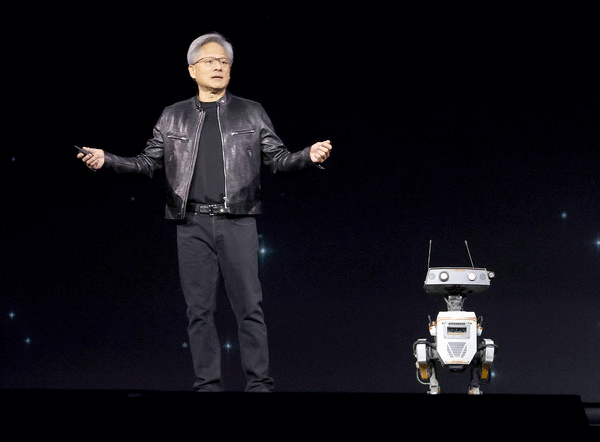
Nvidia Corp.’s $20 billion licensing deal with artificial intelligence startup Groq is being probed by a pair of Democratic senators over whether it violates antitrust laws by improperly avoiding a merger review and illegally consolidating its power in the market for AI computing.
Sens. Elizabeth Warren from Massachusetts and Richard Blumenthal of Connecticut sent Nvidia Chief Executive Officer Jensen Huang a letter on Thursday night, asking for additional information on the deal, which they said appeared to have been structured “to evade scrutiny by antitrust regulators.”
In their letter, the senators wrote, “We are concerned that this takeover could stifle competition, further entrenching Nvidia’s dominance in the AI chip industry and ceding our technological leadership to China.”
The senators are asking for the specific terms of the Groq deal, in addition to whether it was structured to avoid antitrust review.
A Nvidia spokesperson said in a statement that the company “did not acquire Groq, which continues to be a separate and independent business.”
“Nvidia purchased a non-exclusive license to Groq’s IP and hired engineering talent from Groq’s team to join us in our mission to provide world-leading accelerated computing technology for customers everywhere,” the spokesperson said.
Nvidia’s deal with Groq, which was sealed at the end of 2025, expanded its investments in companies connected to the AI boom and gave it access to a new type of technology for its products. The agreement gave Nvidia a nonexclusive license to Groq’s technology and brought on some of the startup’s senior executives, including its CEO Jonathan Ross, who joined the chip giant. Though Groq remains a separate company and its cloud business continues to run independently, most of its software engineers and hardware designers joined Nvidia.
Groq didn’t file the licensing agreement for antitrust review, though federal antitrust law requires companies to submit most acquisitions for scrutiny. In recent years, Amazon.com Inc., Microsoft Corp. and Alphabet Inc.’s Google have all reached licensing and hiring deals with startups that circumvented antitrust scrutiny.
Federal Trade Commission Chair Andrew Ferguson said in January that his agency is scrutinizing those types of deals.
Nvidia’s chips dominate the power-intensive workload of training the large language models that underpin artificial intelligence. Groq specializes in so-called inference, or using AI models once they have been trained on large datasets, an endeavor with more competitors.
Because its technology is “essential for advanced AI development, Nvidia effectively controls which companies can compete in AI, and the entire AI industry is held hostage to Nvidia’s product decisions and priorities,” the senators wrote.
At Nvidia’s annual conference this week, Huang announced the company is integrating Groq technology into a new AI computing platform.
(With assistance from Maggie Eastland and Ian King.)
©2026 Bloomberg L.P. Visit bloomberg.com. Distributed by Tribune Content Agency, LLC.









Comments