Worried about rising beef prices? WA farmers say, share a cow
Published in Business News
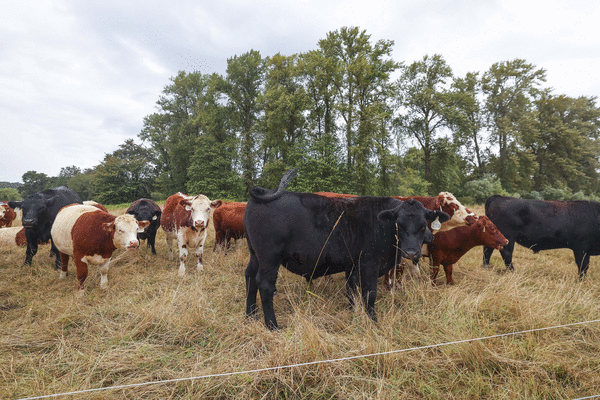
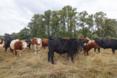
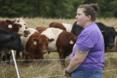
CARNATION, Washington — Far from the refrigerated meat sections of Seattle's grocery stores, two dozen beef cattle relaxed in the afternoon drizzle falling on Carnation Farms' grassy fields.
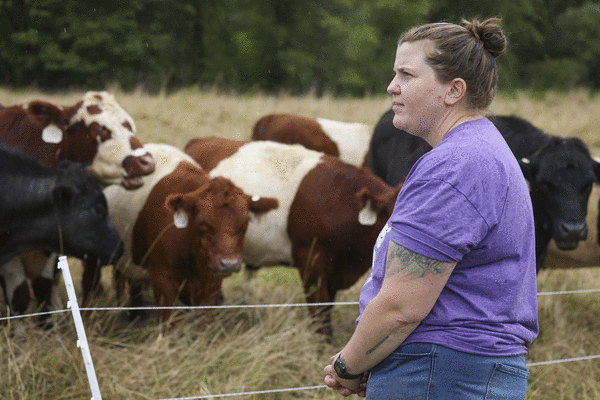
Livestock manager Alex Hagiepetros, 37, rattled off facts about the cows: Some are Belted Kingshire cattle, and others are Angus-Shorthorn crosses. They have names. They enjoy listening to music.
If we're going to eat meat as a society, the animals should be respected and well cared for," Hagiepetros said Wednesday. "Is it hard to look at them and eat them? Yeah. It should be."
Though the summer's beef harvest is transitioning into the autumnal lamb harvest at Carnation Farms, Americans continue to crave hamburgers, brisket and sirloin. What's ruining their collective appetites is rising beef prices at the cash register. Largely driven by shrinking cattle numbers, the cost paid by consumers for beef and veal in July jumped 9% over 12 months, according to the U.S. Bureau of Labor Statistics.
Higher prices have sent consumers searching for alternatives, bringing the hunt for beef closer to home.
Local farmers aren't immune to economic headwinds either, though their sticker prices for customers have largely held steady. They point to a limited supply of cows and market instability as hurdles for their operations. They also have to contend with Mother Nature's whims in Washington, including drought conditions.
Some producers have found beef share programs to be a happy medium. They can sell their meat directly to consumers, and patrons save money by stocking in bulk.
"The concept overwhelms people because you get so much at one time," said Tiffany Cooper, who participates in a beef share at Springherd Farms in Snohomish. "But then you go to the grocery store, and prices are ridiculous."
Supply and demand
Understanding the cost of your steaks and roasts requires a holistic look at the beef supply chain.
"Even family farmers and ranchers like us, we are part of a global market," said Bridget Coon, first vice president of the Washington Farm Bureau. Coon, 43, runs the Bar U Ranch in Benge, Adams County, with her husband, who is part of the fifth generation to steward the family farm.
The macroeconomic equation starts with supply and demand. High beef prices are precipitated by low cattle numbers.
In recent decades, the U.S. beef cow inventory has almost halved since hitting its peak of almost 46 million in 1975, per the U.S. Agriculture Department. This year, it only reached around 28 million, as of July.
President Donald Trump's administration has tried to ease the high cost of beef by slashing tariffs on Argentina and Brazil, two major international suppliers. Last month, he temporarily boosted the allowed amount of lean beef trimmings, which make ground beef, from outside the U.S.
Eric Popp, director of regenerative agriculture at Carnation Farms, said the business would love to scale its operations.
But "the supply right now of calves is pretty small. We're having a lot of trouble finding animals," he said Friday. "It's really making our ability to expand our herd pretty difficult right now."
To incentivize producers to sell their animals, Popp, 38, said the farm offers more than the average auction price, though "that price difference is actually a pretty big cut into our margins."
Local headwinds
Beef producers also have to contend with the weather, with some of the challenges dependent on where a producer is based in Washington.
In the western half, the problem can be the moisture.
When it's too wet, grazing cattle is difficult, Hagiepetros said. The winter often brings floods.
However, climate outlooks for August by the Washington State Climate Office show that the opposite is expected to happen. It highlights an 80% chance of the development of a "very strong" El Niño, a weather pattern that can mean warmer, drier winters.
That's particularly bad news when Washington is already struggling with drought conditions. The Department of Ecology declared a statewide drought emergency in April.
Almost half of Washington — 47% — is experiencing moderate drought, according to the National Oceanic and Atmospheric Administration.
For farmers, "We look for ways to develop water, use water more efficiently — stretch it," Coon said.
Finding those techniques takes another finite resource: money.
Beef share programs
To feed hungry households and earn cash doing it, local farmers have found a sweet spot in beef share programs.
It skips the middleman, Popp said. "That's actually how the majority of cattle in the Snoqualmie Valley are sold: direct to consumers."
At Carnation Farms, customers can choose between buying an eighth share, a quarter share, a half share and a whole share of a cow, which can reach around 300 pounds. The smallest share only consists of ground meat, while the rest feature various cuts.
The business takes a deposit to reserve the share. Then, the customer pays the balance, which is based on price per pound of the hanging weight, on top of harvest, cutting and processing fees.
For example, a quarter share would require a $200 deposit. The deposit would go toward the total. At $7.50 per pound, it would amount to $937 for around 125 pounds.
Add in the fees, and it reaches around $1,113, or about $9 per pound.
The nationwide average for beef in July ranged from $6.90 per pound for ground beef up to $14.60 per pound for some cuts of steak, according to data from the U.S. Bureau of Labor Statistics.
"That's really how people have been able to afford to eat beef consistently," said Popp, who lives in North Bend. "That price savings that people get really does make a huge difference."
There's already a waitlist to join Carnation Farms' beef share for next year. The business also sells lamb and mutton shares.
"The consumer saves money; the producer makes more money," Popp said. "A lot of times, you can go out, and you can see where your animal was raised. You can talk to the person who raised it."
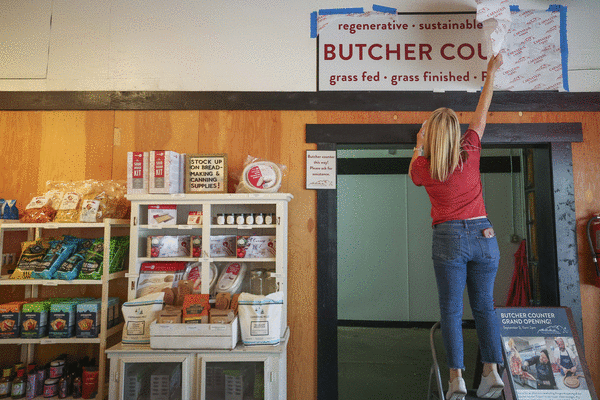
The business plans to open its own butcher counter on Sept. 5.
The shop's future space sat dark and empty in the farm stand Wednesday, though signs hinted at its upcoming grand opening. Next to its doorway, on a community board, a posted note read: "No farms, no food."
In Snohomish, at Springherd Farms, "we can't hardly keep beef in stock," said Mandy Hereth, who owns the business with her husband, Karl. "Our neighboring farms are selling out six months in advance."
Her spouse is part of the fifth generation to run the farm, which his family established in 1901. Once Mandy and Karl moved onto the property in 2006, they began raising beef cattle.
Now, they maintain a herd of 100, sending 25 to slaughter each year.
For 2026 and 2027, a quarter beef share costs an average of almost $7 per pound. A half share is $6.50 per pound, while a whole share is $6 per pound.
The program is a bright spot in an "unstable market" for beef right now, said Hereth, 46.
"Your income is never set in stone," she said. "It's always variable."
'It's just better'
Customers see the value in sharing.
For Cooper, 50, "It's not negotiable," she said. She's been a farm share member for four years at Springherd Farms and plans to continue.
It's high praise from Cooper, a vegetable farmer in Monroe who was a vegetarian for most of her life.
Once she realized how much beef was produced in her county, where agriculture is a major industry, "It just dawned on me that it just made more sense environmentally," Cooper said. She believes local farmers produce meat more sustainably.
So she and her husband buy a quarter beef share once a year, which they freeze to last through the next 12 months.
Cooper added up all the cuts from her beef share — tenderloin, ground beef, roasts and more — to determine the average price per pound: $7. Her household shells out between $800 and $1,000 for its share.
"Now, when we go to the store and look at meat, we're like, 'What is this?'" Cooper said. "It's just better. We know exactly where the cows are coming from.
©2026 The Seattle Times. Visit seattletimes.com. Distributed by Tribune Content Agency, LLC.






Comments