FIFA World Cup in Seattle delivered $889M economic boost, report says
Published in Business News
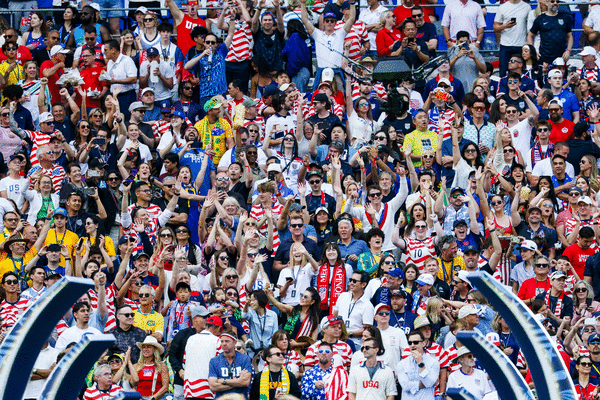
The results are in, and Seattle walked away from this summer's FIFA Men's World Cup with undeniable wins. But the question remains: Was the tournament overhyped?
In Seattle and King County, the global soccer tournament drove $889 million in total economic impact, which includes $109 million in state and local tax revenue. That’s according to data released Tuesday by Visit Seattle, the local destination marketing organization.
Even so, Seattle didn’t necessarily see an unprecedented flood of tourists.
Seattle-Tacoma International Airport recorded a very slight boost in international passengers and a very slight drop in domestic passengers during June and July.
Overall passenger total is -0.01% which is dang near as ‘flat’ as you can be," Port of Seattle spokesperson Perry Cooper said Monday in an email. "For the year, we’re still projecting with the latest numbers to be flat from 2025, which was a record year for SEA."
Visit Seattle is largely counting the tournament as a success.
“These numbers are a testament to the power of large events and the hospitality industry, and how both can work together to drive economic prosperity in our city and region,” Kelly Saling, the group’s chief business officer, said in a statement. “The way that our city showed up on the global stage, amid all that exposure, will drive visitation to our region for years to come.”
Visit Seattle projected an economic impact of $929 million in late 2024.
"We really didn't know which teams were to come and play here in Seattle," said Jorge Gotuzzo, World Cup activation lead at Visit Seattle, in a phone interview Monday. "We just really kind of gave our best estimate, given what we knew at the time."
The number was revised to $846 million in March to account for the prediction of "fewer international visitors and decreased capital project spending for the tournament," per the news release.
By September, Visit Seattle attributed the "greater-than-expected total" to several factors: higher attendance of games by international fans; an increased number of overnight visitors for watch parties; and the adding of a second match featuring the U.S. men's national soccer team.
Tourism Economics, a company that provides global forecasting and quantitative analysis, produced the report with the new data.
It acknowledged that the local hospitality industry "saw mixed results," with record days for some businesses and year-over-year sales drops for others.
Restaurants and bars near Lumen Field, known as Seattle Stadium during the World Cup, reaped the most economic benefits, Gotuzzo said.
Hotel occupancy rates fell, due to the crowding out of cruise ship passengers and convention goers. But the pricier rooms resulted in a jump in hotel revenue compared to the same time last year.
All in all, "this was the summer the world fell in love with Seattle and Washington, Peter Tomozawa, CEO of SeattleFWC26 local organizing committee, said in a statement.
©2026 The Seattle Times. Visit seattletimes.com. Distributed by Tribune Content Agency, LLC.










Comments