Bayer's $7.25 billion Roundup settlement approved by judge
Published in Business News
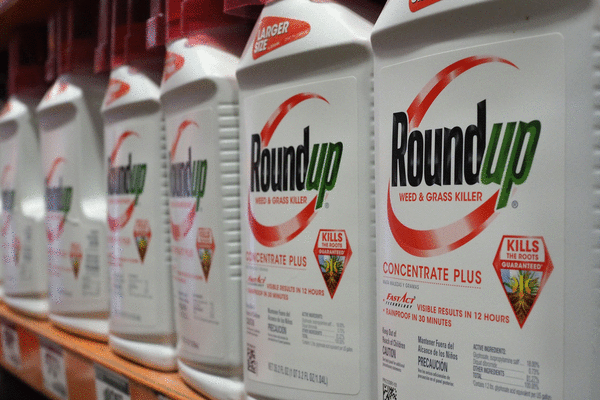
A Missouri judge approved a Bayer AG proposal to contain its mounting legal costs by paying as much as $7.25 billion to resolve tens of thousands of US lawsuits by people who blame the company’s Roundup weedkiller for their cancers.
The settlement agreement is “fair, reasonable and adequate,” serving “the best interests of the class representatives,” St. Louis Circuit Judge Timothy Boyer wrote in his ruling Friday approving the proposal in state court.
Roundup litigation has been a major headache for the German conglomerate, which inherited the legal troubles with its purchase of Monsanto in 2018. The stock price tumbled about 80% in the years after the acquisition, though recent legal wins helped Bayer recover some of that.
The judge’s approval of the settlement will help a turnaround pursued by Chief Executive Officer Bill Anderson, who wants to “significantly” contain the costly litigation by end of this year. The company already got a big legal win in June when the US Supreme Court ruled plaintiffs could no longer sue Bayer for the absence of a cancer warning given that federal regulators concluded a cautionary statement wasn’t necessary.
Bayer’s American depositary receipts closed little changed in New York, after paring losses of as much as 3.6%.
“The Court’s final approval is a decisive milestone in the company’s strategy to mitigate the risks of both pending and future Roundup litigation,” Anderson said in an emailed statement.
Christopher Seeger, a lawyer for plaintiffs in the class-action litigation, said in a statement that the judge’s approval “delivers guaranteed compensation to Roundup cancer victims who have waited more than a decade for justice,” especially after the Supreme Court ruling narrowed “the path to recovery.”
Roundup Claims
The settlement in Missouri’s state court includes both current and future suits from all over the US claiming Roundup caused Non-Hodgkin lymphoma — a link Bayer disputes. While the judge’s approval was expected, Bloomberg Intelligence litigation analyst Holly Froum said the portion relating to future claims is likely to be overturned on appeal because of “notice issues and difficulty of assessing fairness.”
The approval puts Bayer a step closer to resolving the bulk of its legal liability tied to Roundup, if it prevails through a likely appeals process. Bayer had set aside about $10.5 billion for Roundup litigation, which includes the class settlement.
Some Bayer investors had expressed skepticism about the settlement when it was was announced in February. At the time, Anderson indicated that close to 100% of those who are part of the class action must participate for the deal to work. Members could opt out until a June 4 deadline, while Bayer’s right to terminate the class settlement in the case of excessive number of opt-outs expired on Sept. 14.
Bayer also faced opposition to the settlement from plaintiffs’ attorneys who tried to transfer the case to a federal judge in San Francisco, though that effort failed. During a hearing on Sept. 14, they told Boyer that the deal wasn’t fair because it didn’t give current and future claimants adequate notice and infringed on due process rights. The lawyers said they were concerned some clients wouldn’t recover any money.
As part of the deal, people making claims would be eligible for payouts ranging from around $10,000 to $165,000 depending on the severity of their cancer, their age and whether they were an occupational or residential user of Roundup, court records show.
‘Not Enough’
After the ruling Friday, plaintiff attorney Roe Frazer said he will likely pursue an appeal. “We will continue to represent our clients individually in their cases and let juries determine the outcome of hundreds of cancer claims, as opposed to a one-size-fits-none-class settlement crafted by Monsanto,” he said in a statement.
“Even though the $7.25 billion figure looks like a lot of money, it’s not enough,” Frazer said at the hearing in September. Another lawyer, Gerson Smoger, called the plan “the scariest, worst settlement” because Bayer will continue to manufacture Roundup without fear of punitive damages from future claimants that haven’t yet gotten sick.
Opponents also took issue with the plan for plaintiffs’ lawyers to get $675 million in legal fees, or 9.3% of the payout. But those attorneys, who led the class settlement, told the judge the amount was reasonable and well below the one-third benchmark set by Missouri courts.
Attorneys representing the class of clients supporting the settlement told the Missouri judge that the deal was the only viable option in light of the Supreme Court’s ruling, which eliminated the ability to claim the company had failed to provide cancer warnings. “We lost the star of the show,” Seeger said.
Over the past decade, the number of Roundup suits has ballooned to an estimated 65,000, with more expected as new cancer diagnoses emerge among users of the weedkiller, Bloomberg Intelligence said. So far, only 26 cases have gone to trial, with Bayer saying it won 18 of them. Only about 200 currently have trial dates, so it could take decades for the remaining suits to be litigated without a settlement, attorney Eric Holland said.
Bayer has repeatedly denied plaintiffs’ claims that Roundup’s active ingredient, glyphosate, causes cancer. The US Environmental Protection Agency has said that glyphosate is “unlikely to be a human carcinogen,” so hasn’t required a cancer warning label for the product. Bayer, however, removed glyphosate from its US residential lawn-and-garden versions of Roundup in 2023.
The case is Randall King v. Monsanto, 2622-CC00325, Missouri Circuit Court Twenty-Second Judicial District (St. Louis).
—With assistance from Catherine Larkin and Anne Cronin.
(Updates with comments from Bayer CEO, class counsel and lawyers who opposed the settlement.)
©2026 Bloomberg L.P. Visit bloomberg.com. Distributed by Tribune Content Agency, LLC.






Comments