Surging violence in Haiti's breadbasket chokes aid access, worsens humanitarian crisis
Published in News & Features
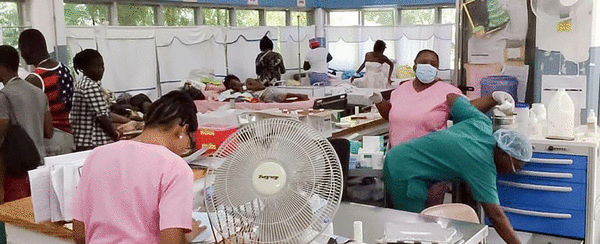
In central Haiti, where residents take pride in working the land, the humanitarian situation is rapidly deteriorating, the United Nations warned, as escalating attacks by criminal gangs in the Artibonite region leave aid groups facing growing access restrictions.
In just the past two weeks, violence in the region, often to referred to as Haiti’s breadbasket, has forced more than 11,000 people to flee their homes and farms, threatening to deepen an already severe crisis in a country where more than half the population does not get enough to eat.
For weeks, the Gran Grif gang and its allies have been targeting rural communities in the Lower Artibonite in an effort to expand territorial control toward the port city of St. Marc, located two hours north of Port-au-Prince and four hours south of Cap-Haïtien.
On Monday at least six people were killed and others wounded during an armed attack in rice-growing Verette. Homes and agricultural storage facilities were reportedly set on fire, Farhan Haq, the deputy spokesman for U.N. Secretary General António Guterres told reporters in New York on Wednesday.
“People were forced to flee, though figures are not yet available,” he said.
Gangs also targeted the area around the Albert Schweitzer Hospital in nearby Deschapelles. The latest attempt occurred on Monday when armed groups attempted to set fire to facilities in the area before being repelled by police.
With the closure of the nearby University Hospital in Mirebalais, Albert Schweitzer Hospital remains one of the few major medical facilities in the region where Haitians, especially women facing high-risk pregnancies, can get adequate health care.
Beyond providing medical treatment, the 200-bed hospital also serves as the headquarters for World Central Kitchen. The nonprofit founded by chef José Andrés after the 2010 Haitian earthquake has partnered with Albert Schweitzer Hospital to open 17 community kitchens in the region, which between May and November of this year have served 4.5 million meals to refugees.
The high number of Haitians who lack sufficient food has placed the country among the world’s top five hunger hot spots, according to the U.N. The deepening hunger, along with the ongoing gang violence, displacements and decreasing access to humanitarian aid contributed to the country being placed this week on the International Rescue Committee’s 2026 Emergency Watchlist.
_____
©2025 Miami Herald. Visit miamiherald.com. Distributed by Tribune Content Agency, LLC.






Comments