Trump touts economic record, avoids Epstein files in rally
Published in News & Features
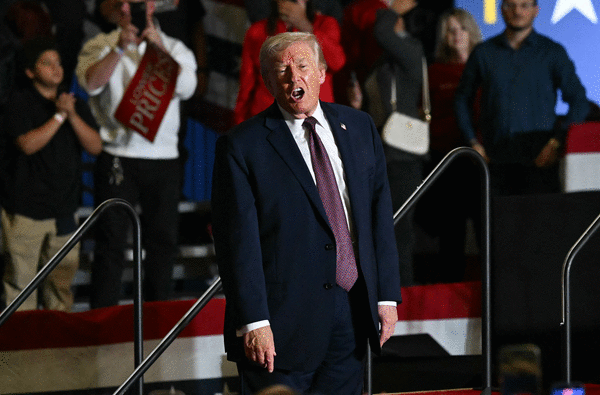
President Donald Trump began a rally Friday night in North Carolina talking about crime and then highlighted his efforts to combat economic uncertainty — while also steering clear of addressing new disclosures involving the convicted sex offender Jeffrey Epstein.
In front of hundreds of people at Rocky Mount Event Center in eastern North Carolina, Trump cited a high-profile crime that galvanized his base and went through recent consumer price index data, recounting stories of threatening tariffs to get better terms on deals.
The president also sought to shore up a vulnerability with the expiration of Affordable Care Act credits in a few weeks. Trump warned that the U.S. government could in late January head into another shutdown, after a record one that ended last month, with Congress deadlocked on how to address rising insurance premium costs.
“You could have another shutdown, because the Democrats are totally in the hands of, they’re totally controlled by the insurance companies, big wealthy companies,” Trump told the crowd.
The president didn’t mention the release of the Epstein files — a measure that he initially resisted before a rare moment of him bowing to intraparty pressure — during the rally.
Trump’s remarks were intended to ease voter concern about his handling of the economy as his polling numbers have slipped, and help shape the narrative around those issues before his holiday vacation in Florida. The crowd waved green-and-red signs proclaiming “Lower Prices” and “Bigger Paychecks” — key elements in the White House’s economic messaging.
Among the deals Trump touted was one announced earlier Friday with nine pharmaceutical companies, the latest in a series of pacts designed to lower drug prices for some Americans.
“This achievement alone should win us the midterms,” he told the crowd.
Still, many of the medications the administration touted as displaying its negotiating prowess are already available to the public at discounts.
Although Trump in 2024 forged a winning coalition of voters as he campaigned on promises to confront escalating costs for consumers, higher prices now have become a political vulnerability for Republicans heading into next year’s midterm elections where they are seeking to maintain control of the House and Senate.
Democrats have seized on voter anxiety, blaming Trump-imposed tariffs and the expiration of health care subsidies for driving up household costs.
As he did during a prime-time address Wednesday night and during a rally earlier this month in Pennsylvania, Trump pointed the finger at Democrats.
“They caused the highest inflation in the history of our country, which led to the highest prices in the history of our country,” Trump said. “I inherited the mess.”
U.S. consumer sentiment rose in December by less than expected, remaining depressed amid lingering affordability concerns, according to data from the University of Michigan’s sentiment index released Friday.
The economic picture is mixed nationwide, data show. Payroll growth remained sluggish in November and the jobless rate rose to a four-year high of 4.6%. Economists anticipate that job growth will remain tepid next year and the unemployment rate will show little improvement, which could continue to weigh on sentiment.
On Thursday, the Bureau of Labor Statistics reported that core inflation increased 2.6% in November from a year ago — the slowest annual pace since March 2021 and down from 3.3% when Trump took office. Still, economists questioned the reliability of that figure, especially after the longest-ever government shutdown prevented the BLS from collecting prices in October.
Trump has at times derided the issue of affordability as a Democratic hoax, and he’s repeatedly cast inflation as a problem he inherited from former President Joe Biden. But he’s also moved to address economic fears for some key constituencies, including by announcing aid for farmers beset by low crop prices amid an ongoing trade war. Earlier this week, Trump announced plans to deliver bonus payments of $1,776 to active-duty military members.
Trump’s promise could resonate especially well in North Carolina, a state with one of the largest active-duty military populations in the country.
It’s also a political bellwether that could be decisive in determining control of Congress — and the fate of Trump’s legislative agenda in years to come. Voters in North Carolina are set next year to decide who should succeed Republican Thom Tillis in the Senate, with former Democratic Gov. Roy Cooper and Trump ally Michael Whatley, a former chair of the Republican National Committee, among those vying for the seat.
Also on Friday, the Trump administration released a memo announcing there will be a study on how to reallocate federal spectrum to commercial use for 6G development, the next generation for mobile communications technology.
Trump’s rally came hours after the Justice Department released long-awaited files tied to the government’s investigations of Epstein, a wealthy and well-connected financier who died by suicide in 2019.
Large swaths of the documents were redacted and the Justice Department said it still had hundreds of pages that it wouldn’t release until after Friday’s deadline to publish the files. That’s already drawn criticism from Democrats, who have accused the Trump administration of trying to obfuscate the evidence.
Trump had for months opposed the release of those documents, but ultimately reversed course in the face of a public outcry and broad support among Republicans in Congress to make the files public.
(Josh Wingrove and John Harney contributed to this report.)
©2025 Bloomberg L.P. Visit bloomberg.com. Distributed by Tribune Content Agency, LLC.





Comments