This tick-borne disease continues to rise in Pennsylvania
Published in News & Features
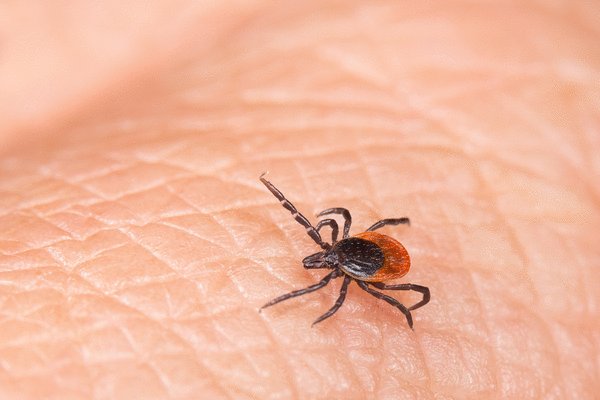
Janine Hauck doesn't know which tick gave her anaplasmosis and Lyme disease. She just remembers the fatigue, weakness and nausea.
The Mt. Lebanon, Pa., resident was an avid hiker, backpacker, dancer, biker and swimmer until she got sick in 2019, at age 57. After throwing up at work and becoming dizzy from walking down the block, she visited her primary care provider and, a few times, the emergency room.
It took her two years to be diagnosed with anaplasmosis, a tick-borne disease that impacts thousands of Pennsylvanians each year and has been increasing in the state since 2015.
Preliminary data from the Allegheny County Health Department (ACHD) shows that cases of anaplasmosis increased by more than 50% in 2025, from last year's 97.
Countywide infection rates have jumped 384% since 2019, said Ronnie Das, public health information officer for ACHD, in an email. Statewide, cases have doubled nearly every year since 2020, with thousands of cases reported.
A bacterial infection caused by a bite from an infected deer tick (also known as the blacklegged tick), anaplasmosis presents with symptoms including fever, headache, muscle pain, nausea and chills. Long term, it can lead to chronic fatigue and exercise intolerance, dizziness, bleeding problems and respiratory failure. Hauck noticed extreme exhaustion while exercising, trying unsuccessfully to push through her symptoms.
The most common tick species in the state, deer ticks have been here for decades, hiding in leaf litter and dense forests.
Surveillance by the Pennsylvania Department of Environmental Protection has identified deer ticks infected with this bacteria in all 67 counties.
Experts don't know exactly what's causing the increase in cases. Industrial development may play a role, as forests are razed to build housing, and ticks are displaced.
The jump in cases could also mean better testing and diagnosis. ACHD has been in ongoing communication with local clinicians to share and learn more about anaplasmosis infections and other tick-borne diseases when evaluating patients, said Das.
Hauck wishes there was even more education. She joined the Pittsburgh Lyme Support Group and speaks across the county to increase awareness about tick-borne diseases, but she said many people are deterred from learning more from the mere thought of developing Lyme or anaplasmosis.
"People don't get how bad a tick bite could affect your life," she said. "I probably spent over $60,000 trying to get better. I'm lucky I have (the money), but not everyone does."
An infected tick has to be latched for around 12 to 24 hours to transmit anaplasmosis, so frequent and thorough tick checks after being outside can help prevent infection.
"The vast majority of tick-borne infections are not transmitted immediately," said Emily Struckoff, vector-borne disease program specialist at Penn State Extension. "The earlier it's caught, the better."
By the time Hauck was diagnosed, years had passed since her symptoms first emerged. She said she was put on a three-month course of antibiotics, but the treatment ultimately made her feel worse, and she has since switched to an herbal regimen that she credits with her improvement.
Now 63, she still can't hike, bike or swim, and physical overexertion can leave her bedridden for days. Before her symptoms, she said she never knew anything about anaplasmosis.
"I really can't commit a lot to doing what I used to," she said. "It's changed my life."
The Pennsylvania Department of Environmental Protection recommends wearing insect repellent, tucking long pants into socks when outside and checking for ticks after outdoor activities.
You can also use permethrin, an insecticide sprayed on clothes that burns ticks' legs before they can latch. Permethrin can last on clothes for about five washes, said Struckoff.
If you develop symptoms after a tick bite, visit your doctor and mention the exposure so it can be tracked, Das said.
_____
© 2025 the Pittsburgh Post-Gazette. Visit www.post-gazette.com. Distributed by Tribune Content Agency, LLC.




Comments