Trump says US Navy carrier strike group heading to Mideast, renewing Iran threat
Published in News & Features
WASHINGTON — A U.S. Navy carrier strike group is moving toward the Middle East as President Donald Trump revives his threats to use military force against Iran’s senior leadership amid a violent crackdown on nationwide protests.
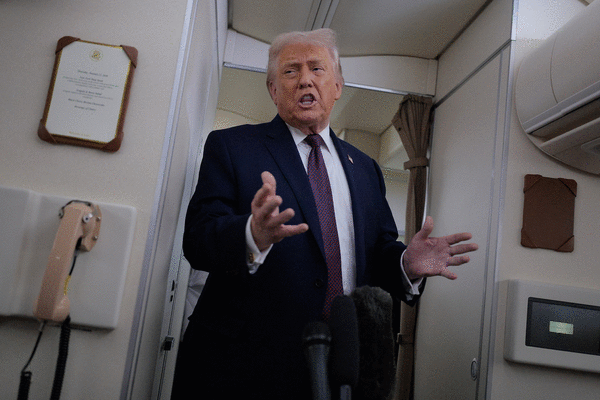
“We have a big flotilla going in that direction and we’ll see what happens,” Trump told reporters aboard Air Force One late Thursday as he returned from Davos, Switzerland. “I’d rather not see anything happen, but we’re watching them very closely.”
The USS Abraham Lincoln aircraft carrier and its associated strike group transited the Strait of Malacca between Malaysia and Indonesia two days ago and are now in the Indian Ocean, according to two U.S. officials, who declined to specify their precise destination.
The Lincoln is accompanied by three Arleigh Burke-class guided missile destroyers — USS Spruance, USS Michael Murphy and the USS Frank E. Petersen Jr. — which can carry Tomahawk missiles. The carrier’s air wing includes F-35C fighter jets.
The new warning comes after Trump walked back a previous pledge to strike Iran after saying he received assurances that its government wouldn’t follow through with the planned executions of hundreds of protesters. Tehran has warned the U.S. and Israel — which carried out strikes on Iranian nuclear facilities last year — against any attempts to intervene to aid the protests.
Contrary to Trump’s claims that Iran was halting executions of the government’s political opponents, the number of people killed in the protest crackdown has surged, according to human rights groups. One United Nations special rapporteur said the total could be more than 20,000.
Rather than signaling a climbdown, the president’s prior comments may have been designed to buy time for the U.S. military to position assets needed for potential strikes as well as protect American and allied positions in the region from possible retaliation, according to Becca Wasser, the defense lead for Bloomberg Economics.
The largest U.S. military installation in the Middle East, Al Udeid Air Base in Qatar, was the target of a face-saving Iranian missile barrage following the U.S. airstrikes against Tehran’s nuclear facilities.
“Should the U.S. launch strikes, they have more options,” Wasser said. “Before, they were constrained to symbolic strikes or a limited strike campaign reliant on forces outside the theater. Now, there are additional abilities to prosecute a fight.”
The large-scale protests, the biggest threat to Iran’s ruling regime in decades, were first triggered in Tehran by a collapse in the nation’s currency and then spread nationwide with calls for the end of Supreme Leader Ayatollah Ali Khamenei’s leadership.
_____
(With assistance from Tony Capaccio.)
©2026 Bloomberg L.P. Visit bloomberg.com. Distributed by Tribune Content Agency, LLC.






Comments