Unearthed memo shows NYC officials feared toxic exposures just one month after 9/11
Published in News & Features
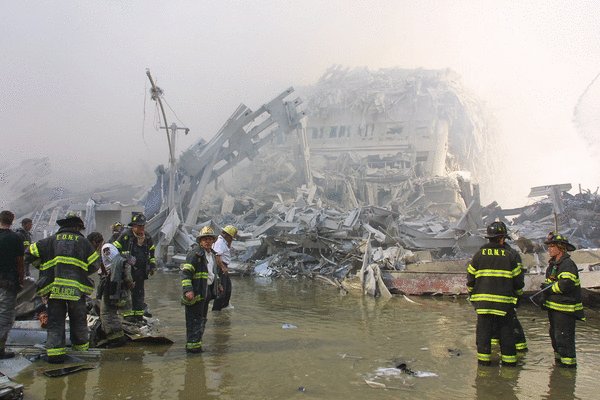
NEW YORK — A pivotal long-sought memo that shows New York City government officials were worried just a month after 9/11 that thousands of first responders and survivors could potentially suffer from “toxic exposure” at ground zero has finally surfaced — nearly a quarter century after it was written, the Daily News has learned.
The famed “Harding memo” was uncovered this week by attorneys fighting the city for documents about air quality and toxic exposures that led to thousands coming down with 9/11 cancers and illnesses.
Sent to Deputy Mayor Robert Harding in October 2001 that summarized city attorneys findings, the memo indicates that “there are approximately 35,000 potential plaintiffs as a result of the events of Sept. 11 and it is estimate that 10,000 would file a claim.”
The memo then listed the potential claims against the city, including lawsuits over “health advisories (that) caused individuals to either return to the area too soon (causing toxic exposure or emotional harm) or too late (causing economic hardship).”
It has long been seen as a key document for 9/11 victims’ advocates trying to determine just what and when City Hall knew about the dangerous chemicals swirling above lower Manhattan in the months after the terror attacks.
Despite the concerns espoused in the Harding memo, the city’s “public proclamations of air safety continued,” according to court documents filed late Tuesday by attorney Andrew Carboy, who is representing 911 Health Watch, a responder and survivor advocacy group.
“From September 12, 2001 to February 2002, the city assured New Yorkers with a single message: the air in lower Manhattan was ‘safe and acceptable,” the filing says. “As the Harding memo anticipates, tens of thousands would be sickened by World Trade Center toxic exposure.”
it is now believed that dust and toxins were in the area for more than five months after the terror attack. Over the next decade first responders and survivors began coming down with respiratory illnesses and cancers that can be linked to exposure to ground zero, but it would take a decade before World Trade Center Health Program was established in 2011 to provide health care and study illnesses linked to the terror attacks.
“After years of pursuing it in court, it is heartbreaking to finally obtain this memo,” Carboy told The News Wednesday. “We read, with our own eyes, that City Hall worried more about losing lawsuits than losing lives.”
More than 140,000 first responders and survivors are now enrolled in the U.S. Center for Disease Control’s WTC Health Program, which provides 9/11-related health care benefits. Out of that number, about 81,000 have a certified condition linked to the toxins that hung above ground zero. On the day of the terror attacks, 343 FDNY members died in the collapse of the twin towers. Since then, an additional 400 members have died of 9/11-related illnesses.
The Harding memo outlines that the city was also concerned people would file “slip and fall” lawsuits for injuries suffered running away from the World Trade Center’s collapse and that rescue workers could sue for being “provided with faulty equipment or no equipment (i.e. respirators),” the newly uncovered document reveals.
The rest of the memo delves into how the city could save itself from financial liability, including asking for “indemnification by the federal government for all liability claims arising from the events of 9/11/01.”
“This form of relief could also assist the city in the long term as well by including toxic tort cases that might arise in the next few decades,” the memo notes. “A major concern is that if these cases make it to court, the judges and juries will be biased in favor of plaintiffs (even though the city seems to have a strong defense) and therefore award substantial damages to compensate individuals for their loss.”
Attorneys, elected officials, and advocates for 9/11 survivors have been seeking a copy of the Harding memo from the city for years.
But Carboy, attorney Matt McCauley and their team didn’t get the memo from the city. Instead, they got it from the Dolph Briscoe Center for American History at the University of Texas at Austin, where the estate of investigative Village Voice journalist Wayne Barrett had bequeathed his personal papers and notes.
Barrett cited the Harding memo in his 2007 book “Grand Illusion” and died in 2017. Staffers at the Briscoe Center sifted through 300 boxes of Barrett’s personal papers until they found a copy of the memo.
“We believe there are other documents like the Harding memo to be revealed,” Carboy said. “We will continue to fight the city’s stonewalling of any additional risk assessments.”
McCauley expressed outrage his team had “to go to Texas to get a document that was sent from Church St. to City Hall, which the City of New York still has not produced after years of requests.”
“Are we to believe that these are the only two pages the city is still refusing to produce?” he said.
City administrations dating back to Mayor Rudy Giuliani have refused to provide attorneys and local elected officials any documentation on what they knew about World Trade Center toxins and the dangers they caused.
The stonewalling continued until last year when City Councilwoman Gale Brewer, D-Manhattan, pushed through legislation ordering the city’s Department of Investigation to launch a probe over what and when the city knew about the toxins.
“The (Harding) memo is very clear that there’s (additional) material to be had,” Brewer said Wednesday. “I don’t know why we had to wait more than 20 years for this to come out.”
A Daily News story published last year as the city marked the 24th anniversary of the terror attacks disclosed that only eight weeks into the DOI review, the response was so overwhelming the agency was looking at the possibility of getting outside help to parse through all the data.
Then, after telling Carboy that they had no documents to share — and even petitioning the court to dismiss the attorney’s FOIL requests, calling the search nothing more than a “fishing expedition” — the city Department of Environmental Protection late last year suddenly produced 68 boxes of materials for attorneys to sort through.
Advocates for 9/11 survivors are calling on Mayor Mamdani to release any remaining documents, or at least support the DOI’s two-year probe, which will cost an estimated $3 million to complete.
“Mayor Mamdani can prove he is going to lead audaciously as mayor if he does what no NYC mayor has done for 24 years: finally reveal what the city knew about the hazards at ground zero,” said Benjamin Chevat, the executive director of 911 Health Watch.
Asked for comment, the city’s Corporation Counsel office noted that “Corporation Counsel nominee Steve Banks testified that he will be conducting a full review of the issue if he is confirmed. Part of that review will be to see what records exist and what records can be released.” Banks’ conformation hearing at the council was Wednesday.
The unearthed memo won’t likely cause a flurry of lawsuits since first responders and survivors who are receiving help from the WTC Health Program and the 9/11 Victim Compensation fund have already signed waivers agreeing not to sue over their illnesses. More than 100,000 people have signed these waivers, officials said.
“It is disgraceful that documents that New York City is holding had to be recovered from a reporter’s archives in Texas,” Uniformed Firefighters Association President Andrew Ansbro said. “I am calling on Mayor Mamdani to fulfill his promise of being a mayor for the people and to break with a 25-year mayoral tradition of lying to us all.”
_____
©2026 New York Daily News. Visit nydailynews.com. Distributed by Tribune Content Agency, LLC.



Comments