Psychedelics beat nicotine patches in study to help smokers quit
Published in News & Features
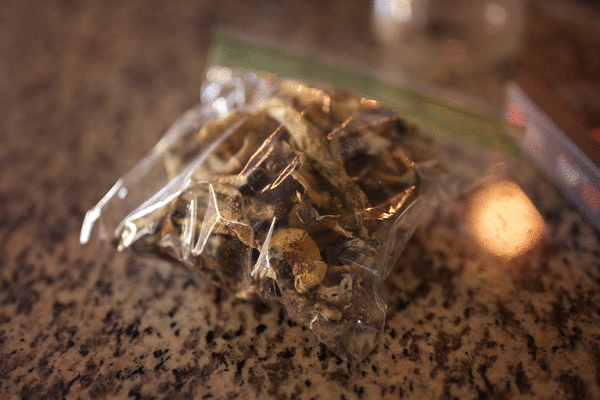
A single dose of psilocybin, the active compound in magic mushrooms, appears significantly more effective than nicotine patches at helping people quit smoking, a new study shows.
Researchers conducted a randomized trial involving 82 adult smokers who were “psychiatrically healthy.” It compared the efficacy of nicotine patches given for eight-to-10 weeks with a single high dose of psilocybin. Both treatments were combined with 13 weeks of talk therapy.
Over 40% of those in the psilocybin group weren’t smoking after six months, compared to only 10% of the nicotine patch group. At the six-month mark, those receiving psilocybin were three times more likely to have avoided cigarettes in the previous week, and six times more likely to stay off nicotine long term.
In 2022, half of American smokers attempted to quit, with a 1 in 10 success rate, according to the latest data from the Centers for Disease Control and Prevention. Existing treatments such as medications, antidepressants, nicotine replacement therapy and counseling typically fail after six months, according to the study published Tuesday in JAMA Network Open. It’s hard to stop smoking because nicotine, a stimulant and the main addictive drug in cigarettes, triggers a chemical in the brain that makes people feel good.
Researchers think psilocybin was effective because it influenced psychological systems, changed self-perception and influenced behaviors, rather than targeting withdrawal or altering the way nicotine acts in the body.
Biologically, psychedelics temporarily alter brain communication patterns and may promote neuroplasticity — the brain’s ability to form new connections, said lead researcher Matthew Johnson, a professor of behavioral pharmacology at Johns Hopkins University.
“During the trip itself, the brain is communicating with itself in a radically different way,” he explained.
While some participants were fascinated by the effects of psychedelics, most were just desperate to quit smoking, Johnson said. Smoking kills about 480,000 people in the U.S. annually and more than 8 million globally, according to data provided in the study.
“They’d say things like, ‘I’ve tried everything but the kitchen sink,’” Johnson said. The results were better than expected, he added.
He emphasized while psilocybin is not physically addictive, it can be abused and requires careful supervision. Participants were monitored throughout the five-to-six-hour experience, with medical staff on hand. No serious adverse events were reported, though some experienced temporary spikes in blood pressure or intense anxiety.
“People can be really anxious, even terrified during the experience,” Johnson said.
Growing interest
This was a small study, building off Johnson’s previous pilot, but the findings suggest psilocybin-assisted therapy for smoking cessation warrants larger, more diverse trials. Still, funding for psychedelic-assisted therapy has lagged. From 2006 to 2020, the National Institutes of Health did not provide direct grant support for standalone clinical trials of therapeutic psychedelic use.
“This whole psychedelic industry didn’t exist when I started this line of work,” he said.
Now, several companies are working to shed psychedelics’ countercultural image and pursue FDA approval for psilocybin-based treatments.
Political interest has also increased. U.S. Health Secretary Robert F. Kennedy Jr. has voiced support for expanding psychedelic access for veterans with post-traumatic stress disorder and has said the Trump administration wants to make such treatments available in clinical settings this year.
Johnson said responsible commercial development is likely necessary to fund the large trials required for FDA approval. While some academics are wary of profit motives in psychedelic medicine, he argues industry participation could accelerate access if safety standards are upheld.
“It could help potentially millions of people, but we have to be cautious and follow the FDA path,” he said.
_____
©2026 Bloomberg L.P. Visit bloomberg.com. Distributed by Tribune Content Agency, LLC.

Comments