Can your neighbor put a gun range in their yard? Residents of the Florida town of Lutz found out
Published in News & Features

TAMPA, Fla — When Nathalia Assaad first heard the bang, bang, bang, bang that would come to haunt her, she mistook the sound for construction.
“Wow,” she thought, pausing in her lush backyard in Lutz, a suburb north of Tampa. “Someone sure is eager to put that roof on.”
Assaad and her husband left on a trip soon after that October day, but they returned to find their street, Little Road, abuzz about the sound, now a near-daily aggravation.
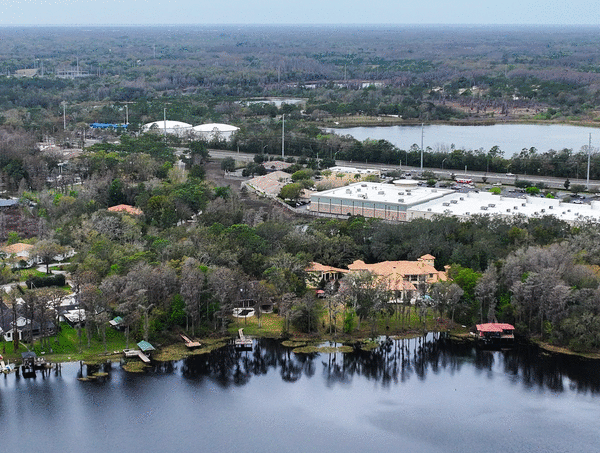
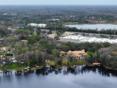
A neighbor identified the popping as the crack of gunfire, sometimes stretching for hours, and called the Hillsborough County Sheriff’s Office. Four deputies went up the long private drive to the largest home in the neighborhood, a six-bedroom, 18,000-square-foot estate obscured by trees and a tall gate that lights up dramatically at dusk.
“Property owner ... shooting on his property at targets that were set up on a berm,” their dispatch notes stated. They saw a mound of cut trees and steel sheets. The deputies deemed everything OK.
A slew of people kept hearing gunshots and calling, not only from their homes, but from businesses at the neighborhood’s edge. The shooting was happening about 700 feet from the bustling Chicken Salad Chick on Dale Mabry Highway. Since deputies had already visited, they logged the calls but didn’t follow up.
Now, months later, residents say the gunfire has shattered their peace, ruining quiet strolls and sunsets on the neighborhood’s lakes. Some fear stray bullets. Others feel unsettled by a nightly reminder of violence.
A couple whose daughter was shot to death by an ex in their home said the noise is excruciating. Their grandson with autism, whom they adopted, must wear headphones.
One person said the shooting aggravated a neurological condition. Another said her mother, scared and suffering from Alzheimer’s, can no longer sit outside with the birds. People’s dogs are freaked.
“I can’t even watch the news in peace,” said Moreb Assaad, Nathalia Assaad’s husband.
Nathalia Assaad, who got nowhere with the sheriff’s office, felt there must be some mistake. How could it be legal to shoot a gun in a neighborhood where even a loud leaf blower could violate noise rules?
“We have a Whole Foods in walking distance,” she said. “It doesn’t get more civilized than that.”
In Florida, though, suburban comforts don’t necessarily matter when it comes to firearms. She was about to learn how a flurry of gun lobbying over a decade ago led to this neighborhood stalemate.
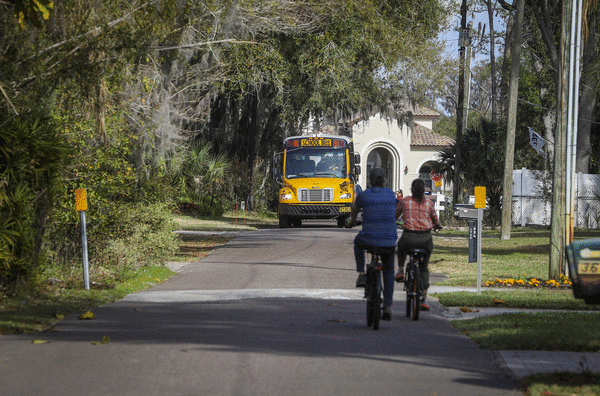
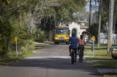
Little Road, barely wide enough for two cars to pass, meanders past older homes and the newer construction of Hillsborough County sprawl. The yards are landscaped, but giant mossy oaks lend a woodsy feel. People on evening walks wave to every car.
Nathalia Assaad is 54 and petite with thick hair she pulls back when pruning her yard. It’s a serene space and home to a family of rescue swans she and Moreb Assaad transplanted there from Lakeland, hoping to give them a better life.
She is polite and speaks formally with the soft accent of her original home in Venezuela. With Moreb Assaad, she runs an auto shop specializing in vintage Land Rovers. When a reporter visited her home this spring, she was wary of what provocations a news story might bring. But she had been desperate enough to call The Tampa Bay Times.
She once believed she could remedy the situation on her own.
When people kept getting backed up in a turn lane at a nearby stoplight, she called the county until they changed the timing.
When fracking for natural gas was on the table in Florida, she walked her neighborhood collecting signatures, went to Tallahassee and spoke on local radio.
When the gunshots started, she thought, “I’ve got this.” She was not so much cocky, she said, as she was naive. “I thought this was a no-brainer. I’m an idiot! I made myself the leader.”
She placed flyers on mailboxes asking neighbors to email her if they had a problem with the gunshots. Around 30 households wrote back. The only sign of dissent, she said, was a home that raised a flag reading “freedom” the day after her flyer went out.
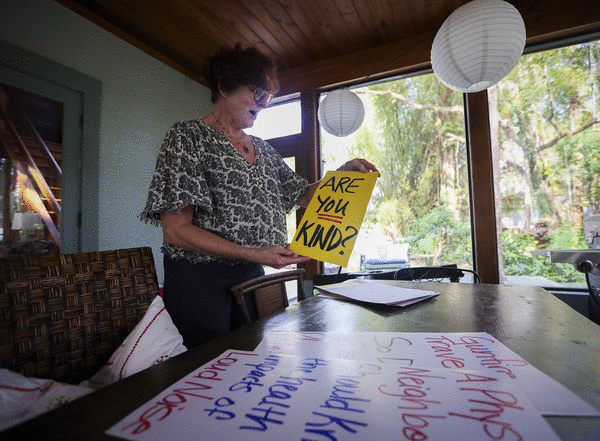
Judith Shila, an Airbnb host and singer on the mailing list, started putting up signs in her yard.
"Let peace echo, not gunfire," one read. Someone, Shila said, ripped the signs down.
The neighbors knew where the shots came from, but they weren’t sure who owned the home. Unlike most of the residents, the owners kept to themselves. From across the lake, Nathalia Assaad could see only their dock.
Property records pointed to the owner, a dermatologist named Christopher Ewanowski. The neighbors looked up his clinic’s website. A broad-shouldered man in scrubs stared back with intense eyes.
Nathalia Assaad believed more than anything that if she could just talk to the doctor, they’d work something out. She applied for the Hillsborough County court system’s free mediation program, which helps settle neighbor disputes, but the doctor did not reply. Neighbors buzzed the gate, but no one answered.
Shila wrote emails and letters to the dermatology clinic. She sent a certified letter to the home.
"I’m reaching out neighbor-to-neighbor in hope of finding understanding and compassion."
No one signed for it.
After a detective told Nathalia Assaad that deputies’ hands were tied, she contacted the Hillsborough County Commission. When an aide wrote back to say nothing could be done, she tried her state representative, leaving a voicemail with what sounded like “a war zone” in the background. The Hillsborough Environmental Protection Commission and county code enforcement were friendly but had nothing to offer.
Kelly Wright was in her kitchen on Thanksgiving morning stirring a pot on the stove. When the shooting started not long before her guests were due, she power-walked down Little Road wearing her gravy-splattered apron. When she got to the doctor’s gate, another angry neighbor was already there pushing the call button fruitlessly.
Wright screamed expletives toward the sound as loud as she could.
The only reply from the distance was bang, bang, bang, bang.
A tangle of gun-friendly Florida laws has left the neighbors parsing statutes and exemptions with increasing desperation.
State law states that it’s illegal to discharge a firearm outside in “an area” that is “primarily residential in nature.” While that sounds like it might apply to suburban Little Road, the law defines residential as one or more houses per acre. The dermatologist’s property stretches 7-plus acres, the largest in the neighborhood by far.
“And what constitutes the ‘area’?” said Kevin Friday, a Florida lawyer who specializes in defending gun rights and is not involved in the Little Road situation. The law doesn’t define the term.
And the law contradicts itself. The same statute that says you can’t shoot in a neighborhood also says you can — as long as it’s done safely.
Also in play: Florida statute 790.33. It prohibits local governments and officials from regulating firearms. The state is the only valid authority on guns. The statute carries heavy personal fines and the threat of removal from office for officials who violate it — among other big penalties — making it one of the most feared and heavily litigated preemption laws in the country.
If a sheriff’s office, for instance, applies a local noise ordinance to shooting, it could be seen as backdoor gun control.
Then there’s Hillsborough County’s noise ordinance, changed shortly after the state added penalties to the preemption law in 2011. Back then, local governments were scrambling to comply.
“No person shall make, continue, or knowingly permit … any noise disturbance,” Hillsborough’s ordinance reads, before making a specific exemption: “The lawful discharge of firearms.”
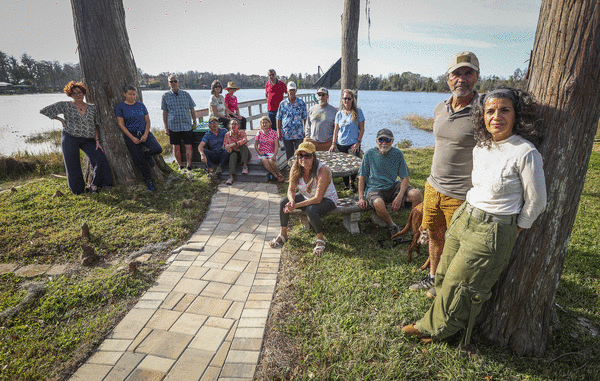
In December, more than a dozen neighbors sat in their homes and joined a Zoom call with a lawyer. Some were seeing each other’s faces for the first time via the little boxes on their screens.
Nathalia Assaad had found Okaloosa County attorney Michael Chesser online. He’d sued a shooting range in the Panhandle on behalf of a client. That case, Gartman vs. Southern Tactical Range, is pending before Florida’s Supreme Court.
Chesser agreed to advise the Lutz group. But in his mild Southern accent, he quickly broke their hearts.
He recommended fairly miserable options: Maybe they could form a homeowner’s association to make rules. Or they could pay for environmental testing to try to show whether the gunfire was hurting the water.
They could attempt a lawsuit, which might take years and cost tens of thousands, he said, but they may want to form an LLC first because there were so many people involved. They’d probably need highly paid expert witnesses. Even then the case might get thrown out.
He mentioned yet another number: statute 823.16. The Florida law shields shooting ranges, specifically, from being sued as nuisances. Whether the doctor’s setup would constitute a shooting range under the law is unclear, but possible.
The law, passed in 1999 amid a flurry of gun lobbying and “range preservation acts,” was designed to shield ranges from new homes — not the other way around.
“But we did not move next door to a shooting range,” Moreb Assaad said. “We have been here for years with peace. He came here.”
Chesser told the group about Gene and Adrienne Gartman, military vets who retired on 80 acres in the Panhandle. They built their dream home with horse stables, a pool and a white picket fence.
The Gartmans walked into Chesser’s office in Shalimar one day and pushed a newspaper ad across his desk.
"Come join us as we open a 24-hour, 360-degree cowboy gun range."
The range opened next door. Among the weapons shot there was a 50-caliber rifle.
“Do you know what that is?” Chesser said. “I know. I was an Army artillery officer.”
With Chesser’s help, the Gartmans filed a nuisance lawsuit. But when Chesser got in front of a judge, “she came very close to laughing. She probably thought I couldn’t read.” The case was thrown out because of 823.16.
Chesser appealed — and won. He argued that the law violates Floridians’ constitutional rights to enjoy their property or seek help in court.
In July, an appellate court sent the case back to the trial court. The gun range owners appealed to the Florida Supreme Court, which must decide if Chesser’s clients will get a trial.
The justices’ decision could upend decades of protection for gun ranges. Even so, the appellate court had been careful to note that its decision applied narrowly to the Gartman case.
“The Gartmans are in their late 70s now,” the lawyer told the neighbors on Zoom. “They’re 10 years older than when this whole thing began. But in reality they’re probably 20 years older because of the stress.”
The neighbors nodded. They agreed they’d have to weigh their next move carefully.
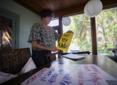
In February, Nathalia Assaad puttered to her living room with pound cake. Moreb Assaad followed with coffee. A group of 10 gathered under high ceilings on fluffy couches to talk, to plan, to rant.
“I want to sell my house,” said Kelly Wright, who lives about 10 doors down, “but I’d have to disclose the shooting.”
One held printed sheets with the heading, “talking points.” Those were for the benefit of the reporter in attendance — me. They’d voted on allowing in a journalist. Maybe a story in the Times would bring attention to what they saw as a ridiculous law and situation.
As they made small talk, Nathalia Assaad stood off to the side and spoke low enough that her guests didn’t hear.
“I had a panic attack today,” she said. When her husband traveled for business, she’d been sleeping with a chair propped against the bedroom door.
The neighbors talked about weapons. Some were gun owners. Some loved shooting “in the appropriate places.” Others wished all guns would go away.
They knew very little about the person who liked to shoot. They’d been filling that vacuum with speculation.
"It’s clear he is allowed to do what he’s doing, but that doesn’t mean he should be doing it."
"He’s a narcissist. He doesn’t care."
"He was shooting during the Super Bowl. The Super Bowl!"
"Is he even the one shooting?"
"I heard that the son is training to shoot in the Olympics."
"Is there one son, or two?"
"I heard he bought the property next door."
"I think he wants to buy the whole neighborhood."
They dreamed up arrangements that felt a bit like child custody. “What if we said, OK, Saturday from noon to 2 you can shoot?” said Chuck Kaupp, 80.
The group grumbled.
“I think he needs to take his shooting somewhere else, period,” said Ubi Fernandes, 73, who grabs his grandchildren and hustles them inside when the shooting starts. “He is making noise. Now we need to make noise about what he is doing.”
One neighbor said he’d managed to flag down a woman who lives in the home — “I’m assuming it’s his wife” — and asked if the shooter could take Sundays off.
After that, he said, the banging started twice on Sundays.
It was about 6 p.m., the time when the shooting would usually start, pointed out Lisa Hogan. Everyone stopped to listen, but it was quiet.
“I think maybe he’s not doing it because he knows you are here,” said Nathalia Assaad, seriously, gesturing toward me.
Was there a mole in the group? The neighbors wondered who might have told the doctor a reporter was looking into the story. Nathalia Assaad tried to put the conversation back on track, to focus on changing the law.
Everyone stared at the floor.
“If you write a story,” Shila asked, “will you be contacting him?”
“Of course, that would only be fair, right?” I said. “He needs to have a chance to share his side of it.”
“Yes,” she replied, “Good.”
I started doing all the things that the neighbors had done to find Christopher Ewanowski. I wrote emails and snail mail. I called more than a dozen phone numbers associated with him. I went to the gate, but either no one was home or no one cared to answer.
An Instagram account for the doctor had not been updated since a 2021 announcement that his clinic’s staff had been vaccinated for COVID-19. I could not find him in interviews or media clips other than ads for a free seminar where he spoke on skin cancer. They were more than a dozen years old.
I left voicemails, explaining that I was writing about the neighborhood and Florida’s gun laws. I knew the law was on his side, I explained, but I wanted his help explaining the shooting to readers.
Per public records, he is 53. His biography says he’s a Tampa native and a graduate of Jesuit High and the University of South Florida. After more education and training around the country, he returned to Tampa to open his practice, Suncoast Skin Solutions. According to his website, he is one of a few dermatologists in Tampa Bay specializing in highly specific skin surgeries.
I heard nothing. And just like the residents of Little Road, my mind started to wander.
Was it possible a successful skin cancer surgeon with multiple clinics, a large secluded homestead and a family was so locked into his own life that he had no idea his neighbors were talking about him — basically all the time?
Publicly available phone numbers are often outdated or wrong. Email addresses are even worse. People don’t always return phone calls from strange numbers. Important letters can get lost in the mix.
Maybe his only release was target practice. Maybe he’d assumed his property was big enough to mitigate the noise. Maybe, if he knew the neighbors were so bothered, he’d stop.
Maybe the doctor wasn’t even the shooter at all.
To Nathalia Assaad, the doctor was still a stranger, but she felt his presence in her home.
Sometimes, she said, she felt like they were in a sort of dialogue. When signs went up in the neighborhood, or when she’d send an email to the group about a plan, she heard the shots replying.
“He’s angry today,” she thought when the shooting came fast. “He’s letting me know.”
"Today the shots sounded listless, almost sad," she texted me another day. "Very strange."
“Maybe,” she said later, “that’s all in my head.”
In March, I heard from Becky Ewanowski. His wife.
She politely asked that I not call her in-laws and leave voicemails. I apologized but told her I really wanted to talk to her husband — or whoever was shooting. She said she would make sure that he got the message, that he would call me if he wanted to talk.
Again, silence.
A few days later I drove back to the neighborhood in bottlenecked rush hour traffic alongside people escaping into subdivisions, past the plaza where they picked up takeout on their way home from work. Turning onto shady Little Road felt instantly tranquil.
That day’s gunfire had stopped about 20 minutes earlier, a neighbor told me. It had been an earlier-than-usual session. I sat in the car with my windows down and listened. There was quiet now, only the sounds of mockingbirds and hawks from every direction, chirp, chirp, chirp, chirp.
©2026 Tampa Bay Times. Visit tampabay.com. Distributed by Tribune Content Agency, LLC.





Comments