Mosquitoes are thriving in LA's miserable humidity, worsening the spread of West Nile virus
Published in News & Features
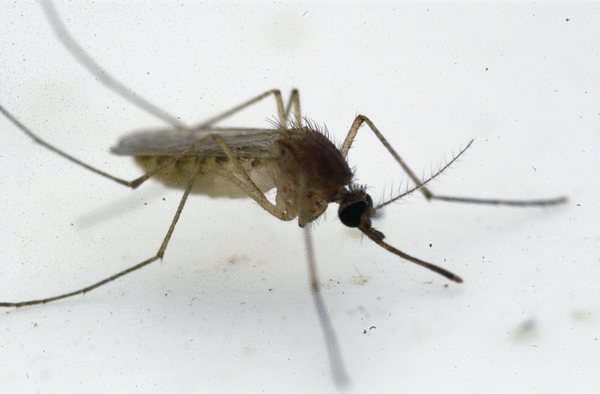
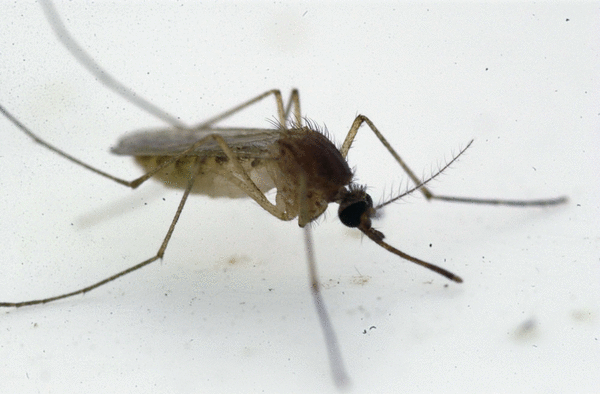

LOS ANGELES — Southern California's unprecedented humidity fueled by El Niño conditions is giving a boost to mosquitoes and helping spread West Nile virus, experts say.
West Nile virus cases in Los Angeles County are the highest they've been in more than a decade, records show.
The spike is thanks in part to Southern California's sweltering summer, with record-breaking humidity coupled with extreme heat that's being shepherded in by El Niño conditions in the Pacific, which are fueling hurricanes that send moisture to California.
The lifespan of a mosquito is dependent on several factors including species, temperature, humidity, gender and time of year, according to the Mosquito and Vector Control Association of California.
"Mosquitoes really need humidity because otherwise they desecrate," said Dr. Photini Sinnis with Johns Hopkins Bloomberg School of Public Health. "Their lifespan is determined by humidity, so if you have humidity, the infected mosquitoes will live longer and infect more people."
Southern California had some of the worst humidity ever recorded for the region this summer, experts said, which made already hot temperatures feel oppressive, sparking health concerns.
And in that humidity, mosquitoes were breeding — and biting.
"Mosquitoes are not long lived, but they can live for a few weeks and they'll take a blood meal every four days," Sinnis said.
West Nile virus cases in Los Angeles County
So far this year, Los Angeles County has seen 100 cases of West Nile virus, resulting in five deaths, the county's Department of Public Health said. In comparison, there were only 22 cases and two deaths all of last year.
Of the county's 100 cases, 73 were men, 27 were women, and the median patient age was 64.5, according to a Sept. 18 epidemiology report. Of this year's cases, about 90 people were diagnosed with a neuroinvasive disease, a condition that results in the brain and surrounding tissues becoming inflamed, possibly leading to permanent brain damage and even death, according to the Mayo Clinic.
About a third of all infected persons reside in East Los Angeles, with other cases reported in the San Fernando Valley and South Bay, according to the recent epidemiology report.
And the mosquito season isn't even over. Health officials say mosquito season typically runs from June to October and the region is on track for one of its most severe West Nile virus seasons in recent memory.
"The last time case numbers reached this level was in 2017, when 268 cases were reported for the entire season," the department said in a news release.
"West Nile virus can cause serious illness, and the number of severe cases and deaths we are seeing this year is concerning," said Dr. Muntu Davis, Los Angeles County's health officer. "We are still within the peak period for West Nile virus transmission, so it is important that everyone take steps now to protect themselves and their families."
There is no specific treatment for West Nile virus. In more severe cases, people may need to go to the hospital for supportive measures such as IV fluids, pain management and nursing care, according to the Centers for Disease Control and Prevention.
About 1 out of 10 people who develop severe West Nile virus disease affecting the brain and nervous system die, according to the CDC.
West Nile virus cases in the City of Long Beach
The city of Long Beach was the first to report a human West Nile virus case in the county.
So far, Long Beach has reported 42 West Nile virus cases this year and zero deaths.
Of the reported cases, 26 were diagnosed with a neuroinvasive disease.
The last time Long Beach had 10 or more West Nile cases was in 2017, when it had 15. Before that was in 2014, when it had 56 cases.
In response to the increase in human infections, Vector Control districts in Long Beach have increased surveillance, outreach and education, as well as mosquito control treatments in areas where cases are being identified, said Dr. Cliff Okada, health officer for the city.
Humidity and other factors driving up West Nile cases
It's well known that mosquito activity increases in warm and humid conditions, Okada said.
"Southern California experienced a very warm winter and recently has seen humid weather, which may be contributing to increased West Nile virus activity and more human infections across Long Beach as well as Los Angeles County," Okada added.
At the same time, there has been a nationwide increase in mosquito-transmitted diseases, Sinnis said, adding "I think it's fair to say that a lot of that is due to ... warming temperatures."
Earlier this summer, federal officials warned that the virus was off to the earliest start in the U.S. in 20 years.
_____
©2026 Los Angeles Times. Visit latimes.com. Distributed by Tribune Content Agency, LLC.






Comments