Lawsuit photos show California police officer smiling over a handcuffed woman, 66, who later died
Published in News & Features

SACRAMENTO, Calif. — On the morning of Nov. 17, 2024, Nyota Koya, a 66-year-old Black woman from Roseville, lost consciousness during an encounter with a Sacramento police officer named Matthew Sterling. She died a week later without ever regaining consciousness.
Nearly two years later, the Sacramento Police Department still has not told her daughter and the public whether it disciplined the officer. Now Koya’s daughter is left to seek damages through a lawsuit.
Koya had been stranded in a parking lot at Haggin Oaks Golf Course near the eastern border of the city of Sacramento after her electric car’s battery died, according to court documents. Responding to a report of trespassing, Sterling approached her just before 10 a.m. He offered to take her to a shelter and have her car towed. A second officer was with Sterling initially but left the scene for a time.
More than two hours later, with her removal from the property still unresolved, Sterling forcibly pulled Koya from the car at 12:22 p.m., according to body camera footage provided to The Sacramento Bee by Koya’s daughter’s legal team. The second officer eventually returned to the scene. He is not named as a defendant in the lawsuit.
Sterling then pushed her face down to the asphalt, placed his knee on her back, and handcuffed her, the footage shows. At 12:35 p.m., paramedics arrived and reported that she didn’t have a pulse before taking her to Mercy San Juan Medical Center, where she died on Nov. 24, 2024.
The lawsuit includes two body-camera screenshots showing Sterling, who like Koya is Black, smiling as he kneels over her. She is lying on her side on the asphalt, wearing a bathrobe, her gray hair in a bun, with her hands cuffed behind her back. When seen on the body-cam video, the smiling moment happens quickly.
The exchanges Koya had with Sterling before she lost consciousness form the basis of the civil lawsuit that names the city of Sacramento, the Sacramento Police Department, Sterling and then-Police Chief Katherine Lester as defendants. Brought by Koya’s estate and daughter Nathifa Wright, it’s being heard at Sacramento’s United States District Court and seeks damages for 17 claims, including false detention, excessive force and wrongful death. The case is assigned to United States Magistrate Judge Chi Soo Kim.
Koya’s case shares similarities with an incident in Elk Grove last year in which Scott Saetern, 37, was suffering an apparent mental health crisis when police in that city placed him in a restraint device and left him alone. Saetern later died.
Following a Bee report on the Saetern incident, California Assemblymember Nick Schultz, D-Burbank, said he is considering introducing legislation next year that would widen the scope of transparency laws that make police service records publicly available in shooting deaths and certain other cases. State law requires police to release footage when they shoot people, but the law does not always extend to compression or asphyxia deaths while people are restrained, either by a device or by the bodies of the officers themselves.
Advocates for Koya say her death demonstrates that more non-shooting police deaths should be subject to public scrutiny.
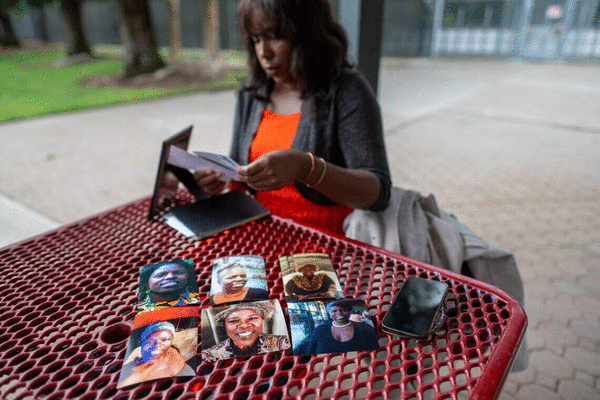
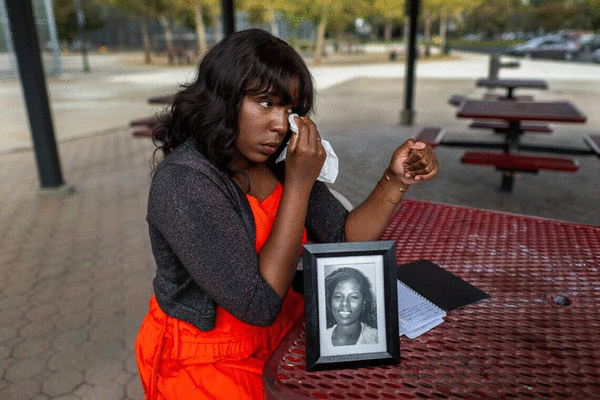
“Who investigated this and what did they conclude?” said Wright, a Roseville resident, in an interview with The Bee. “Show me that. I never heard anything. She deserved respect. Not to be treated like a dog on the street. Or worse.”
Sacramento police hired Sterling in 2022, the same year he graduated from the police academy, according to records from Wright’s attorney. In 2025, according to a document The Bee received from a California Public Records Act request, he earned $226,528, including $129,200 in overtime pay. From 2025 to 2026, he received a raise in base salary from $96,675 to $119,246.
City spokesperson Jennifer Singer confirmed that Sterling remains employed by Sacramento police but that they couldn’t comment further “on pending litigation or confidential personnel matters.”
Sterling did not respond to emails seeking comment.
Koya’s daughter says she has been frustrated by California laws that maintain strict confidentiality of police personnel records. SB 1421, signed into law in 2018, made it possible for the public to access records detailing whether an officer was disciplined for certain deaths, and how.
If Koya had died as a result of gunshots by a peace officer, state law would grant Koya’s daughter and the public access to those records.
But the standard for non-shooting deaths in the custody of peace officers can be open to legal interpretation, as it is in Koya’s case. Andrea Velasquez, a deputy city attorney for Sacramento, said in an email that whether police caused Koya’s death is “very much in dispute.”
The Sacramento County coroner listed Koya’s cause of death as “complications of pulmonary thromboembolism due to deep vein thrombosis.” Essentially, that means a blood clot in her leg got loose and traveled to her heart. Notably, it classifies the manner of death as natural, not a homicide.
Koya’s lawyers contend that she was in visible distress on the day she was handcuffed by Sterling.
“(Koya) displayed behavior that (Sterling) knew or should have known required immediate attention,” the lawsuit says. The suit includes a timeline of events and exchanges between Koya and Sterling that grew tense as time went on.
“I’m gonna tell you what I’m gonna do now because I got to a point I don’t care anymore,” Sterling can be heard saying on the body camera footage obtained by Wright’s attorney. “I gave you options, you declined the tow truck … since you have that trespass (notice), I can arrest you on a misdemeanor trespass so we can take you to jail and you leave your car here … that’s about to be my option within the next five minutes.”
Koya asked to be transported to her daughter’s home in Roseville, but Sterling said it was outside his jurisdiction, according to the video.
The footage shows Koya began crying when Sterling put her on the ground.
“Can you help me can you, please please ...” Koya cries into the asphalt.
In the tussle between the two, Koya’s light gray robe flies up, exposing her undergarments. Sterling then puts his hands in her robe pockets and empties her coins and cash on to the asphalt.
“I’m done playing your game. I played your game for an hour and a half,” Sterling says.
Sterling then stands Koya up and tells her to climb into the back seat of his patrol car. As he’s holding her up next to the car, her head rolls back and her eyes go to the back of her head.
At 12:28 p.m., he places her on the ground and calls for paramedics. He keeps the handcuffs on. At 12:35, paramedics arrive. There is no pulse.
Paramedics transported Koya to the hospital and called her daughter the next day. Wright said paramedics told her that her mom had a 0.001% chance of surviving.
“She was my world,” said Wright, 37.
“We just had each other. Being a mother was a big part of her life’s purpose. If she was in conversation, I’d probably come up.”
Koya lived with her daughter but moved out in May 2024 to give her some privacy. She lived in a Roseville house with two other women but remained extremely close to her daughter.
Wright misses her mom often — whenever she looks at the plant she gave her or tries to cook one of her favorite recipes.
“I’ve been lost,” Wright said.
Koya’s family filed its lawsuit in September 2025. Family lawyers are currently presenting evidence to the judge.
____
©2026 The Sacramento Bee. Visit at sacbee.com. Distributed by Tribune Content Agency, LLC.






Comments