Will Massachusetts ban crypto kiosks, known to scam victims?
Published in News & Features
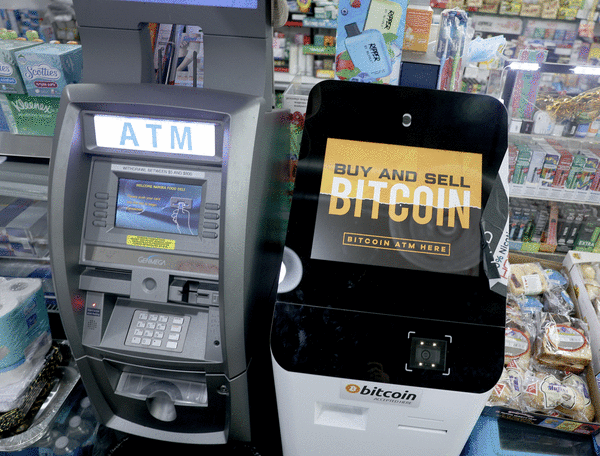
As 2027 nears, so too does a deadline to ban crypto currency machines in the Bay State.
Proposed legislation that would prohibit the ATM-looking apparatuses, found often in gas stations and convenience stores, needs to be passed and signed into law by Jan. 5 or it will have to be reintroduced in the next session.
The ban was included in an amendment to the economic development bill still in conference committee, according to its sponsor Sen. John Cronin, a Democrat representing parts of Worcester and Middlesex counties.
Cronin isn’t on the committee and said he couldn’t comment on the ongoing negotiations, but he told the Herald that he hopes Massachusetts will “stop being a soft target” for this kind of theft.
“There’s a growing awareness of the harm that this industry and these machines do to our community and our residents,” he said.
There had been a bill put forward that would have regulated the machines where customers are often directed by scammers to exchange their money into cryptocurrency to transfer to bad and often untraceable actors.
Other states have sought to just regulate the kiosks, rather than ban them, Cronin said, “but the fraud doesn’t stop and the thefts don’t stop.”
Essex District Attorney Paul Tucker said he became aware of the issue when police departments and individuals themselves started coming to his office, complaining of scams involving the machines.
“We’ve really tried to sound the alarm on the dangers of these crypto kiosks,” Tucker said in an interview, describing them as “a portal for scammers to separate people from their hard-earned money.”
His office has been part of a campaign to make residents aware of the risks and permanently eliminate them in Massachusetts.
Several communities have taken action themselves, including municipalities in his neck of the woods, including Haverhill, Gloucester, and Peabody, but Tucker said it’s not enough.
“We really need a state-wide ban,” he said.
Citing an Iowa Attorney General study of the kiosks, Tucker said that upwards of 90% of transactions on certain companies’ machines are scams.
The Iowa AG ended up suing some crypto kiosk operators, as have AGs in the District of Columbia and here in Massachusetts.
The suit filed by Attorney General Andrea Joy Campbell against Bitcoin Depot sought a court order to prevent the company’s kiosks from processing large transactions without fraud protections and to refund customers who’d been scammed.
Since the suit was filed, Bitcoin Depot has declared bankruptcy and the lawsuit remains in state court.
For Tucker, there isn’t a good reason to use the machines. Anyone using them for a legitimate crypto purchase would be better served by other brokerages because the kiosks charge “exorbitant fees,” he said.
Although his office has seen victims of all ages, he said often older adults are the targets of these scams, and the Massachusetts AARP is also supporting the prohibition.
“A ban on crypto ATMs is now the most effective way to stop the ongoing damage,” the organization’s state director Jen Benson said in a statement supporting the legislation. “Despite our efforts to push for straightforward consumer protections, these machines continue to operate without safeguards, causing people to lose their life savings. It’s clear that more decisive action is needed.”
Tucker said the kiosks appear legitimate and familiar to victims: “They make them look like ATMs … They operate the same.”
When asked whether the store owners where the kiosks are installed could be persuaded to get rid of them, Tucker said he thinks it will take the force of law to stop the situation.
“This is a money maker,” he said, explaining the stores are “renting a three-by-three space and getting hundreds of dollars.”
At least four states, Indiana, Minnesota, Tennessee and Vermont, have all banned the kiosks, and Tucker said it’s the only way for Massachusetts to follow suit.
“We’re in the hundreds of millions of dollars now statewide of how much people have lost in these crypto kiosks machines,” Tucker said. “It’s at a critical point now, I don’t think it’s an underestimate to call it an epidemic.”
While he hopes and waits for the legislation to move, Tucker said he’s been visiting Council on Aging programs, giving talks about the kiosks and telling people to be wary.
His office also created a PSA with a kiosk scam victim who was cheated out of $13,000 in a cryptocurrency scheme.
“It’s pretty powerful,” he said. “We feel the more we get the world out … maybe we can stop some of these folks from being scammed.”
_____
©2026 MediaNews Group, Inc. Visit at bostonherald.com. Distributed by Tribune Content Agency, LLC.





Comments