Bad Bunny is the latest, but not the first, Latino artist to win album of the year
Published in Entertainment News
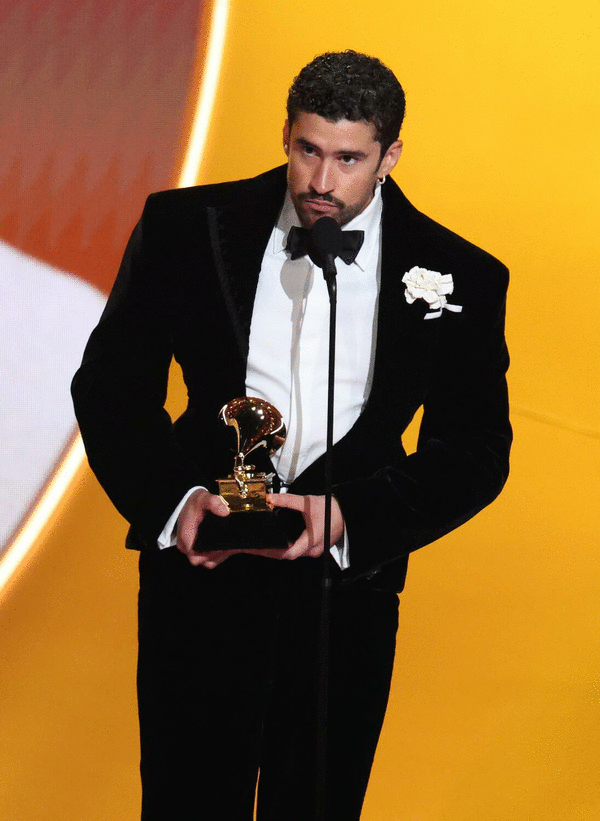
On Sunday, Bad Bunny’s seminal “Debí Tirar Más Fotos” made history when it become the first predominantly Spanish-language release to win album of the year at the 68th Grammy Awards.
With this win, the Puerto Rican artist became the third Latino act to win the highest honor at the ceremony — joining Santana, led by the Mexican guitarist Carlos Santana, and Brazilian musician João Gilberto.
Santana took home the prize at the 42nd Grammy Awards in 2000 for its 1999 LP “Supernatural.” The album included the radio hits “Smooth,” which featured Matchbox Twenty singer Rob Thomas; “Maria Maria,” featuring the Product G&B; and “Corazón Espinado,” with an assist from Maná.
The renowned now 78-year-old guitarist was the first Hispanic act to win the Grammy award for album of the year, and “Supernatural” remains the one of the bestselling albums of all time with over 30 million copies sold.
At the 7th Grammy Awards in 1965, American saxophonist Stan Getz and Brazilian guitarist Gilberto won album of the year for their acclaimed LP “Getz/Gilberto,” which featured the genre-defining hits “Desafinado” and “Garota de Ipanema.”
Gilberto was the first Latino artist to be awarded the prize, which helped popularize his homeland’s popular bossa nova genre worldwide. It was also the first jazz album to win in the category.
Lauded Brazilian pianist Antônio Carlos Jobim helped compose many of the tracks on “Getz/Gilberto,” but was not part of the team that received a Grammy award. Similarly, singer Astrud Gilberto, whose vocals are featured on “Garota de Ipanema,” was not awarded in the album of the year category. However, she was awarded the Grammy for record of the year at the same ceremony for her work on the track — making her the first Latina to win in that category.
When accepting his album of the year award Sunday night, Bad Bunny addressed the crowd predominantly in Spanish and expressed solidarity with Latino and immigrant communities.
“I want to dedicate this award to all the people who had to leave their homeland, their country, to follow their dreams,” he said in English.
“Puerto Rico, believe me when I say that we are so much bigger than 100 by 35 and there is nothing that exists that we can’t accomplish,” he said in Spanish. “Thank God, thank you to the academy, thank you to all the people who have believed in me throughout my whole career. To all the people who worked on this album. Thank you, Mami, for giving birth to me in Puerto Rico. I love you.”
----------
©2026 Los Angeles Times. Visit at latimes.com. Distributed by Tribune Content Agency, LLC.










Comments