Appreciation: Remembering Tom Skerritt for his rich mix of little gems
Published in Entertainment News
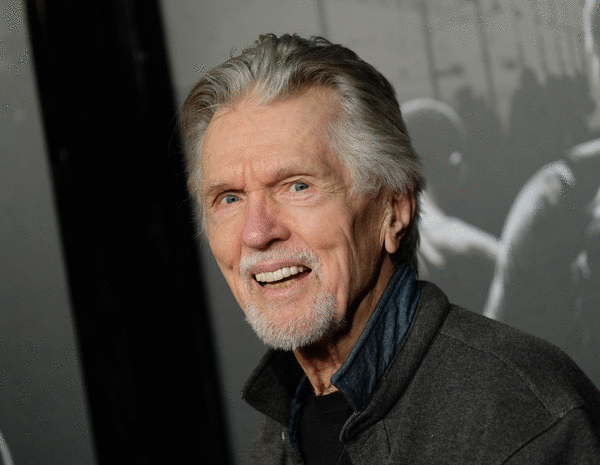
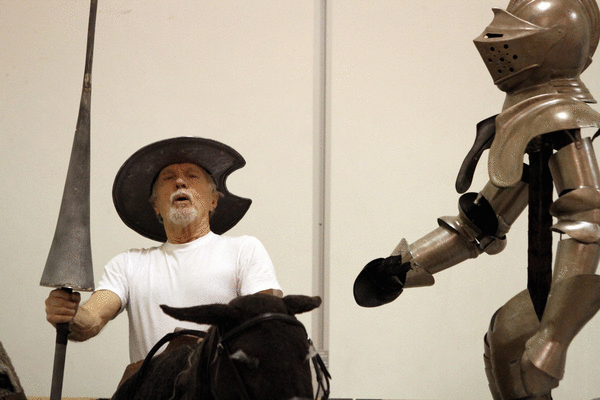


SEATTLE — My favorite Tom Skerritt performance wasn’t in a movie or a television show, and it’s not available for streaming in its entirety; it fully lives on only in the memories of those lucky enough to have seen it. In 2012, and again in 2015, Skerritt performed the title role in Pacific Northwest Ballet’s production of “Don Quixote.” Don Q, as he’s called, is a mostly nondancing role: Cervantes’ famous knight errant, who nobly dreams of a better world. It was a bold challenge for Skerritt, then in his late 70s and without professional dance training, but one into which he threw himself wholeheartedly. His Don Q had a gentle grandeur and a haunted, otherworldly quality; you couldn’t take your eyes off him, standing still and rapt as dancers whirled around him, or finding his own cautiously joyful dance steps in a dream sequence. He let us see that he was dazzled by the dancers and by the beauty of Quixote’s visions — and we, in turn, were dazzled by him.
Skerritt was, of course, better known for his screen work. He died last week at his Seattle home, at the age of 93, leaving behind a vast legacy in film and television. My awareness of him goes back a long way, to my days as a ballet-obsessed teen who loved the 1977 dance film “The Turning Point.” In that film, playing a former dancer who was now a loving husband and father, Skerritt didn’t do a single step of ballet, and yet he moved with such ease you believed that he could. In that movie, and so many other movies and television roles following it, his persona was that of a kind and decent man — one who listened, who sympathized, who dreamed. (Those of us who were teenage girls in the late '70s also remember him as another kindly, handsome dad: Marcus Winston in “Ice Castles.”)
Though many of us knew him for his roles in big Hollywood movies — “Alien,” “Top Gun” — the ones that stuck with me the most through his long career were a rich mixture of little gems: quiet Rev. Maclean in “A River Runs Through It”; daffy but affectionate Drum Eatenton in “Steel Magnolias” (was ever a man more proud to be walking his daughter down the aisle?); pompous one-percenter Evan Drake in “Cheers” (though there was the tiniest twinkle of kindness in the man, if you looked hard); the raspy-voiced mayor of Seattle in “Singles,” who didn’t raise his voice because he didn’t need to. And I envy anyone who saw him locally in “Our Town” at Intiman Theatre in 2004; I didn’t see it, but what a perfect piece of casting as the kindly, wise Stage Manager, who quietly watches all. It’s too easy — and especially poignant now — to imagine his softly raspy voice, saying, “Eleven o'clock in Grover's Corners … You get a good rest, too. Good night.”
Skerritt, originally from Detroit, had made Seattle his home since the 1980s; he was, for quite a few of us, the movie star next door. He didn’t just live here but immersed himself in the local culture: teaching screenwriting, serving on nonprofit boards, sharing his gifts. If you look at the comments attached to his Seattle Times obituary published last week, you see many of them mentioning Skerritt’s involvement with local arts (particularly the Seattle film industry) and his kindness and friendliness to anyone who approached him. Of the many tributes I saw to him online, one of the most moving was perhaps the simplest. “He lived a long and good life,” wrote John N. Maclean, grandson of the real-life Rev. Maclean whom Skerritt played in “A River Runs Through It,” on Facebook, “and his heart was in the right place.”
Though I interviewed Skerritt several times over the last few decades — he was always thoughtful in his conversation and generous with his time — I certainly couldn’t say that I knew him. Actor interviews are a curious, semi-social experience; you never really know who you're talking to. But it's funny how people we see onscreen become people we think we know. It’s an actor’s job to become somebody else before our eyes, but the good ones have a way of bringing a bit of themselves to it, of making the performance believable because it's grounded in something real, something recognizable. Sometimes, what shines through a performance is what a person truly is.
You can, if you want one last moment with Skerritt, see just a bit of “Don Quixote” online; PNB made a short video in 2015 with footage of the performance, still posted on YouTube. In it, Skerritt speaks of his initial reluctance to take on the role, due to his age, but “the challenge of what we do is one of the reasons we do it.” And you watch him as Don Q, white-haired and regal and yet sweetly vulnerable, and you see both the man he’s playing and the man he is, twisted together into one beautiful thread.
“I’m a clumsy ox who doesn’t dance well enough, but I have my ideals and hopes — the way Don Quixote did,” Skerritt told me in a 2012 interview. “The dreams never go away.” How lucky we are that he shared so many of them with us.
© 2026 The Seattle Times. Visit www.seattletimes.com. Distributed by Tribune Content Agency, LLC.










Comments