Commentary: Patrick Stewart embodied the value of aging actors
Published in Entertainment News
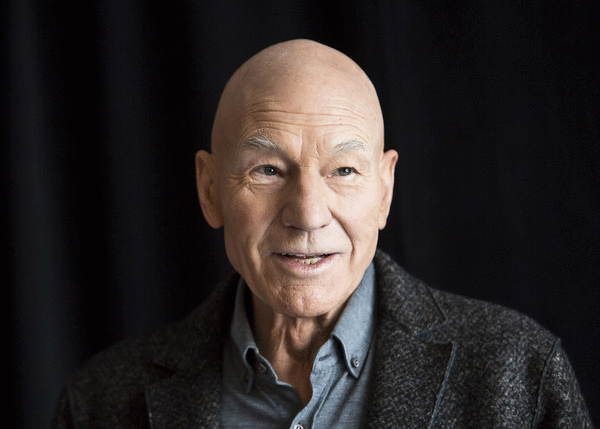
For generations of fans, prolific actor Patrick Stewart had become inseparable from the characters he played. So when news came that he died on Oct. 28, many paid tribute to the 86-year-old by invoking the fictional icons he left behind.
While his career spanned decades and encompassed many kinds of roles — from Royal Shakespeare Company productions to a low-budget A24 thriller — nothing looms as large in popular culture as his work in the "Star Trek" and "X-Men" projects. It’s only fitting, then, that Stewart’s final film role will be in "Avengers: Doomsday," returning for the ninth time as the mutant Charles Xavier.
That superhero fans and Trekkies alike hold such affection for his characters, which he continued playing well into his 80s, isn’t just a testament to their longevity; it shows the value of highly skilled aging actors in an industry that tends to overlook them completely or fails to make the most of their talents.
Stewart’s enduring appeal is hardly an anomaly. A January survey of 2,013 adults conducted by AARP found that 93% of Americans were likely to watch movies or TV shows with actors over 50 in leading roles, including 87% of viewers under 35. Yet older actors remain underrepresented onscreen.
Even when they do appear, casting them isn’t enough. Hollywood can fail aging actors for many different reasons, but the most relevant to Stewart’s career may be studios’ tendency to pander to nostalgia rather than treat the passage of time as a meaningful opportunity for new dramatic exploration.
Now, to be fair, Stewart’s later work certainly benefited from moviegoers’ history with his characters. But his continued presence in franchises offered something more than familiarity. His presence underscored the essential role that actors with real gravitas play, particularly in franchise filmmaking.
Stewart’s career is a reminder of what audiences stand to gain when filmmakers recognize the difference.
Hollywood has historically relied on seasoned actors with classical training and dramatic authority to lend credibility to material that might otherwise seem outlandish. Think Alec Guinness as Obi-Wan Kenobi in the original "Star Wars," or Ian McKellen as Gandalf in "The Lord of the Rings" trilogy. Stewart is a worthy extension of that tradition. A longtime veteran of British theater, one of his greatest strengths as an actor was a commanding baritone voice that exuded authority. That presence was key to his celebrated performance as Xavier in the "X-Men" franchise.
The wise, compassionate leader of the X-Men, Stewart’s role throughout the series was defined less by action than by ideological conflict. Notably, Xavier shared a lot of screen time with McKellen’s Magneto, the franchise’s main foil who believed mutants and mankind could never coexist.
As a franchise, the "X-Men" films released by 20th Century Fox had their highs and lows. (The less said about "X-Men: The Last Stand," the better.) But in its finest moments, Stewart wasn’t just lending Shakespearean prestige to comic book movies at a time when they weren’t guaranteed box-office draws: He grounded the franchise in recognizable themes of tolerance, prejudice and coexistence.
The actor was 60 when the first "X-Men" film was released in 2000, but the longer he played Xavier, the more opportunities the franchise found to evolve his role in the story. In 2017’s "Logan," Xavier goes from the franchise’s unshakable moral compass to a vulnerable figure confronting his own mortality. Seeing an iconic character at their lowest point wasn’t just a bold narrative choice, but one that allowed Stewart to give the character a new emotional dimension.
This kind of evolution is essential when franchises age alongside the actors most synonymous with them. It’s one of the elements that made "Top Gun: Maverick" memorable, particularly in the pivotal scene reuniting Tom Cruise’s Maverick and Val Kilmer’s Iceman. The moment draws on the weight of the shared history between the characters, and the film’s decision to factor Kilmer’s real-life illness into Iceman’s storyline makes the passage of time feel consequential.
By contrast, some modern franchises seem to believe that the mere presence of seasoned actors in familiar IP is enough. "Jurassic World Dominion" brought back the trio of Sam Neill, Laura Dern and Jeff Goldblum, but didn’t give them much to do besides remind other characters (and the audience) that they’ve been in dino-disasters before. "Ghostbusters: Afterlife" adopted a similar playbook. The legacy sequel resurrected the late Harold Ramis as a CGI ghost, which came across as manipulative rather than earned, and reunited its original Ghostbusters in a finale that invited the audience to cheer for their arrival and little else.
Other times it’s us, the viewers, not the studios, that need to change our limited thinking. Moviegoers can have an adverse reaction to character reinvention. Consider the backlash to Luke Skywalker in "Star Wars: The Last Jedi." Some fans didn’t appreciate the once-hopeful character being transformed into an older, bitter man disillusioned with the Jedi Order.Even if it doesn’t earn universal approval from audiences, however, a reimagined role that subverts expectations accomplishes what a long-running franchise needs to remain vital: It takes a bold swing. When aging actors are brought back simply to check a box, the result isn’t just underwhelming but can also be creatively limiting. Recognition isn’t a meaningful payoff in and of itself.It remains to be seen how "Doomsday" will handle Stewart’s final performance as Charles Xavier because his involvement — in typical Marvel fashion — has been shrouded in secrecy. But the best way to honor the actor’s decades-long history with the character will be to avoid leaning on that history as a crutch and give Xavier a return worthy of Stewart. Make it so!
———
This column reflects the personal views of the author and does not necessarily reflect the opinion of the editorial board or Bloomberg LP and its owners.
Miles Surrey is a Brooklyn-based culture writer. His work has also appeared in The Ringer, Men’s Health, and Vox.
©2026 Bloomberg L.P. Visit bloomberg.com/opinion. Distributed by Tribune Content Agency, LLC.











Comments