Is Elon Musk setting his sights on Hollywood?
Published in Entertainment News
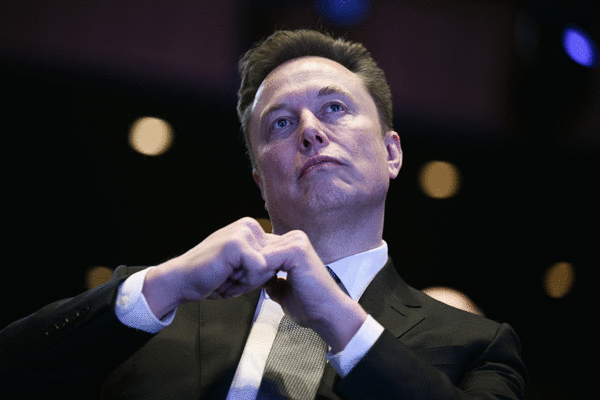
LOS ANGELES — Elon Musk has already taken over aerospace, social media and the electric vehicle industry. Is Hollywood next?
The trillionaire behind Tesla, SpaceX and social media platform X is making inroads into the entertainment business at the same time a documentary about his rise to power is raising questions about his motives.
Musk’s foray into Hollywood became publicly known late last month, when he invested about $1 billion in the newly combined Skydance, according to media outlet Semafor. The move rattled many in Hollywood, where there is deep suspicion of Musk’s ties to the Trump administration, where he previously co-ran the so-called Department of Government Efficiency.
Skydance, of course, is run by David Ellison, son of Oracle co-founder Larry Ellison, with whom Musk reportedly has a friendly relationship. The investment comes as Skydance faces more than $80 billion in debt from the merger of Paramount Skydance and Warner Bros. Discovery.
Then, about a week and a half ago, Musk’s artificial intelligence image and video generator Grok Imagine released an episode of “The Odyssey,” fulfilling Musk’s pledge to make his own version of the Greek epic in protest of the perceived “woke” elements of Christopher Nolan’s interpretation. The blockbuster has now grossed nearly $1.8 billion worldwide.
The seven-minute episode, which shows Odysseus leaving his family in Ithaca to fight in the Trojan War, was a collaboration between U.K.-based AI film studio Wonder Studios and director Dev Walker. Online comments have been largely critical of the episode’s quality.
Paramount declined to comment at the time on the reported investment, while representatives for Musk at his SpaceX company did not respond to a request for comment.
Now why would Musk — who seemingly has no experience in liberal Hollywood — want to start venturing into the entertainment space, particularly content production? The answer could be twofold.
“I suspect his motives are a mix of a profit-oriented desire to demonstrate the capabilities of the Grok AI and a personal desire to express cultural and political reservations about the Nolan ‘Odyssey,’” Gabriel Rossman, a UCLA professor who studies cultural industries and economic sociology, told me via email. “It is not unheard of for wealthy people to get involved in film in part as a profit-seeking interest, but also as a form of cultural patronage and an attempt to shape the culture.”
That culture-shaping aspect and Musk’s effect on society as a whole are the subject of director Alex Gibney’s recent documentary, “Musk.” The nearly four-hour film chronicles the rise of Musk’s companies, his takeover of Twitter and, eventually, his dominant role in the Trump White House, all while questioning how the U.S. government allowed him to amass such power.
The film is a bit of a departure for indie distributor Bleecker Street, which doesn’t release a lot of documentaries but acquired the U.S. rights to “Musk.”
“If we were going to do a documentary, this felt like the one to do,” Bleecker Street Chief Executive Kent Sanderson told me. “Yes, it’s the story of one man, but it’s one man who really touches every aspect of the way our society is evolving right now.”
But getting the documentary in front of audiences has been a fraught process, at best. For a time, social media and tech platforms including Meta, YouTube, TikTok and Musk’s X wouldn’t run paid ads for the film’s trailer.
“That is something that I’ve never experienced in 20-plus years of movie marketing,” Tyler DiNapoli, Bleecker Street’s president and chief marketing officer, told me.
TikTok went a step further. It “permanently suspended” the documentary’s ad account on the day of its wide release in mid-October, a move that was eventually reversed. A TikTok spokesperson later said it was an “error,” but the action fueled concerns that the platform was suppressing an unflattering portrait of a powerful tech titan.
“It’s impossible for us to say what the impact was, but without a doubt, it has an impact on the campaign,” DiNapoli said.
TikTok is partially owned by Oracle, where Larry Ellison still serves as chief technology officer and executive chairman. He has a brief mention in the “Musk” documentary in the form of a screenshot text message in which he offers to chip in $2 billion to help Musk acquire Twitter.
So far, the documentary has made more than $718,000 in theaters. Viewers can pay to rent or own the film and watch at home starting Nov. 6, and the documentary is set to debut on HBO Max in early 2027. HBO is now owned by the David Ellison-led Skydance.
All of this has raised questions in Hollywood about Musk’s intentions, and by extension, what it means to have tech more and more infused into entertainment.
“Culture is shaped from film,” said Steve Caplan, a lecturer at Loyola Marymount University who teaches courses on media and marketing. “And I think Big Tech has a very different view on culture and creativity.”
©2026 Los Angeles Times. Visit at latimes.com. Distributed by Tribune Content Agency, LLC.






Comments