
My Pet World: A thirsty cat and a trembling dog need a closer look



Dear Cathy,
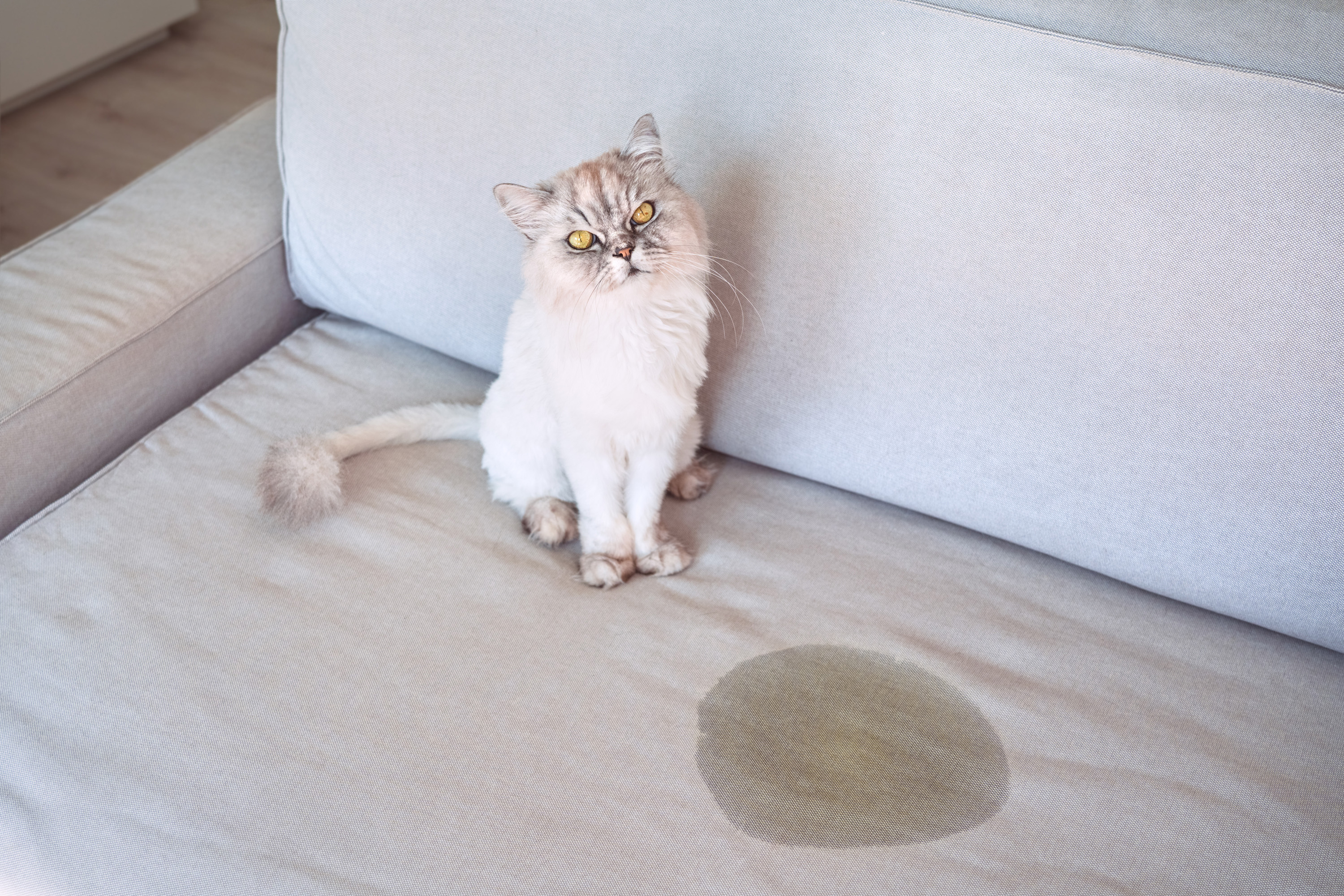
I spend time at my son’s house watching my grandson and visiting with their two, seven-year-old rescue cats. They are both mature, litter-trained, well-behaved cats. Recently, there has been an incredibly pungent smell of ammonia from their litter area. One or both are really missing the litter box. One of them is also drinking lots of water. (Kidneys perhaps?) I am just an observer, but we need your help.
— Barbara, Long Island, New York
Dear Barbara,
You may be “just an observer,” but noticing a sudden change like this can be very important.
My first recommendation is a veterinary exam, especially for the cat who is drinking so much water. Increased thirst and urination can be signs of kidney disease, diabetes, hyperthyroidism, a urinary tract infection, bladder stones, or other medical problems. The odor may not mean one of them is missing the box, either. One cat may simply be producing much more urine than before, leaving the litter and the surrounding area more saturated.
Since you don’t know which cat is responsible, aim a camera at a water bowl and/or litter-box to identify who is drinking more, who is producing the larger urine clumps, and whether one cat is actually urinating over the edge of the box. (I assume they are both neutered.)
I also want your family to know the signs of a urinary emergency. If either cat repeatedly enters the box, strains, cries, licks himself excessively, or produces little or no urine, he needs immediate vet care.
If both cats are healthy, look at their litter-box setup. With two cats, there should, ideally, be three boxes in different locations. Make them large and uncovered and scoop them at least twice a day. One cat may stand higher when he urinates or may no longer squat as deeply as he once did (getting older will do that), so a roomy box with high sides and a low entrance can help keep the urine inside while still being easy to enter.
When it comes to cleaning, use a blacklight to look for dried urine around the boxes, on the wall, and along nearby baseboards. Clean anything you find with an enzymatic cleaner made specifically for cat urine. Regular household cleaners may remove the visible mess but it won't remove what the cats can still smell.
Finally, if stress or territorial marking end up being part of the problem, get a feline pheromone diffuser for a multi-cat household and plug it in near the litter box, or two pheromone collars, one for each of them to wear.
But I think one of the cats has a health problem, so going to the vet is the first thing to do.
Dear Cathy,
We have a two-year old female Boston Terrier, who fears riding in the car no matter the destination. She loves the dog park, or going for a walk, seeing the vet, or staying with my daughter.
Yet, as soon as she knows a car ride is imminent, she starts trembling. Often, she’ll slink off to her crate. Once in the vehicle, it’s the same trembling or cowering. For long trips, we use her crate. She is crate trained and loves it, but she shakes, stands for hours, and never gets comfortable. Yet, once arriving at our destination (dog park, store, etc.), she bounds out of the car happy as can be.
She has never experienced anything unusual in a car, so there shouldn’t be latent bad memories. I don’t like that she’s so terrified of car rides. Can’t be good for her little psyche. Any tips on how to reduce this automotive induced anxiety?
— Larry, Blacksburg, Virginia
Dear Larry,
The “something bad” may not have been a particular event. Stella may simply get extremely motion sick in the car. Dogs experiencing motion sickness may drool, pant, tremble, stand rigidly, or simply look miserable. Talk to your veterinarian about her trembling and inability to settle. They may recommend an anti-nausea medication, an anti-anxiety medication, or both. Be sure to test any medication on a short trip before relying on it for longer travel.
In the meantime, train her to accept car rides by starting her in a parked car. Reward Stella for approaching it, then for getting in and immediately getting out. Once she is comfortable, progress to sitting in the car with the engine running, then backing out of the driveway, and eventually driving around the block. Move slowly and stop each session before she begins trembling. Over time, and with medication, she should learn to feel safer on these trips.
_____
_____
========
(Cathy M. Rosenthal is a longtime animal advocate, author, columnist and pet expert who has more than 25 years in the animal welfare field. Send your pet questions, stories and tips to cathy@petpundit.com. Please include your name, city, and state. You can follow her @cathymrosenthal.)
©2026 Tribune Content Agency, LLC.
(c) 2026 DISTRIBUTED BY TRIBUNE MEDIA SERVICES, INC.






Comments