Halfway through Florida's bear hunt, state officials won't say how many bears are dead
Published in Science & Technology News
Florida’s first statewide black bear hunt in a decade is more than halfway over but state wildlife leaders have offered no information on its progress, not even a death count.
“Are we overkilling like in 2015?” asked Joe Humphrey, a Seminole County resident who described himself as a hunter at odds with the Fish & Wildlife Conservation Commission’s position that a bear harvest would not harm the once threatened species. “They don’t want us to know.”
Whatever its motivation, the DeSantis administration’s approach to managing the hunt that stretches from December 6-28 is strikingly different from what was done a decade ago.
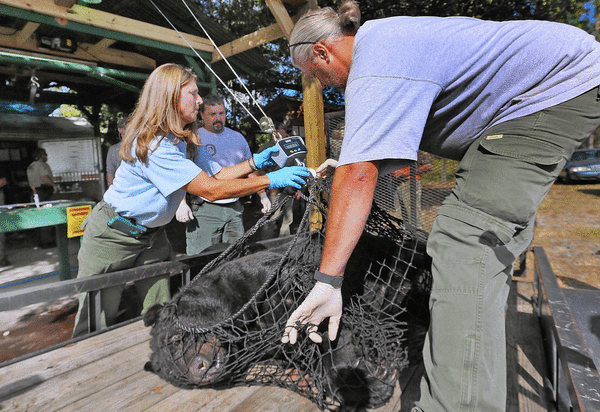
In addition to rebuffing or ignoring questions from the media and conservationists, it eliminated the check-in stations where hunters had to log their kills in 2015, which provided an opportunity to make sure hunt rules were being followed, but which also became hubs for protest.
This year hunters are simply supposed to inform FWC through an agency phone app if they bag a bear.
Chuck O’Neal, founder of the not-for-profit conservation group Speak Up For Wildlife, said Fish & Wildlife’s lack of transparency reflects the “total arrogance” of the taxpayer-funded agency, its governor-appointed board and its disdain for public opposition to the killing it calls a harvest.
He called on FWC Executive Director Roger Young to halt the hunt.
“It’s clear this hunt was all about providing a special opportunity for hunters,” O’Neal said. “It was never about accountability or weighing both sides, realizing a great majority of Floridians were and are against this hunt. It’s just a big ‘F.U.’ to the non-hunting public.”
But Chuck Echenique, a lifelong hunter and president of The Future of Hunting in Florida, defended the agency’s silence.
“This frothing over the numbers is ridiculous,” Echenique said in a text to the Orlando Sentinel. “First of all, no state agency publishes a live harvest update on limited quota hunts. When you have a set number of tags, you know that you cannot exceed the total number of bears for which you issued permits. Wasting man hours and resources to provide daily counts and updates is a waste of time and energy.”
The 23-day bear hunt, the first in Florida since 2015 when 3,779 permitted hunters killed 304 bears in little more than two days, was limited to 172 permits across four hunting zones, including one in Central Florida where Fish & Wildlife set a harvest or kill limit of 18 bears.
Echenique, who did not win a bear-hunt permit, said he was part of a hunting party with permit-holders who harvested two bears.
He said he knew of another dozen other lawfully taken bears across bear management areas where hunting is allowed.
Groups opposing the hunt say as many as 50 of their supporters won bear permits to keep them from bona fide hunters.
Permits were awarded through a lottery which cost applicants $5 per entry. No entrant could win more than one bear tag.
O’Neal sent state wildlife leaders screenshots of social media posts suggesting some bears had been poached.
“Killed 2 today. Florida is awesome,” one read. “Going back tomorrow to possibly get the momma and one more kid bearling!”
The Sentinel could not authenticate the post.
“This hunt, which was sold to the public as a scientifically based, well-regulated, conservative hunt, has turned into a lawless free-for-all,” O’Neal said in a phone interview. “The FWC has responded to us with inexcusable silence on these important issues.”
Echenique, the Tampa-based hunting advocate, dismissed the social media posts boasting of poaching bears as hooey.
“So much bad information, innuendo and pot-stirring taking place. It’s disgusting,” he said in his text to the Sentinel. “Anyone who kills a bear without a tag (poaching) isn’t going to report their harvest. Poachers are criminals and as hunters we despise them.”
FWC rebuffed multiple Orlando Sentinel inquiries about the hunt, directing the newspaper to file public records requests, which it did.
The agency then failed to respond to those requests.
Thursday afternoon, an FWC spokesperson sent a short note to the newspaper: “We encourage the public to visit our bear hunt webpage, where they will find a lot of important and helpful information, such as FAQs, news releases, interviews and a newly added video featuring two of our SMEs.”
The webpage has no information about the progress of the hunt.
The acronym “SMEs” likely means “subject matter expert” as the video features FWC’s black bear expert Mike Orlando.
The Florida agency argued the harvest quota was set using sound science and data as a management tool like other states do.
But O’Neal said FWC has brought suspicion upon itself by eliminating the check-in stations.
In 2015, conservation groups and bear advocates opposing the hunt waited at the public stations and took notes.
“We knew right away in 2015 from firsthand, eyewitnesses accounts it was turning into a slaughter,” O’Neal recalled.
He said quick draw hunters harvested female bears with cubs and underweight yearlings which were supposed to be off-limits.
“Without those check stations, how do we know this hunt hasn’t already gotten out of hand?” he said.
_____
©2025 Orlando Sentinel. Visit orlandosentinel.com. Distributed by Tribune Content Agency, LLC.






Comments