Meta lays off hundreds amid AI spending, fizzled metaverse plans
Published in Science & Technology News
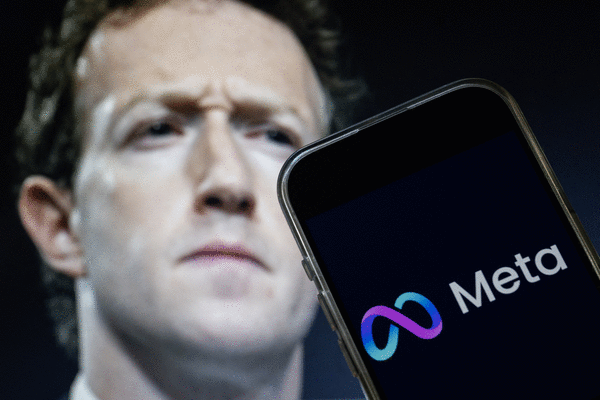
Meta said its road to the metaverse ran through Seattle. Recent layoffs point to a dead end.
Meta laid off hundreds of employees Wednesday, about two months after a sweeping workforce reduction at the company.
A Meta spokesperson confirmed media reports that the Menlo Park, Calif.-based tech giant's latest cuts hit several divisions, including the company's flagship platform Facebook, recruiting, sales and Reality Labs, Meta's virtual reality division. The company did not disclose where affected employees were based, but said the cuts were global.
The Reality Labs cuts, coupled with Meta's plans to pull back on development for its immersive world app, signal a final call for those hanging out in the metaverse. During the pandemic, CEO Mark Zuckerberg went all in on the vision of a virtual world running parallel with the real world. Renaming his company from Facebook to Meta, Zuckerberg envisioned everyday users and businesses spending time as their virtual reality counterparts.
Teams across Meta regularly restructure or implement changes to "ensure they’re in the best position to achieve their goals," the spokesperson said in an emailed statement. "Where possible, we are finding other opportunities for employees whose positions may be impacted."
The Information, a tech-focused publication, first reported on the layoffs.
The wave of layoffs are smaller than the cuts Meta made in January, when 331 workers in the Puget Sound, Wash., area alone were let go. In total, Meta announced it was cutting about 10% of its 15,000-employee Reality Labs division, the organization responsible for developing the products and software behind Zuckerberg's metaverse ambitions.
The cuts in January were made to shift resources in Reality Labs away from the metaverse to wearables like smart eyeglasses. Meta has also increased its capital expenditures this year as it builds out its AI infrastructure. The company expects to spend between $115 billion and $135 billion this year on data centers and other equipment needed to fuel its AI efforts.
Meta's AI spending spree comes as its metaverse dreams dwindle.
Along with the cuts to Reality Labs, Meta said last week that it would sunset the Horizon Worlds app for its virtual reality headsets in June. The following day, Meta revised its plans slightly, saying it would continue to support existing VR apps in Horizon Worlds but wouldn't develop additional content.
Meta's virtual and augmented reality technology seeped into other parts of the company, like the Messenger app, but the majority of the metaverse development was focused in Reality Labs.
The division has routinely lost money since it was broken out in Meta's financial results in 2020. Since the company formerly known as Facebook rebranded to Meta in 2021, Reality Labs has lost $76.9 billion, according to regulatory filings. By comparison, Meta's family of apps division — a collection of Facebook, Messenger, Instagram and WhatsApp — has made more than $352 billion since 2021.
Meta's Seattle office was originally an engineering outpost, but as the idea of the metaverse evolved, so did the Puget Sound area's importance to the company.
After Meta acquired Oculus, the precursor to Meta's Quest virtual reality headsets, the company had offices in Sodo in addition to its South Lake Union offices. During the pandemic, the company expanded, gobbling up space on the Eastside until at one point it had more than 8,000 employees spread across Redmond, Bellevue and several Seattle neighborhoods.
In 2022, during the height of Meta's virtual reality hype, the company's former Pacific Northwest lead, Paresh Rajwat, said the road to the metaverse "passes through Seattle."
Over the three years that followed, Meta slowed its hiring and reevaluated its real estate portfolio. The company backed out on occupying two office buildings in Bellevue’s Spring District and offered them for sublease in 2023 and 2024. Last year, it let expansion rights for five other development sites in the tech-focused neighborhood lapse, according to King County records.
Though it still holds office and lab space in Redmond, Wash., Meta once had plans for two large Frank Gehry-designed buildings in the city. Since completing one in 2023, development on the other has remained stagnant.
Meta also vacated one of its early offices in South Lake Union in 2023, a space that has since been taken by Apple.
_____
© 2026 The Seattle Times. Visit www.seattletimes.com. Distributed by Tribune Content Agency, LLC.






Comments