Clarence Page: Birthright citizenship debate puts America’s melting pot on trial again


As a Black American who is old enough to remember the last days of legal Jim Crow racial segregation, I pay special attention whenever I hear signs that in many American minds the Civil War never really ended.
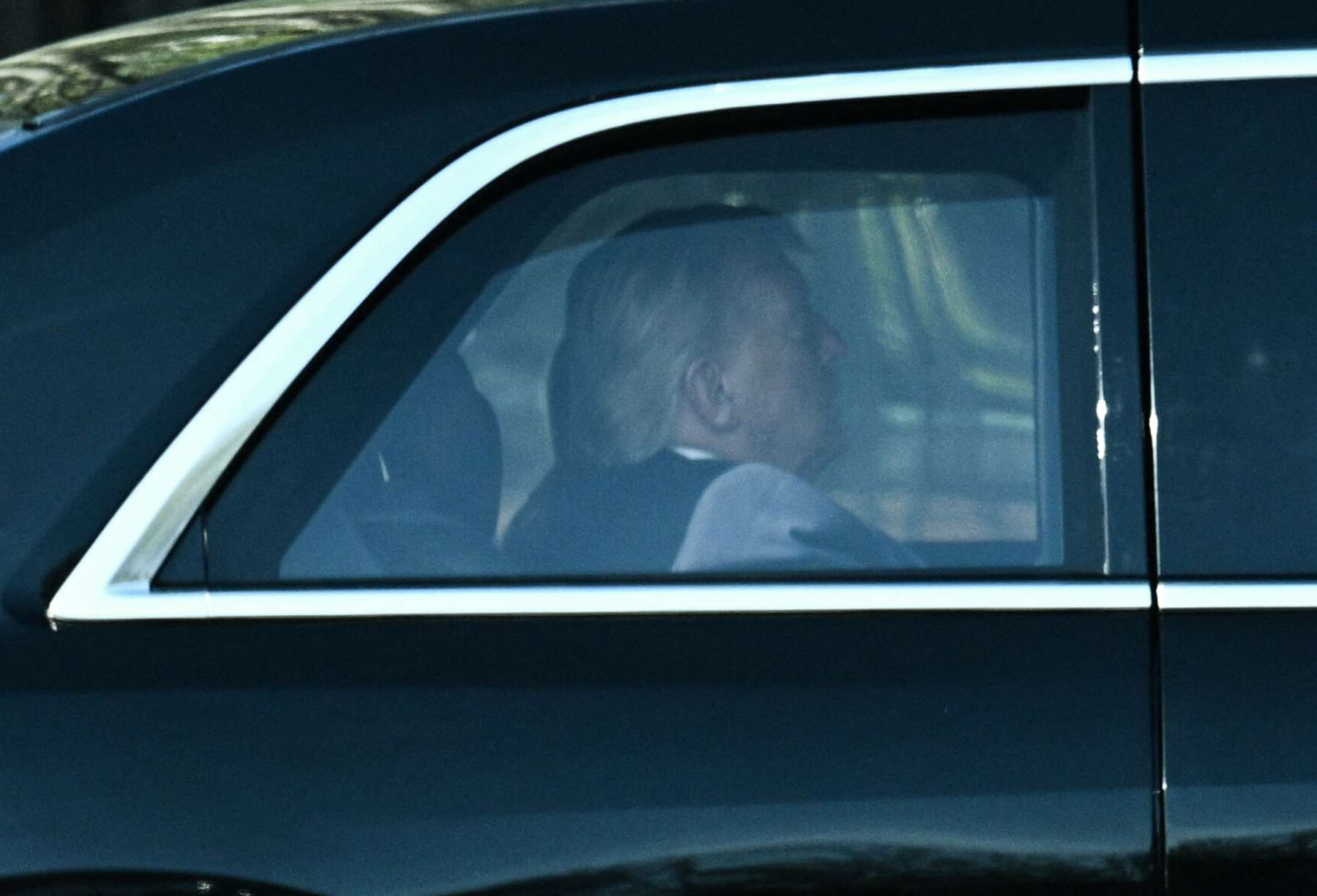
So does President Trump. That may help to explain why he took the extraordinary step on Wednesday of appearing in person in the grand chamber of the U.S. Supreme Court, apparently the first president to do so, as his solicitor general made the case against "birthright citizenship" before the high court justices.
The issue, one of the most important Supreme Court rulings expected this year, is whether a Trump may deny citizenship to babies born in the U.S. based on the legal immigration status of their parents.
The policy, outlined in an executive order issued on his first day of his second term of office, seems to contradict the plain language of the 14th Amendment of the U.S. Constitution. Indeed, federal judges in four separate cases have ruled Trump's order was unconstitutional, and now the Supreme Court is reviewing three of those rulings.
The outlook, I am happy to observe, does not look good for Trump’s side, which gave me a cautiously optimistic outlook about the side I favor — along with most other Americans, judging by the polls.
The Trump administration has settled on three main arguments against birthright citizenship, which the president and his minions have faithfully rehearsed in recent weeks. They are: this right is abused by rich foreigners; the 14th Amendment only purported to speak to the legal status of enslaved people and their descendants at the end of the Civil War; and the policy is anomalous among the nations of the world.
As a PBS fact check pointed out, these objections don't hold much water. The most convincing might be the notion that birthright citizenship is abused. Cases of "birth tourism" do occur, but they make up a small percentage of births and are easily addressed by less sweeping policy.
As for the 14th Amendment argument, birthright citizenship has deep roots in Anglo-American jurisprudence, and the amendment has been applied to children of other immigrants, notably the Chinese in United States v. Wong Kim Ark (1898).
Finally, contrary to what Trump repeatedly insists, the U.S. is hardly an outlier in allowing birthright citizenship. It is the law in more than 30 countries, including virtually the entire Western Hemisphere.
At one particularly quotable moment in Wednesday's arguments, Roberts dismissed U.S. Solicitor General John Sauer’s contention that today’s immigration problems require a revision of the understanding that virtually all children born on U.S. soil become American citizens, regardless of their parents’ immigration status.
Sauer painted a menacing picture of “a sprawling industry of birth tourism” that has led to “uncounted thousands of foreigners from potentially hostile nations” arriving in the U.S. to have their children here.
“We’re in a new world now,” Sauer said, “where 8 billion people are one plane ride away from having a child who’s a U.S. citizen.”
“Well, it’s a new world,” Chief Justice John Roberts Roberts countered. “It’s the same Constitution.”
Thank you, Mr. Chief Justice.
The durability of such constitutional protections is evidenced by its survival in the Constitution since the Reconstruction era.
Trump’s order represents the boldest move of his anti-immigrant agenda, reopening racial wounds at the core of American identity and undermining our “melting pot” ideals of human rights, equal opportunity and assimilation.
We’ve come a long way since the high court’s Court's infamous Dred Scott v. Sanford ruling in March 1857, when Chief Justice Roger Taney issued what legal scholars have denounced as the worst Supreme Court’s opinion in history.
The question before the court then was whether African Americans are citizens of the United States and thus able to file suit in federal court.
Taney went for the jugular. Black people, enslaved or free, were not citizens, he wrote, and had "no rights which the white man was bound to respect." They were "beings of an inferior order" and not included in the Declaration of Independence.
In fact, many would say, Taney was only describing plainly — without a hint of sugar-coating — what most Americans believed to be true under the laws and customs of those antebellum times.
Yet Taney’s words evoked such disgust, horror and profound discomfort in many minds that it helped lead directly in those increasingly tense times to the outbreak of the Civil War.
Too harsh? I can’t help but hear echoes of that old, candidly racist era in the justifications of the brutal immigrant sweeps by ICE and Border Patrol agents in Chicago, Minneapolis and other places. Most of those dragged out of their homes or off the streets have been people of color, and too often have been treated without regard to their civil rights or due process.
And, similarly, when I saw Trump grandly throw open doors of welcome to white South Africans, whom he inaccurately described as victims of “white genocide,” as he cut food aid to poor populations of color, I could not help but wonder how much racial progress we have yet to make.
(E-mail Clarence Page at clarence47page@gmail.com.)
©2026 Tribune Content Agency. Distributed by Tribune Content Agency, LLC.
(c) 2026 CLARENCE PAGE DISTRIBUTED BY TRIBUNE MEDIA SERVICES, INC.


















Comments