Crossing the Line: When Political Power Confronts Moral Authority
There are moments in political life when rhetoric stops being merely provocative and begins to test the boundaries of institutional respect. President Donald J. Trump's attack on a sitting pope invites comparison to one of the most consequential overreaches in modern American history: when former Sen. Joseph McCarthy turned his fire on the United States military and, in doing so, exposed the limits of demagoguery.
That parallel is not casual. It is instructive.
McCarthy's downfall did not come because he lacked support. At his height, he commanded headlines, shaped fear and influenced national discourse. His collapse came when the American public recognized that there are certain institutions, pillars of national and moral life, that cannot be casually politicized without consequence. When he attacked the military, he crossed from aggressive politics into perceived recklessness. The famous rebuke "Have you no sense of decency?" was less about a single hearing and more about a nation reclaiming its moral footing.
Today, the question is whether a similar line has been approached or crossed.
Trump's criticism of a pope is not, in itself, disqualifying. In a free society, religious leaders are not beyond critique, particularly when they speak on political or economic matters. The Catholic Church has long been an active voice in global affairs, weighing in on war, poverty, migration and moral responsibility. Presidents, policymakers and commentators have every right to disagree.
But tone, intent and context matter.
When a president frames a pope not as a moral interlocutor but as a political adversary, something deeper is at play. This is no longer a policy disagreement; it becomes an attempt to reframe a spiritual authority through the lens of partisan conflict. The language used -- accusations of weakness, insinuations of illegitimacy and alignment with political enemies -- signals not engagement but confrontation.
And that raises a more profound question: What is the agenda behind such an attack?
At one level, it reflects a broader strategy that has defined Trump's political style of disrupting, challenging and redefining institutions that stand outside his sphere of influence. Whether it is the judiciary, the intelligence community, the media or now a global religious figure, the pattern is consistent. Institutions are not merely debated; they are recast as adversarial if they do not align.
But the Catholic Church is not just another institution.
It is a global body of more than a billion adherents, with tens of millions in the United States alone. It is not bound by electoral cycles or national borders. Its moral authority does not respond easily to political pressure. When a political figure attempts to diminish that authority, the risk is not simply backlash; it is fragmentation.
For American Catholics, this moment is particularly delicate. Many have supported Trump politically, drawn to his positions on issues like religious liberty, judicial appointments and abortion. Others have been deeply critical, especially of his rhetoric and approach to immigration and global alliances. The pope, as a unifying spiritual figure, exists above those divisions at least in principle.
An attack like this forces a choice that many Catholics would prefer not to make: between political loyalty and spiritual allegiance.
That is where the McCarthy analogy becomes more than rhetorical. McCarthy misjudged not only the military's resilience but the public's threshold for institutional assault. Trump, in this instance, may be testing a similar boundary: whether Americans, including his own supporters, are willing to accept the politicization of a religious figure on this scale.
Has he crossed the Rubicon?
Not definitively, but he is standing at its edge.
Crossing the Rubicon, as history teaches us, is not a single act but a point of no return, a decision that fundamentally alters the relationship between power and restraint. Trump's rhetoric toward the pope suggests a willingness to challenge even those institutions that traditionally exist outside political combat. Whether that becomes a defining overreach depends on the response.
If supporters embrace the framing, the boundary shifts. If they resist it, if they see the distinction between political disagreement and institutional respect, then the moment becomes corrective rather than transformative.
What is needed now is moral clarity.
Moral clarity does not require agreement with the pope on every issue. Nor does it demand silence in the face of disagreement. It requires something more disciplined the ability to distinguish between critique and contempt, between debate and delegitimization.
It also requires an honest assessment of intent. Is this about policy differences, or is it about consolidating influence by redefining every independent authority as opposition? That is the question Americans must confront, not as partisans but as stewards of a system that depends on the coexistence of political and moral institutions.
McCarthy's moment ended when the country decided enough was enough.
This moment is still unfolding.
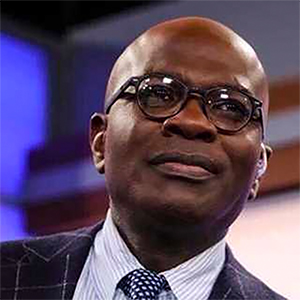
Armstrong Williams is manager/sole owner of Howard Stirk Holdings I & II Broadcast Television Stations and the 2016 Multicultural Media Broadcast owner of the year. To find out more about him and read features by other Creators Syndicate writers and cartoonists, visit the Creators Syndicate website at www.creators.com.
----
Copyright 2026 Creators Syndicate, Inc.



















Comments