Editorial: It's almost dying time for dozens of Florida's black bears
Published in Op Eds
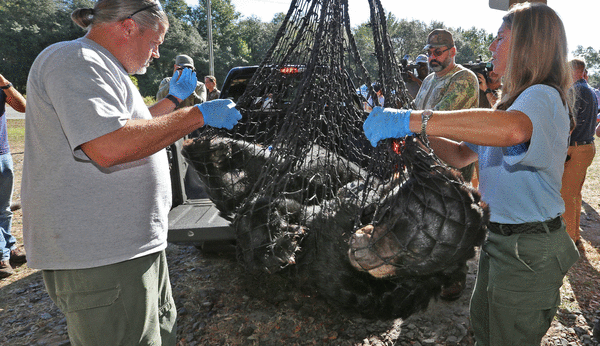
Barring a last-minute miracle, Florida’s black bears will be in the crosshairs of hunters come Saturday — a planned slaughter based on shoddy science and laden with potential for things to go wrong.
Or maybe “go wronger.” This hunt never should have been approved, let alone tagged as an annual event that will proceed until state officials come to their senses. Thousands of Floridians begged the state Legislature and the Florida Fish and Wildlife Conservation Commission to stop the hunt from going forward, citing threats to the state’s bear population that are only going to become worse as more and more people crowd into Florida.
This summer, the FWC approved a hunt Dec. 6-28, based on its own estimates that the bear population is around 4,000. Bear-loving advocates say that number is based on old data, and not adjusted for the fact that many bears that might have been living undetected in remote, undeveloped land are now far more visible in residential neighborhoods and along highways that have pierced their former sanctuaries. Tuesday, a Tallahassee judge dismissed a last-ditch effort to call an emergency stop to the hunt.
That leaves the slaughter proceeding under rules that allow ample opportunities for lethal errors. The hunt is authorized in four of the state’s “bear management zones,” including one that covers Orange, Lake, Marion, Seminole and Volusia counties — the hot spot for human-bear encounters around the state, but with almost no reports of humans injured by bears. That could be due, in large part, to efforts in Seminole County to manage the bear population in a non-lethal way, with locking trash cans and entertaining information.That region was allocated 18 permits to kill one bear each, contributing to 172 bear-hunt permits issued statewide.
A cruel framework
There are elements of this year’s hunt that will make it particularly vicious. First, hunters will be allowed to use dogs to hunt — a move that greatly increases trauma to the bears and could separate mothers from their cubs. Hunters are also allowed to take advantage of bait stations to shoot the bears when they are concentrating on eating. And the terms of the hunt allow the use of bows and arrows, which are less likely to be immediately lethal, increasing the bears’ suffering.
Hunters won’t be required to take bear carcasses to centralized checkpoints as they were during the last hunt in 2015. Is it because FWC officials don’t want photographs of blood-matted fur and empty, staring eyes circulating on social media? They needn’t have bothered. There are plenty of those shots from a decade ago.
Stealing back lives
There’s also a sly move underway to undermine the event — one that breaks no laws, and won’t deprive the state of revenue. When the state opened up applications to participate in the bear hunt, environmental groups urged hunt opponents to send in the $5 entry fee and, hopefully, win one of the permits — a move that would spare one bear.
The Sentinel’s Steve Hudak reported Tuesday that Bear Warriors United (the same organization that went to court to stop the hunt) estimates that 45 permits (26%) could be in the hands of people who have no intention of shooting bears with anything but a camera and long-range lens.
Recently, there’s been another note making its rounds on social media, and we’ll just post the wording here and let you draw your own conclusions:
The organized resistance is certainly cheeky. But it covers a deep grief that the state would sanction such a cruel, barbaric hunt in the first place. Florida officials should have listened to the voices of opposition last time. This time, the only way to get their attention may be through the ballot box.
_____
©2025 Orlando Sentinel. Visit orlandosentinel.com. Distributed by Tribune Content Agency, LLC.





















































Comments