Commentary: Hamstringing the humanities will hinder scientific discovery
Published in Op Eds

It seems we’ve decided the humanities have less to give the human race — or more modestly, this country’s future — than the sciences.
This is a serious mistake. The sciences and the humanities are different faces of the human search for knowledge and not the opposites we have turned them into. If you hamstring one, you hamstring the other. And thinking of “sciences” and “humanities” as unrelated modes of inquiry is not only shortsighted; it’s also new to western civilization. Before the scientific revolution, investigations into the natural world and into the human condition were treated as different facets of our quest to know — a drive that Aristotle defined, in his “Metaphysics,” as characteristic of humankind by nature. But when we started treating science (and the technologies it birthed) as independent of other forms of knowledge, when we started treating meaning, history, culture and power as externalities, it cost us in discovery, in deployment and in avoidable harm.
There are so very many examples. Take eugenics, a canonical instance of what happens when measurement and quantification are treated as synonymous with truth, and a core humanistic question — “what is this category, historically and morally?” — is waved away. Eugenics, advanced as a scientific program, carried normative assumptions about “fitness” and hierarchy into policies that ranged from coercive sterilization to state violence. The humanities could have pointed at the time to the conceptual instability of race as a biological essence; the rhetorical sleight of hand by which social prejudice becomes “data”; the political uses of supposedly neutral expertise.
Or consider health and medicine. Again and again, epidemics have demonstrated that pathogens move through cultures, not just bodies. Anthropological and historical work on trust, rumor, religion, political legitimacy and the social meaning of risk has repeatedly improved the design of interventions, because it reveals why a technically sound policy can fail spectacularly when it ignores how people understand authority. “Follow the science” is not a plan if you do not also know how communities hear it, fear it, or translate it into local idioms of danger and care.
And artificial intelligence! We built machines that can translate, classify, predict and persuade at planetary scale, and only after doing so — after releasing them into the bloodstream of public life — did we remember to ask the questions that every decent civilization has always asked first: Who gets harmed? Who gets counted? What gets erased? We are shocked that algorithmic systems trained on historical data reproduce historical injustice; that predictive tools in policing and credit can harden inequities into automated fate; that facial recognition can perform unevenly across populations; that “optimization” can become an alibi for ethics.
But none of this should be surprising if we remember the 19th-century pattern: Build a technical instrument, declare it objective and then discover that it has quietly inherited the world’s prejudices because it was trained on the world as it is.
The success stories are there. During the 2014-16 Ebola outbreak in West Africa, anthropological insights — burial practices, trust networks, local authority structures and rumor ecology — proved crucial to designing interventions people would accept and that would work on the ground. The literature is explicit that community engagement and social understanding were not optional “cultural add-ons” but part of effective outbreak control.
Where science and the humanities are severed, the damage often takes one of three forms: category error (we measured the wrong thing, because we never interrogated the category); trust collapse (people refused the intervention, because science treated social meaning as noise); and delayed correction (harm had to become undeniable before the system could “see” it).
Where humanistic angles were allowed in, science tended to improve not by becoming less rigorous, but by becoming more self-aware: clearer about its concepts, its subjects, its incentives and its downstream effects.
The bitter irony is that we are now at a moment when universities, under financial and political pressure, are shrinking the very disciplines that could have helped us avoid such pitfalls: philosophy and ethics (where we learn to argue about ends), history (where we learn what “progress” has cost before), literature and rhetoric (where we learn how language makes realities) and the interpretive social sciences (where we learn how institutions distribute trust and harm). We say these are worthless expenses for society. Could we be more wrong?
This is not just about ethics and wayward science. It’s about how all forms of knowledge work together and should be understood as doing so. Niels Bohr did not derive quantum mechanics from yin-yang, but he found in that ancient symbol a powerful way to express complementarity — his insistence that opposing truths can coexist. Gunpowder, however, was born directly out of Chinese alchemy, where Taoist experiments in transformation accidentally reshaped global history.
Science uses metaphors: Who will unpack them? Science spawns technology: Who will measure that technology’s impact on the psyche? Science’s questions arise out of a future we envision for ourselves: Who does the envisioning?
It is hard to think of a worse time for humanities retrenchment. The sciences are extraordinary at generating data, but they cannot on their own generate the habits of mind that allow societies to interpret data responsibly or resist the distortions that often engulf it. Nor, as currently practiced, do they allow us to see how the world of the humanities is constantly contributing to scientific advance. Lop off the humanities, and we’ll all pay the price for this silly miscalculation of human interest.
____
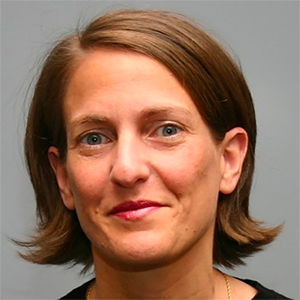
Shadi Bartsch is a professor in humanities at the University of Chicago and former director of the Institute on the Formation of Knowledge.
___
©2025 Chicago Tribune. Visit at chicagotribune.com. Distributed by Tribune Content Agency, LLC.

































Comments