Editorial: Illinois must move fast to ensure consumers don't run short on power
Published in Op Eds
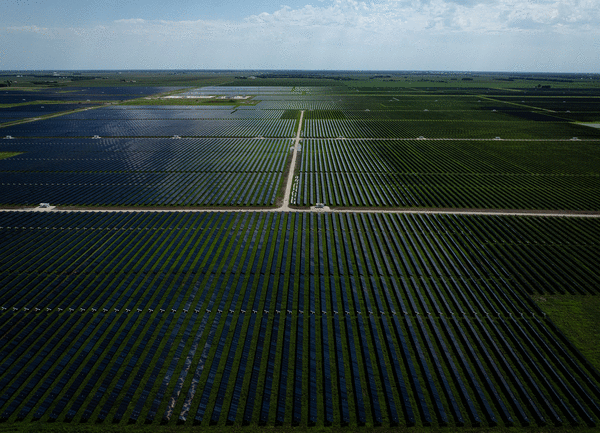
Fifteen months ago, this page warned that Illinois faced likely electricity shortages in the next few years if Gov. JB Pritzker’s landmark Climate and Equitable Jobs Act, passed in 2021, wasn’t made more flexible to allow existing natural gas-fired power plants to run past the law’s closure deadlines.
Since then, Illinoisans have watched their electricity rates jump, as the regionally managed process for ensuring there’s enough power capacity to meet peak demand has resulted in steep power-price increases. Those higher electric bills raised public awareness about ongoing questions around how our volatile energy markets are being managed.
Now, we have something approaching absolute confirmation of the pending shortage problem in the form of a report released Dec. 15 by the Illinois Power Agency. That 184-page document thoroughly showed how northern Illinois will experience power shortages beginning in 2030 if CEJA’s mandates to close some gas-fired power plants by that year aren’t lifted, at least in part if not fully. The law, with very limited exceptions, requires that Illinois’ power-generation sector rid itself of all fossil fuel combustion by 2045.
Illinois isn’t alone in these reliability concerns. PJM Interconnection, the grid manager for a broad multistate region including northern Illinois, held a recent auction of power generators to determine how much consumers and businesses will pay them to promise to deliver during peak-demand periods in the year beginning June 1, 2027. PJM managed to procure just 14.8% more than it expects to need to meet expected peaks in that year — a strikingly low cushion since PJM’s ordinary minimum standard for that “reserve margin” is 20%.
Simply put, not enough new capacity is being constructed to meet anticipated future demand — much of it expected to come from power-hungry data centers necessary to support growing artificial intelligence demand.
Springfield responded in October with substantial amendments to its 2021 green energy law that will subsidize the construction of new battery storage facilities, which can hold electricity generated by intermittent sources like solar and wind farms for several hours until they’re needed most. Crucially, the bill also gives the Illinois Commerce Commission, which regulates utilities, new authority to lift the closure mandates in CEJA on gas-fired power plants if the ICC determines they’re needed for reliability. We supported the measure, which Pritzker has said he will sign.
The ICC plans to begin that reliability analysis next year.
It shouldn’t dawdle.
Owners of the sorts of power plants that CEJA currently mandates closing by 2030 — many of them so-called peakers that turn on quickly when needed during heat waves or cold snaps and just as rapidly turn off — will have to make decisions well before that deadline on when to permanently shutter their facilities. Given the extensive work the Illinois Power Agency already has done documenting the likelihood of future power shortages, those sorts of decisions shouldn’t be all that difficult.
We’ll have more to say in the new year on how Springfield can further ensure Illinoisans don’t have to suffer through future rolling blackouts and the like.
The electricity industry changes fast, and its realities don’t lend themselves to inflexible ideologies. Humility is the order of the day when it comes to policymaking for such a vital commodity.
_____
©2025 Chicago Tribune. Visit chicagotribune.com. Distributed by Tribune Content Agency, LLC.

















































Comments