Marc Champion: 'The West' is near death. It's also worth fighting for
Published in Op Eds
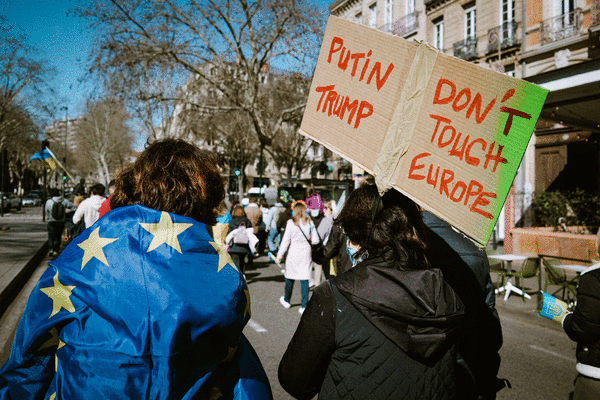
“The West” is a club on life support, skewered on the lance of Donald Trump’s Hobbesian view of the world as a series of protection rackets carved up by countries strong enough to command a seat at the table. With America’s traditional allies now part of the buffet, this seismic development begs a question: Is the West worth saving, and can it be?
As a concept, the West has always been frustratingly vague and slippery. So much so that at various times and publications of my journalistic career, editorial fatwas were issued against its use. It can’t be determined by geography, because it also includes parts of the East. It can’t be just NATO, or a Christian club, for similar reasons. And yet, none of those editorial bans stuck. The term soon squirrelled its way back into use, because there was no substitute. It was too useful as a shorthand description of a tribe of market democracies that readers and writers alike understood to exist.
I don’t recognize the exclusively Christian, race-based Western civilization described in the new U.S. National Security Strategy, or in the deeply disingenuous sermons of Vice President JD Vance. Neither does Georgios Varouxakis, an historian of political thought at London’s Queen Mary University. I reached out to him because in July he published "The West: The History of an Idea." It’s a book that does a valuable — meaning document-based and non-ideological — job of debunking some of the most common theories about when and how this entity arose.
So, no, the West doesn’t stretch back to ancient Greece, because the ancient Greeks never mentioned it, or conceived of it. Nor was it, as some on the left believe, conjured up in the late 19th century by imperialists as a helpful, dog-whistling tool to legitimize their colonial exploitation of other, non-white, races. The idea appeared earlier and its most vocal proponents were passionate anti-imperialists. But the West also has been subject to constant reinterpretation, and right now, it’s getting highjacked amid the culture wars.
“Don’t leave it to them,” Varouxakis told me, as we discussed the Trump administration’s assaults on Europe. “Don’t allow them to own the term, they don’t own the term. Western civilization does not mean white supremacism.” What defines the West can change, of course, if enough far right populists gain power in the countries that belong to it. But if that happens, it’s also doubtful that either the West or its major institutions — primarily the European Union and the North Atlantic Treaty Organization — could long survive the toxic nationalism such a shift would bring.
The first recorded articulations of the West as a political identity came around the time of the 1821-1829 Greek War of Independence, Varouxakis told me. Until then, the Ottoman Empire had been Europe’s most worrying threat. So, when people wanted to talk about their collective otherness and defense against the Ottomans, they’d speak of Christendom, or of Europe.
Now Greece was breaking free from three centuries of subjugation within the Ottoman Empire, because the Sultans and their armies had failed to modernize and were growing weak. This was a tumultuous period. Russian troops had briefly occupied Paris in 1814, just a few years earlier. In 1815, Napoleon suffered his final defeat at Waterloo and Russia’s emperor, Tsar Alexander I, formed a so-called Holy Alliance with Austria and Prussia. They wanted to promote absolute monarchy and faith against the secular republicanism that in 1812 had taken French troops all the way to Moscow.
Christendom would no longer do as a rallying cry against this emboldened Russia, because unlike the Ottomans, it was Christian too. Europe was no longer adequate either, because the recently established American republic across the Atlantic was a potential ally in promoting the fruits of the enlightenment — separation of Church and state, science, the rule of law and individual rights — against Moscow’s absolutism. A common, predominantly Christian culture was part of the formula for this new West, but not of the reductive kind preached by Vance.
This was, as always, ultimately about geopolitics. Russia had partitioned Poland and occupied Finland over the two previous decades. It was looking to snap up territories from the weakening Ottomans, taking Bessarabia (today’s Moldova) in 1812, and looking further into the Balkans. Now Moscow’s armies were also driving south on the other side of the Black Sea, through the Caucasus, and consolidating their hold on Central Asia, setting off the “Great Game” with Britain for control of the approaches to India.
The man who did most to promote and define the new “West” as a bulwark against this emboldened Russia was the French father of sociology, Auguste Comte. He saw the West as including Latin and Anglo-Saxon Europe, as well as their outposts in the New World. Slavic, yet Catholic Poland, and Orthodox, yet Athenian Greece were special guests. He also included Germans as core members, but that relationship remained fraught until after 1945. Adolf Hitler in particular spoke of “the West” as an encircling enemy, echoing some Russian rhetoric today.
Other French writers and politicians also promoted Greece’s inclusion in the new Western club as it struggled to gain independence, because its people had proved willing to fight. By defending themselves they were also defending the rest of Europe, which had grown too soft and decadent to fight for itself, the argument went. At the same time, many members of the Greek elite, educated at European universities, yearned to join the West for their own reasons. They saw it as a path to the kind of tolerant, law-based, secular and technologically advanced society they wanted their country to become.
In fact, Varouxakis told me, “the way people talked of the Greeks exactly 200 years ago is spookily reminiscent of how we speak now about Ukraine.” I’d add that Alexander’s bid to push back and reshape Europe in the image of his own conservative values and authoritarian political system has equally strong echoes in Vladimir Putin’s actions and rhetoric today.
The desire of Greeks in the early 19th century and Ukrainians today to join the West is testament to the enduring soft power that this fundamentally liberal-democratic idea has had, for all the countless faults and misdeeds of its constituent states. It’s probably best thought of as the ideological glue that holds NATO and the EU together. Lose that bond, or try to replace it with a common identity manufactured from extreme nationalism, and it’s hard to see not just the West but also the secularism and tolerance that made it attractive surviving.
____
This column reflects the personal views of the author and does not necessarily reflect the opinion of the editorial board or Bloomberg LP and its owners.
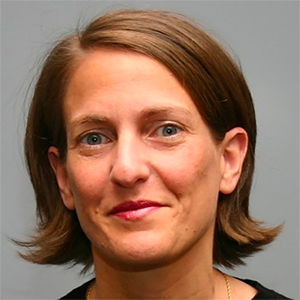
Marc Champion is a Bloomberg Opinion columnist covering Europe, Russia and the Middle East. He was previously Istanbul bureau chief for the Wall Street Journal.
©2025 Bloomberg L.P. Visit bloomberg.com/opinion. Distributed by Tribune Content Agency, LLC.





























Comments