Editorial: Maduro action not without historical precedent
Published in Op Eds
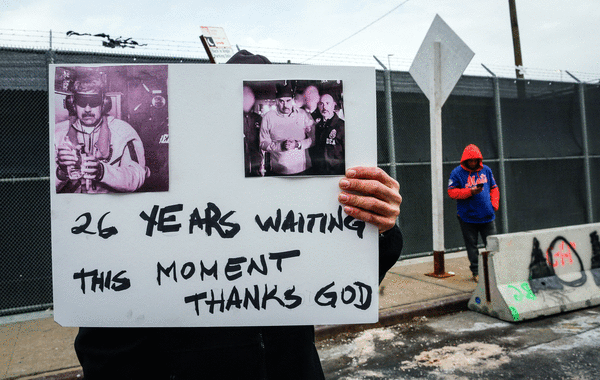
Nicolas Maduro appeared in a New York courtroom Monday, two days after U.S. forces carried out a surprise raid in Venezuela, capturing the country’s president at a military base and hustling him in handcuffs and blindfolded to a U.S. aircraft carrier. “I am innocent,” he told the judge.
Maduro — who, with the help of his predecessor, the late Hugo Chavez, turned his native land into an economic basketcase in fealty to graft and socialism — was indicted in 2020 by the U.S. Department of Justice on charges of conspiring with Colombian guerilla groups to traffic drugs into the United States.
“The Venezuelan regime … remains plagued by criminality and corruption,” then-Attorney General William Barr noted in a press release at the time. “For more than 20 years, Maduro and a number of high-ranking colleagues allegedly conspired with the FARC, causing tons of cocaine to enter and devastate American communities.”
The military action highlighted the nation’s political divisions, with many Democrats calling the move “illegal” and threatening reprisals against President Donald Trump. The White House could have indeed made things easier for itself by keeping Congress informed about its plan. But the action is not without precedent. President George H.W. Bush in 1989 approved a similar action without congressional authorization against Panamanian President Manuel Noriega. The courts upheld his apprehension and conviction on drug charges.
Other presidents, including Barack Obama in Libya, have acted unilaterally to advance American interests. “The Constitution does not give a president the right to declare war,” law professor Jonathan Turley posted on X. “However, presidents are allowed to use military forces without such a declaration.”
The question now: What comes next? Trump should consider a national address outlining his plans moving forward. The president initially said the United States would “run” Venezuela for the time being, but Secretary of State Marco Rubio offered a softer interpretation of American intentions, saying Sunday that the United States would continue its blockade of Venezuelan oil exports as a means of pressuring the country to embrace a more prosperous course. No doubt Cuban officials, so dependent on Venezuelan oil, feel the heat.
Meanwhile, Maduro’s vice president, Delcy Rodriguez, now serves as interim president. The Wall Street Journal describes her as a “hard-line socialist and regime stalwart.” Ms. Rodriguez appeared defiant over the weekend, but Trump says she is “cooperating” with the United States. We’ll see.
Ultimately, the goal should be for the United States to facilitate free and fair elections in Venezuela while helping it rebuild its economic infrastructure. But, at the very least, there is one less collectivist tyrant in the Western Hemisphere.
©2026 Las Vegas Review-Journal. Visit reviewjournal.com.. Distributed by Tribune Content Agency, LLC.
















Comments