Commentary: Fake images and videos are proliferating online. What's the average news consumer to do?
Published in Op Eds
Nicolás Maduro and his wife confronted two overpowering forces last week: the U.S. military and artificial intelligence. The result was worldwide confusion and a reminder that what one sees these days is not necessarily authentic.
U.S. special forces captured and flew Maduro and Cilia Flores to New York to face drug and narcoterrorism-related charges. The images of the Caracas drama were vivid and at times bogus, providing the latest cautionary challenge in our trying to divine what’s real and what is not.
My NewsGuard colleague Chiara Vercellone, a senior staff analyst, identified five phony and out-of-context still images and two falsified videos supposedly depicting the military operation and its aftermath. They garnered “more than 14.1 million views in under two days, on X alone,” she wrote.
One photo showed Maduro wearing white pajamas inside a military cargo plane that supposedly flew him out of Caracas. It quickly generated 4.6 million views. In fact, it was AI-generated, with a double row of passenger windows on the plane. Maduro was not taken out by plane but by helicopter to the USS Iwo Jima, and he wore a gray jogger outfit, blacked-out goggles and headphones, according to an image posted by President Donald Trump on Truth Social.
And while many of these visuals did not drastically distort the facts, the use of AI and dramatic, out-of-context video, Vercellone wrote, “represents another tactic in the misinformers’ arsenal — and one that is harder for fact checkers to expose because the visuals often approximate reality.”
Those bogus images and videos spread not just on X, but also along other superhighways of falsehoods, notably the Meta platforms Instagram, Facebook and Threads, albeit with less engagement.
David Friend, Vanity Fair contributing editor and Life magazine’s former director of photography, told me: “We’re in an Orwellian age in which truth has become fluid. Little wonder that the Maduro abduction prompted online mimicry.”
Friend, a Highland Park native, added: “The tools of the digital age allowed cultural vandals to be their own mini-propagandists, putting out fake or deliberately misappropriated photos and videos of Maduro in custody or ‘the operation’ in progress. The goal? To add more fog to the fog of war, further muddying the public’s understanding of U.S. motives.”
So, what should the average consumer do? If you don’t even know the difference between an inexpensive point-and-shoot camera and the super-sophisticated Simulcam systems used by director James Cameron in his “Avatar” movies, are you out of luck?
The Massachusetts Institute of Technology Media Lab offers a good primer on discerning video fakes. It includes being watchful for unusual blinking and odd lip movements; the skin on cheeks and forehead being too smooth or wrinkly; moles or facial hair not looking real; a seeming mismatch between the age of a person’s skin and his eyes and hair; curious reflections in a person’s eyes or eyeglasses; or background signs or billboards that seem odd, even upside down.
Another NewsGuard colleague, senior editor Sofia Rubinson, produces educational videos on misinformation for our Reality Check newsletter. She underscores the need to double-check social media claims. For example, she demonstrated how the assertion that video of a huge anti-Trump protest in Boston was actually an unrelated rally years earlier was a lie. It was indeed an October 2025 “No Kings” protest in Boston. But many other videos may truly be bogus.
“A single camera angle or a blurry lens can completely change what a clip appears to show. And aired with a false caption, wild claims can appear believable,” Rubinson says in one instructional video. “So, before treating videos as proof, you need to anchor it against reliable sources and longer context.”
The challenges are great. Rubinson did an instructional video on how OpenAI’s new Sora 2 text-to-video AI model produces realistic-looking videos that NewsGuard found regularly advance false claims in the news.
There are telltale signs that a video was generated by AI tools such as Sora, from watermarks to on-screen text mishaps, but you need to really watch carefully.
Even Pete Souza, former White House photographer for Presidents Barack Obama and Ronald Reagan, feels at sea with the images he sees. He wrote to me, “I wish we could say we can easily tell whether a news photograph is real or not. But the reality is that AI technology is so good, that sometimes you just can’t tell.”
Trump knows that well and clearly relishes the inauthentic. Recall how he posted a fake video of himself mocking “No Kings” protesters. He wore a crown and flew a jet that dumped brown sludge on masses below.
The result is to further call into question any image posted by Trump — or many others.
____
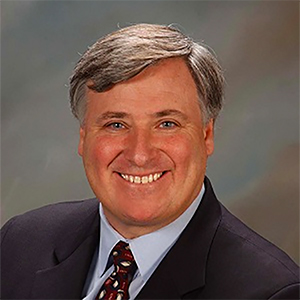
James Warren, former managing editor of the Tribune, is executive editor of NewsGuard.
___
©2026 Chicago Tribune. Visit at chicagotribune.com. Distributed by Tribune Content Agency, LLC.





































Comments