Commentary: How I broke free of cannabis, and you can too
Published in Op Eds
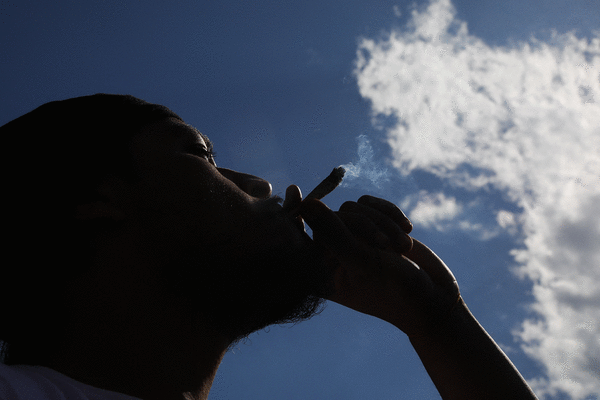
Just because marijuana is now a legalized, ubiquitous $32 billion business that’s outpacing alcohol to become America’s drug of choice doesn’t mean it’s good for you. The 21-year-old pot emporium clerk advising you which gummies to take for insomnia is not a physician or licensed pharmacist. While doctor-prescribed THC and CBD medicines help patients with debilitating illnesses like cancer, HIV/AIDS and pediatric seizure disorders, a new review of other cannabis uses found little evidence of benefits.
Unfortunately, studies on its long-term effects show the perils of rising dependence. The easier pot is to obtain, the sicker we’re getting. Regular users experience more delusions and psychosis, an increase in heart attacks and strokes and a higher risk of death. People hooked on marijuana were 10 times more likely to die of suicide, and accidental poisoning is also increasing. Most recently, UC San Diego Medical School researchers studied genetic reasons why nearly 30% of pot users will develop cannabis use disorder, Drug dependencies rarely decrease without intervention; they’re more likely to grow and spiral out of control.
Although I used pot daily for two and a half decades, I was sure it wasn’t hurting me. I had a spouse and two jobs, I argued. Yet addiction is an impulse disorder characterized by lack of awareness and denial, with insidious symptoms, so you might not realize you have a problem. In truth, I was stuck in a self-destructive cycle, unable to advance my teaching career, publish a book after trying for seven years, or get close to my husband, who hated me stoned.
After a substance abuse specialist helped me quit, I experienced surprising upsides being marijuana free. Giving it up improved my relationship with my mate, friendships, and focus, enhanced my professional life, led me to triple my income and increase charity donations. I became more authentic and empathetic (albeit more intense and emotive.)
Of course not all 78 million Americans who have tried marijuana abuse it, nor are the 15% who report using it currently. But how can you tell if you’ll become addicted or are already hooked?
“First, figure out whether your use is a harmless routine or a dependency that could become hazardous to your health,” said Frederick Woolverton, the clinical psychologist I worked with. He suggested asking yourself: Are any loved ones complaining about your habit? Are you spending more money than you can afford to buy it? Are you forgoing social events to get stoned by yourself? Do you feel worse the next day?
My response to his queries was affirmative. The next step: try quitting for two weeks. If you’re fine and can easily function, your substance use is probably not a dangerous dependency. Conversely, if you have painful withdrawal symptoms (like me), that indicates you’re on your way to a full-blown addiction. Here are ways you can nip that in the bud, so to speak.
Taper off: Some people have luck cutting down slowly. Since smoking the drug is the most toxic, according to Harvard Medical School, experts recommend switching to edibles, capsules, transdermal patches infused with cannabinoids, or a dry herb vaporizer to slow or moderate your usage and at least protect your lungs.
Ask a psychiatric provider to prescribe antidepressants: “Underlying any substance problem I’ve ever seen is a deep depression that feels unbearable,” said Dr. Woolverton. “It’s not unbearable, but it feels that way.” More effective treatments for depression, anxiety or sleep issues can often soothe withdrawal symptoms or negate the impulse for using or overuse.
Talk with an addiction specialist: Because many addicts depend on substances like others rely on people, one-to-one help on a regular basis with an experienced expert can help. My treatment cost $200 a session for a year, partially covered by medical insurance and offset by what I saved from abstaining.
Try group therapy for addiction: Instead of hanging out with stoner buddies, you’re more likely to be drug-free spending time with others trying to quit. In-person meetings with groups led by a doctor specializing in substance abuse are less expensive than individual sessions and the peer connections can sometimes make it more effective, according to Manhattan psychiatrist Carlos Saavedra.
Check-in at free Marijuana Anonymous or Narcotics Anonymous: Meetings can provide a sponsor, a like-minded cohort and free and easily available gatherings with steady support weekly, daily or even hourly, in person or online with apps like I Am Sober.
Go cold turkey: Pick a date to stop and prepare by ridding your home of pot paraphernalia, avoiding temptations and having realistic expectations for how long withdrawal might take. Interestingly, Jan. 1 can be the worst day because of high expectations. That’s why I chose a random date in October. “If people aren’t able to quit on the first try, keep trying, because it usually takes a number of attempts,” Saavedra added.
Beware the substance shuffle: After I nixed pot, I drank and smoked cigarettes more and wound up giving those up too. I thought I was finished with substance abuse. Then I started chewing gum so obsessively it led to cavities. Sugar-free gum gave me stomachaches. I had such an addictive personality, I could get hooked on carrot sticks. When stressed, I gravitated toward such myriad dependencies as caffeine, diet soda, cake frosting, popcorn and cough syrup that helped me sleep. I had to be vigilant with my diet, sleep, work and exercise schedule and address difficult emotions straight on, instead of smoking, toking, drinking or eating them away.
Seek rehab: If you can afford it, many rehabilitation and detox programs are available at hospitals and treatment facilities across the country. Sometimes health insurance covers inpatient or outpatient treatment. Contact your doctor and medical insurers to see what’s available in your network.
Make an individualized plan: There’s no one-size-fits-all technique effective for everyone. So combine techniques based on your personality and dependence issues. According to Woolverton, those willing to try several recovery options have greater chance at success, as I did. Now, 23 years clean and sober, whenever I feel like getting high, I call my mom or college roommate, take a walk and track my steps (10,000 on a good day) and/or journal about what’s really eating me. I’ve published several books since breaking my addiction, and my husband and I celebrate our 30th anniversary this summer. It turns out when you stop a toxic habit, you’re leaving room for something more beautiful to take its place.
____
Susan Shapiro is co-author of “Unhooked: How to Quit Anything” and author of the memoirs “Lighting Up” and “The Forgiveness Tour.”
©2026 Los Angeles Times. Visit at latimes.com. Distributed by Tribune Content Agency, LLC.




































Comments