Editorial: Congress should get moving on Russian sanctions bill
Published in Op Eds
President Donald Trump prudently backed off from his Greenland invasion threat, perhaps signaling that he’s ready to again turn his attention to containing one of this nation’s actual enemies, Vladimir Putin and Russia.
For nearly a year, the Senate has sat on a bipartisan proposal intended to exert additional pressure on Putin to end his misguided war on Ukraine. The legislation, written primarily by Sen. Lindsey Graham, R-S.C., and Sen. Richard Blumenthal, D-Conn., would give the president the authority to impose secondary sanctions or tariffs of up to 500 percent on countries that are helping Putin finance his aggression by purchasing Russian energy or other exports.
China and India are the main culprits, although the latter has indicated that it will attempt to find replacement sources for Russian oil.
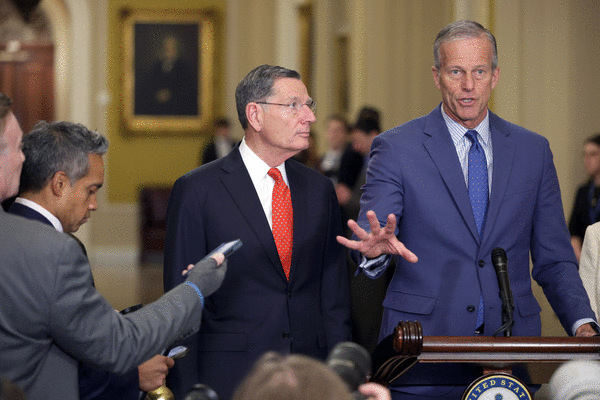
Senate Majority Leader John Thune, R-S.D., has previously said that he wanted Trump’s support before moving forward. But that is no longer an issue. Shortly after the new year, The Associated Press reported, the president confirmed that he “is now on board” with the effort, which has 80 co-sponsors in the upper chamber.
The legislation would be “well-timed,” Sen. Graham told media outlets because “Ukraine is making concessions for peace and Putin is all talk, continuing to kill the innocent.” Indeed, Putin’s game is to drag out or delay talks as he continues his bloody efforts at territorial conquest as part of his nostalgia for the authoritarian Soviet Union.
Trump has previously maintained that Putin wants peace, while also admitting that it’s possible he’s being “played” by the Russian leader. Giving his approval to the Graham-Blumenthal bill is a sign that the administration is ready to take a tougher stance on the issue.
Yet a timetable for pushing the legislation remains elusive. Sen. Thune told Politico that the proposal would have to originate in the House, which is constitutionally charged with the power to initiate spending bills. Fine. House Speaker Mike Johnson has his own issues with his razor-thin majority, but the bill should garner plenty of Democratic support. He should consult Sen. Thune and get the process moving.
Trump has shown an eagerness to use tariffs as a means of forcing his foreign policy priorities on other nations. The Supreme Court is currently considering whether he has the power to act unilaterally in this regard. Yet the Graham-Blumenthal bill would give him congressional approval to turn up the heat on Russia and China, increasing American leverage. There’s no need for more delays. Congress should act.
©2026 Las Vegas Review-Journal. Visit reviewjournal.com.. Distributed by Tribune Content Agency, LLC.
















































Comments