Editorial: Keep judges and politicians out of college sports
Published in Op Eds
Congress and the courts have all but destroyed the thing that made college sports so special, the idea of amateur student athletes competing for their schools in exchange for a free education and the opportunity to display their skills on a stage that could lead them to the professional sports leagues.
Now, with the NCAA increasingly losing control of collegiate athletics, there's far less distinction between the pro leagues and college teams. Many of the top college players attract multi-million dollar deals and have agents representing them.
Nearly gone are the days when coaches recruited athletes in their living rooms, winning over parents with promises of providing their children with an opportunity to grow as both people and players. Now, bargaining is done in offices, and it's all about "show me the money!"
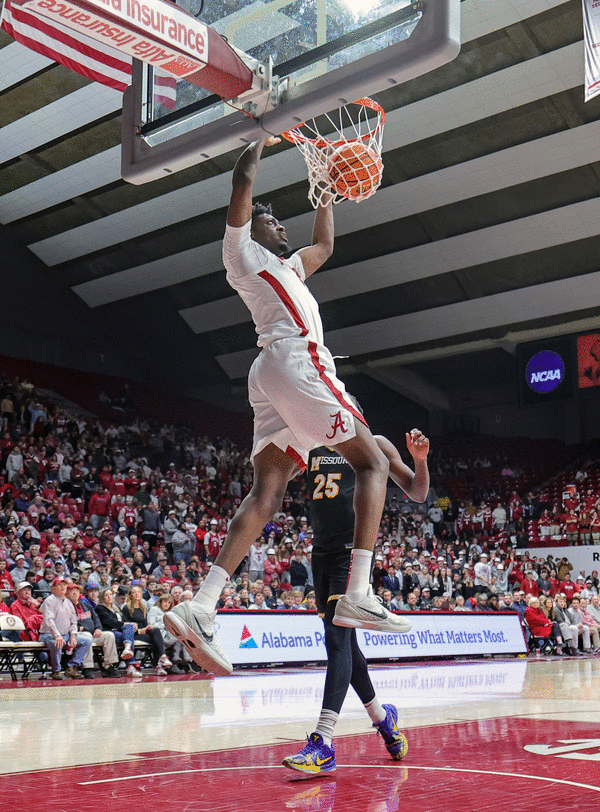
The latest example of how rapidly the integrity of collegiate sports is deteriorating came in January, when Charles Bediako, a member of the Detroit-based Motor City Cruise NBA G-League team, walked onto the court in an Alabama Crimson Tide uniform to face the Tennessee Volunteers in a critical Southeastern Conference game.
The 7-foot center left Alabama as a sophomore three years ago to enter the NBA draft. He has since bounced around the fringes of the big league.
Under NCAA rules, Bediako is ineligible to play college ball again because he failed to withdraw from the NBA draft before the deadline. He's also signed three professional contracts with NBA teams.
The collegiate association tried to keep him from coming back, but a local Alabama judge, who is also a Crimson Tide booster, issued an injunction that blocked the NCAA from intervening.
Though Alabama lost, Bediako had a solid game. If this works out for win-at-all-costs coach Nate Oats ― he's the one who allowed a player associated with the 2023 murder of a young woman to remain on the team ― go ahead and bet the floodgates will open.
That a single local judge could have a profound impact on the college basketball season is the end-product of five years of meddling by judges and politicians in the affairs of collegiate sports.
It started with the 2021 Supreme Court ruling striking down NCAA bans on gifts and other financial awards to college athletes. That paved the way for legislation in a number of states allowing college players to benefit financially from their own name, likeness and image (NIL).
In a settlement with the U.S. House last year, the NCAA agreed to pay $2.8 billion to athletes who competed between 2016 and 2024, before NIL. It also allowed Power Five schools to share 22% of their annual sports revenue with players.
Federal courts struck down rules requiring a waiting period for transfer athletes to play for their new teams, creating the so-called transfer portal that has seen some athletes playing for multiple schools during their college careers.
Few would argue this outside influence has improved college athletics. Coaches are less likely to build successful programs over several seasons than they are to recruit an entirely new program every year. And few talk about class time, grade point average or graduation rates. Student athlete has become a quaint notion at the big universities.
Congress is considering a host of new laws governing college sports, including legislation from Republicans to prevent athletes from joining a union and a bill from Democrats providing them with post-eligibility medical care.
The changes imposed on the NCAA require universities to raise tremendous amounts of money to compete for players. That's led to questionable practices, such as Michigan State University's sale of part of its athletic program to a private investor.
Lawmakers ― and judges ― should weigh the results of their previous actions before diving any deeper into what should be the NCAA's business.
And the association should head off coaches from copying Coach Oats by immediately setting aside all victories in which a player ineligible by NCAA rules participated. That's a good place to start halting the slide toward amateur-in-name-only by collegiate athletics.
©2026 www.detroitnews.com. Visit at detroitnews.com. Distributed by Tribune Content Agency, LLC.




















Comments