Editorial: Iran's neighbors aren't happy after being targeted
Published in Op Eds
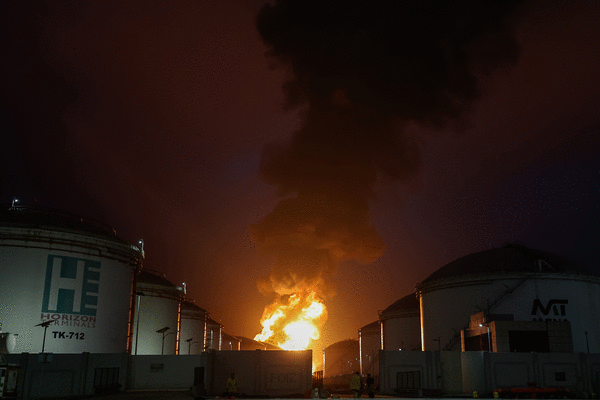
The United States and Israel ramped up attacks on Iran on Wednesday, with Defense Secretary Pete Hegseth stating more American assets were headed to the region and the Jewish state taking increasing aim at Iran’s infrastructure, according to news accounts. CBS reported that Iran’s power grid was completely shut down.
Iran’s scattershot response has, as of Wednesday evening, led to the deaths of six Americans. The nation mourns their passing and prays for their families and loved ones.
The situation remains highly fluid, and it would be folly at this early stage to predict where this conflict will ultimately lead. But Iran’s attacks on its Arab neighbors present opportunities for building long-term alliances that work toward stability in the region.
In response to the U.S.-Israeli airstrikes — which have killed dozens of the Iranian leaders — Iran has sent missiles and drones into neighboring states, striking civilian areas. This has been met with anger and criticism from many leaders in the region, further cutting off Iran.
“Iran’s decision to retaliate across the Middle East has amounted to a strategic mistake,” NBC News reported Tuesday, “isolating Tehran and angering neighbors.” One Arab diplomat told the network, “We’re put in this situation; we have to deal with it. The Gulf countries have no choice — it was a huge mistake for Iran to strike the Arab neighbors. People are furious. They should not have attacked our bases.”
An alliance of six Arab nations — Bahrain, Jordan, Kuwait, Saudi Arabia, the United Arab Emirates and Qatar — issued a joint statement condemning “Iran’s indiscriminate and reckless missile and drone attacks against sovereign territories.”
The development indicates that many Middle East nations aren’t shedding tears over the potential dissolution of a government that has for decades sown death and destruction throughout the region.
“The regime in Tehran sought to expand the battlefield to apply the pressure,” Shimon Refaeli, a senior fellow at the David Institute for Security Policy, argued in The Wall Street Journal this week. “Instead, it consolidated the moderate camp. Countries that were conflicted, divided or neutral suddenly found themselves on the same side as Israel. For them, Iran is no longer a distant enemy; it is a home-front enemy.”
President Donald Trump on Wednesday survived a war-powers vote in the Senate, meaning he’ll have the freedom to prosecute this military offensive for the near future. A primary goal for the White House must be to capitalize on anger toward Iran in the region by advancing diplomatic initiatives promoting a way forward that ultimately favor peace over a constant state of conflict.
©2026 Las Vegas Review-Journal. Visit reviewjournal.com.. Distributed by Tribune Content Agency, LLC.




















































Comments