Mary Ellen Klas: Trump's immigration raids are reshaping the Catholic vote
Published in Op Eds
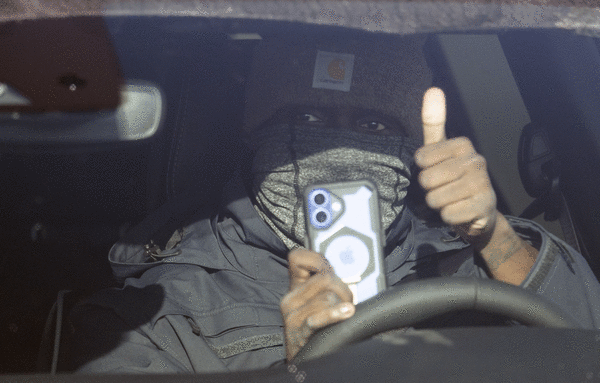
It’s not normal for a priest to bring a cell phone into the sanctuary when he is celebrating Mass. But when Father Paul Haverstock heard there were masked immigration agents in the parking lot of his church in January, he said he wanted “a clear recording of me letting the agents know that we’re in the middle of a religious service.”
Haverstock is pastor at St. Gabriel the Archangel Catholic Church in Hopkins, Minnesota, which has a largely Spanish-speaking congregation. He never needed to do any video recording that day, but having federal agents idling outside his church has terrorized his community, he told the Catholic News Agency. A month earlier, ICE agents had arrested the church’s maintenance worker, who had lived in the U.S. for 25 years.
Since President Trump rescinded protections that prevented ICE from targeting immigrants at houses of worship, Catholic communities like St. Gabriel’s have been under surveillance. Apprehending Latino parishioners has proven to be one way the White House is using to achieve its deportation quotas. An estimated 36% of all Latino adults in the U.S. are Catholic, and Hispanics account for most of the church’s growth in the country.
But while numerous polls show most Americans disapprove of Trump’s policy of racially targeted mass deportation, the Catholic Church has stood out as one major institution that is pushing back. The systemic attacks on immigrants have drawn powerful opposition from parish priests all the way up to Pope Leo XIV. The fight has not only helped the newly minted U.S.-born pope to bring a divided church together — it has helped galvanize opposition to Trump among Latino Catholics.
“Any goodwill that President Trump had gained in the last election cycle has really been frittered away because of this very aggressive policy toward immigrants in the United States,” said Melissa Deckman, CEO of the Public Religion Research Institute, a nonpartisan nonprofit polling organization.
Hispanic Catholics tend to prioritize immigration much more than other Americans, Deckman told me. They also place a greater emphasis on economic concerns than other voters, she said, which creates a “one-two punch that is leaving a lot of Latinos, particularly Latino Catholics, unhappy with [Trump’s] performance.”
For decades, Hispanic Catholics tended to vote staunchly Democratic, but Trump made significant inroads in 2024. He saw a 12-point gain over his 2020 vote share among Hispanic Catholics, winning 48% of their vote, according to the Pew Research Center.
Now, Trump’s support among Latino voters has cratered. By November, a majority of Latino voters disapproved of Trump’s handling of the economy and immigration, Pew found. PRRI’s latest American Values Survey reinforced that conclusion, finding that only 28% of Hispanic Catholics viewed Trump favorably, nearly seven in 10 had little to no confidence in Immigration and Customs Enforcement, and seven in 10 opposed more ICE funding.
The findings suggest that skepticism about the administration’s immigration policy — particularly among Hispanic Catholics — has made it nearly impossible for the GOP to maintain Trump’s gains. It also helps explain why Latino voters propelled record turnout in recent elections in red states like Texas and Florida, where voter shifts helped secure victories for Democrats.
Contributing to Hispanic Catholics’ focus on immigration is the leadership role the Church has played. In October, Pope Leo XIV issued his first encyclical, Dilexi Te (I Have Loved You), which urged bishops worldwide to champion social justice and defend migrants. He emphasized that he’s not just talking about material poverty, but “moral and spiritual poverty” and “the poverty of those who have no rights, no space, no freedom.”
The American bishops listened and, for the first time in 12 years, issued a “Special Message” denouncing the “climate of fear” and “dehumanizing rhetoric and violence, whether directed at immigrants or at law enforcement.” They acknowledged that “nations have a responsibility to regulate their borders,” but they also called for comprehensive immigration reform, a task Congress has failed to achieve for 40 years.
“Seeking to deport millions of men and women and children — families who often lived here for decades, many children who don’t know other countries — is contrary to Catholic faith and, more fundamentally, contrary to basic human dignity,” said Cardinal Robert McElroy of Washington, who spoke about the issue with a dozen other Catholic clerics in St. Paul in February.
Neither Hispanics nor Catholics are a monolith, of course. Vice President JD Vance, a convert to Catholicism, has criticized the church’s leaders “for not being a good partner in common-sense immigration reform.” The U.S. Conference of Catholic Bishops had a “complicated 12-year relationship” with Pope Leo’s predecessor, Pope Francis, according to the National Catholic Register. Francis often bypassed them when making leadership appointments, and his supporters criticized the bishops for downplaying his teachings on the environment, the poor and immigrants while focusing more on issues like gay marriage and abortion.
According to PRRI’s survey, a racial divide within the Catholic Church today reflects these tensions. Most White Catholics consistently agree with larger majorities of the White evangelicals in supporting Trump and his policies, while Hispanic Catholics take an opposite view. The PRRI poll shows that while Hispanic Protestants are evenly divided on Trump’s performance, there is a 29-point gap between White and Hispanic Catholics over the president.
These persistent divisions within the church make the clergy’s leadership on immigration all the more profound, said Christopher Hale, who was former President Barack Obama’s national faith vote outreach coordinator and now writes the Letters From Leo newsletter about the first U.S. pope. “Even among the conservatives, they have responded to Leo in a way that they did not under Francis,” he told me.
Hale has chronicled how conservative bishops issued dispensations, releasing Catholics who feared being detained from the obligation to attend Mass. He has detailed how, in deep-red Tennessee, all three of the state’s Catholic bishops condemned the ICE raids in their communities. And after the deaths of Renee Good and Alex Pretti in Minneapolis in January, Cardinal Joseph Tobin of New Jersey, one of the top three highest-ranking clerics in the country, called on Congress to oppose funding the Department of Homeland Security.
Just as Trump’s cruel treatment of immigrants has soured many Latino voters on his presidency, many conservative Catholic leaders have risen to the occasion and are using the power of their pulpit to condemn it too. To some, it may look like they are standing up against Trump. It’s more accurate to say they are standing up for the gospel.
____
This column reflects the personal views of the author and does not necessarily reflect the opinion of the editorial board or Bloomberg LP and its owners.
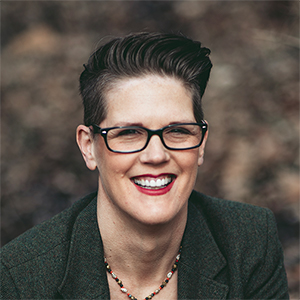
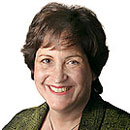
Mary Ellen Klas is a politics and policy columnist for Bloomberg Opinion. A former capital bureau chief for the Miami Herald, she has covered politics and government for more than three decades.
©2026 Bloomberg L.P. Visit bloomberg.com/opinion. Distributed by Tribune Content Agency, LLC.













Comments