Commentary: Democracy isn't eroding. It's evolving. The question is: Toward what?
Published in Op Eds
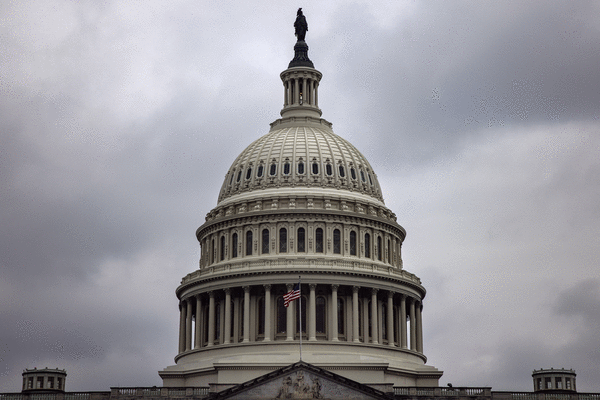
I fell in love with democracy before I fully understood it.
In high school civics classes in the 1990s, I learned about a system that was imperfect in its origins but evolving toward something better. I believed in that evolution. I believed that democracy, if nurtured, could become more inclusive than the one it started as.
That belief stayed with me. It shaped how I studied political science in college and how I think about public life today. It’s why, over the years, people have encouraged me to run for office—not because I am a politician, but because I pay attention to how democracy works, who it works for, and who it leaves out.
Now, at 50 years old—standing alongside a democracy approaching its 250th birthday—I find myself asking a different question.
Not whether democracy is working. But whether we are paying attention to what it is becoming.
Much of today’s public discourse suggests that democracy is eroding—under threat, unraveling, or being dismantled. These conversations often fall along familiar partisan lines, with each side blaming the other for its decline.
But I see something else. I don’t believe democracy is eroding. I believe it is evolving. And that distinction matters.
Because if democracy is evolving, then this moment is not just about protecting it from collapse. It is about shaping the direction of its growth.
American democracy has always reflected who we were at the time it was created.
In its original design, it was not meant to include everyone. It concentrated power in the hands of a few and prioritized the interests of a select group. That was not a flaw of the system. That was the system.
Over time, however, we have pushed against those limits. Through struggle, advocacy, and collective action, democracy expanded. It became more inclusive—not because it was designed that way, but because people demanded it.
Every gain we point to today was the result of that pressure.
Which is why the idea that we can return to a time when democracy “worked better” is, at best, incomplete—and at worst, misleading. Because the truth is: it has never worked equally well for everyone.
We are now at an inflection point. Not because democracy is breaking—but because it is moving. The real question is not whether we can restore it to some imagined version of its past. The question is whether we want it to evolve in the direction it is currently going.
Because evolution is not inherently progress. It is simply change.
And change, without intention, can just as easily reinforce the exclusions we have spent generations trying to dismantle.
Turning 50 has taught me something about milestones.
They are not just moments for celebration. They are invitations for reflection—for honesty about what has worked, what hasn’t, and what must change moving forward.
If that is true for a life, it should be true for a democracy.
As we approach 250 years, we should acknowledge how far we’ve come. But we must also confront the reality that democracy, in all its forms, has never fully served everyone all the time.
And it never will. Because no system can.
In my work facilitating dialogue across differences, I have learned a simple truth: No one gets what they want all of the time.
That is not failure. That is the nature of collective life. But a healthy system ensures that everyone gets some of what they need, some of the time. That is the balance. And that is where we are falling short.
Because right now, for many, it feels as though a select few are getting most—if not all—of what they want, while others are left navigating a system that does not reflect their needs, their voices, or their lived experiences.
If democracy is evolving, then shaping its future cannot be left only to those who hold formal power. It requires something of all of us.
That begins with civic responsibility—not in the abstract, but in practice. It means becoming more informed about the issues that shape our lives and going beyond headlines to understand how decisions are made and by whom. It means being thoughtful about who we choose to represent our voices—not just based on party affiliation, but on whether they reflect the kind of democracy we want to build.
It also requires a shift in how we think about democracy itself.
We cannot continue to approach it as a zero-sum game—where one group’s gain must come at another’s expense. In a country of more than 330 million people, democracy cannot function sustainably if it only works well for some while failing others. The goal is not for any one group to get everything it wants. That has never been possible.
But a functioning democracy must ensure that all people are able to access some of what they need, some of the time—and that no group is consistently excluded from the system’s benefits.
I do not hold elected office. I am not a policymaker. But I live in this democracy. I experience it every day. And that experience matters.
Because democracy is not just something we study or debate. It is something we live. And the people who live within it—regardless of title or position—have a role in shaping what it becomes.
So as we approach this milestone, the question is not whether to celebrate democracy or criticize it. The question is whether we are willing to take responsibility for its future.
Not by looking backward in search of a version that never fully existed, but by deciding, together, what we are willing to learn, how we are willing to engage, and what we are willing to build.
Because democracy has always been evolving. The question now is whether we will shape that evolution—or simply live with where it takes us.
____
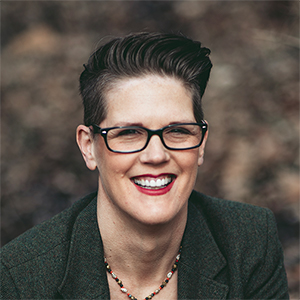
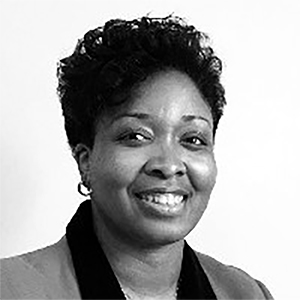
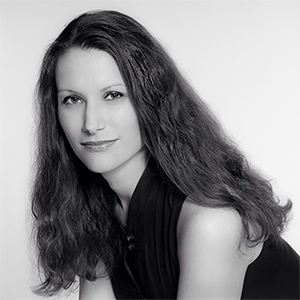
Randi McCray is the Associate Director of School Community and Culture at the Yale School of Public Health and a Public Voices Fellow at Yale University.
_____
©2026 The Fulcrum. Visit at thefulcrum.us. Distributed by Tribune Content Agency, LLC.
























Comments