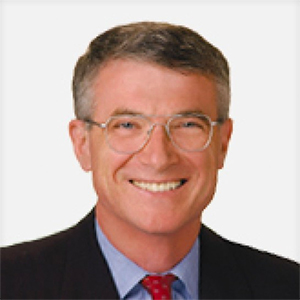
Brad Carson's latest role puts him in the fight over AI
Published in Political News
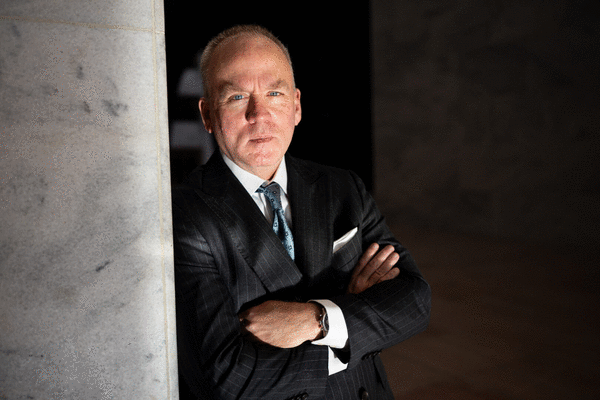
WASHINGTON — When the people of Oklahoma said no to electing him to the Senate in 2004, Democratic former Rep. Brad Carson started saying yes.
“I supported candidates I believed in. That brought me back to Washington, D.C., to work at the Department of Defense,” Carson said. “I said yes to go be an academic at University of Virginia. And so I was always looking for interesting things to do.”
It’s been 21 years since Carson left the Hill at the end of two terms representing Eastern Oklahoma’s 2nd District, including parts of outer Tulsa. Since then, he ran the Cherokee Nation Businesses in Oklahoma. He worked in weapons intelligence for the U.S. Navy in Iraq — his favorite job, and one that earned him a Bronze Star and Army Achievement Medal. He taught classes and worked on energy policy and did a bit of consulting.
He even ran a couple of ultramarathons, though it’s been years since his last race, in Peru.
“I spent seven days in the hospital with dengue fever, so I haven’t run one since.”
AI and higher education
Most recently, Carson served as president of the University of Tulsa. While there, he co-founded Americans for Responsible Innovation, a nonprofit group focused on ensuring that technology, including artificial intelligence, serves the public interest. The group reports that it has received funding from philanthropic groups including those associated with founders of eBay and Facebook.
In higher education, he saw a world on the brink of fundamental change. AI, he believes, will alter how students learn and professors teach and conduct research. It could change the value of a college education and what people need from their schools.
Under his tenure, Tulsa brought back undergraduate degrees in philosophy, religion and music. In an AI-powered world, Carson believes, those subjects will be “more important than ever,” a view he admits is currently “a bit unfashionable.”
“The work we actually do vocationally will soon be displaced by machine intelligence. So really, the questions for most of us over the next 20 to 50 years, [are] like: What does it mean to be a human? What is good in life? What is beauty? How should I live? What is the good life?”
Last May, Carson left the university to lead ARI and its advocacy affiliate, the Center for Responsible Innovation, full time. On the one hand, he’s excited about AI and calls himself a “super user” of large language models for research and coding work.
But on the other, his new job is focused on preventing “near-term harms” — to kids, from cognitive off-loading, and from insufficient human oversight — and long-term fears of “misaligned” AI and loss of control. Increasingly, he thinks the two go hand in hand.
“These near-term harms, whether it’s algorithmic bias and discrimination, dangers to children, AI psychosis, over reliance of students on LLMs to do the work … those are very related to concerns about the degradation of democracy and our ability to think clearly about the future,” Carson said. “As the institutions become degraded, they’ll be harder to use … to grapple with misaligned AI.”
At the helm with ARI, Carson has advocated against President Donald Trump’s executive order directing federal agencies to sue or pull funding from states with certain AI regulations and other efforts in Congress to preempt state AI laws.
That work has brought him back to D.C. to advocate on AI policy, applying the lessons he learned 20 years ago about how the Hill works.
He sees members “overwhelmed by the sheer number of issues” and the necessity to do right by every question, even when it’s “hard to be an expert on everything.” He also knows the vital role staff play in any given office, and has learned to navigate generational divides in the use of tech like LLMs.
“That’s where the staff can be really important … They understand how to use it for good. They understand how you can use it for ill. And so they’re a very important audience for the work I do,” he said.
Last year, Carson also co-founded Public First Action with former Utah Republican Rep. Chris Stewart. For that group and two super PACs, one for each party, the former members hope to raise $50 million to counterbalance “anti-safeguard super PACs,” according to a statement announcing the groups’ founding.
Carson said that he and Stewart “intend to support candidates who believe we shouldn’t sell our best chips to China and who believe there should be reasonable guardrails around AI.”
Carson said that he believes growing voter concerns, especially over jobs and kids’ safety, will eventually create momentum for Congress to regulate AI.
‘Culture war’
That optimism, and a belief that Congress “usually does the right thing,” sits side by side with Carson’s long-held worries about a disconnect between his party and places like the one where he grew up.
Carson won his House seat as a moderate Democrat with just under 55% of the vote. Two years later, he surged to 74%. But things have changed. Carson’s former district has been redrawn three times since Carson’s first race. In 2024, Republican Rep. Josh Brecheen won his second term in the district with 74% of the vote.
How could a Democrat win where Carson did all those years ago?
“It’s not possible today. It would take a 10-year reclamation effort, really,” he said.
Carson didn’t run for a third House term, instead opting to run for Senate in an open-seat contest after incumbent Republican Don Nickles decided to retire. He lost to Republican Tom Coburn, taking just 41% of the vote, though he did run 7 points ahead of Democratic presidential nominee John Kerry in the state.
In the wake of that loss, Carson wrote an essay for The New Republic that he now calls “fairly prescient,” though he said at the time it was “a bit controversial in some circles.” The piece detailed his visit to an Oklahoma Baptist church vehemently opposed to abortion.
“The culture war is real,” he wrote. “And it is a conflict not merely about some particular policy or legislative item, but about modernity itself.”
America, he said, was split over issues of identity and individuality, nationality and culture.
In 2026, he sees a Democratic Party that will sometimes be able to win the presidency, but will struggle in its current form with the Senate and even House maps.
“We don’t have a message, really, that resonates with a broad swath of the geography of America. And that’s not good electorally, and it doesn’t strike me, actually, as good as a matter of principle either,” he said.
He would like to see the Democratic Party focus on the working class and on bridging the increasingly wide partisan divide, including on issues even deeper than the “good start” of affordability.
“Dealing with this year’s electricity bills is very important, and we might win some races on that, and that’s a good thing,” he said. “But you have to … convince people that you’re fundamentally like them, that their values are ones you hold close to your own heart.”
He thinks there’s hope for Democrats running for national office to connect with voters on fundamental issues and start to rebuild the party’s brand. But when asked who might fill that role, he declined to get specific.
Who does Brad Carson hope will run for president in 2028?
“A Democrat who can win.”
©2026 CQ-Roll Call, Inc., All Rights Reserved. Visit cqrollcall.com. Distributed by Tribune Content Agency, LLC.



Comments