POINT: Why Trump's tariffs work
Published in Political News

The debate over President Donald Trump’s tariffs was never really about economics; it was about framing.
Instead of asking whether tariffs generated leverage, revenue or strategic correction, many observers chose a different path: emotional labeling. Tariffs were routinely described as “tantrums,” “outbursts” or “chaos.” Policy was treated as psychology. Outcomes were secondary to impressions.
That choice matters because tariffs did work, and the framing was designed to obscure why.
Strip away the narrative, and tariffs delivered several concrete outcomes that critics said were impossible.
They generated substantial revenue, largely paid by foreign producers seeking access to the U.S. market. They altered negotiating dynamics, a Trump specialty, forcing counterparties to the table long-resisted reform. They encouraged supply-chain diversification and domestic investment. And they demonstrated that the United States was willing to enforce reciprocity rather than merely request it.
Those effects are not theoretical. They are observable, especially in the trade agreement frameworks Trump made with Japan and South Korea, which not only set tariff rates and rules of the road on various goods and services. It also became the impetus for companies from both countries to make investment commitments in the United States to the tune of hundreds of billions of dollars, set to supercharge U.S. growth and create good-paying jobs.
Yet, rather than engaging those results, coverage focused obsessively on tone. That is a tell. When policy opponents avoid debating mechanisms and outcomes, it often signals that the results are inconvenient to their case.
Tariffs worked because they addressed a structural reality that polite trade discourse often ignores: the United States is the world’s indispensable market, and Trump demanded that American consumers and workers be treated with respect.
Access to American consumers is not a shared asset — it is leverage. For decades, the U.S. largely refrained from using it, even as trading partners deployed subsidies, barriers and non-tariff restrictions. The result was a system where imbalance became normalized.
Tariffs changed incentives.
They raised the cost of asymmetry. They forced exporters and foreign governments to internalize behaviors that had previously been externalized onto American workers and producers. In practical terms, they transformed trade discussions from abstract principles into concrete negotiations.
In a trade agreement framework with the European Union, bureaucrats in Brussels were compelled to reconsider economically harmful regulations that harmed U.S. and European companies. Similar trade agreement frameworks that Trump reached with Southeast Asian countries led these nations to reconsider their relationship with China and the economic coercion they used to secure leverage.
That is why tariffs provoked such an intense reaction. They didn’t merely alter flows of goods; they altered power dynamics.
From a persuasion standpoint, labeling Trump’s tariffs as “chaos” was more effective than arguing they were wrong. Emotional framing short-circuits analysis. If a policy can be made to feel reckless, it never has to be evaluated on its merits.
This explains the fixation on metaphors like “tantrum” or “bull in a china shop.” Those phrases do not describe outcomes; they cue emotional judgment against a president they oppose. They invite audiences to recoil rather than assess.
Persuasion tactics have a shelf life. When predicted disasters fail to materialize — when markets adjust, negotiations occur and revenues accrue — the emotional frame weakens. Repetition stops persuading and starts revealing intent.
That shift is now visible.
One reason tariffs were so easy to mischaracterize is that they were treated as a break from normalcy, rather than a correction of it.
For years, the U.S. tolerated chronic trade deficits, intellectual property leakage, and industrial hollowing while being told this was the price of leadership. Resistance to that arrangement was portrayed as hostility to trade itself.
Tariffs were not anti-trade. They were anti-imbalance. Executives from different parts of the U.S. economy — from the automotive industry to the pharmaceutical manufacturing industry — have readily acknowledged that tariffs, along with tax and regulator reform, changed their behavior and incentivized them to invest more in the U.S.
They did not close markets; they conditioned access to them. They did not reject globalization; they rejected one-sided globalization. And they did not create instability so much as reveal how dependent stability had become on American restraint.
From that perspective, tariffs were less a disruption than an awakening. Public opinion shifted not because of rhetoric, but because experience contradicted the warnings.
It was argued that tariffs would destroy growth. Growth continued. They were told prices would spiral uncontrollably. They didn’t. They were told allies would flee. Instead, negotiations intensified.
Over time, voters began to notice a pattern: the confidence of the predictions did not match their accuracy. That gap eroded trust in the framing itself.
In persuasion terms, audiences recalibrated. They began to distinguish between emotional anti-Trump storytelling and empirical reality. Once that happens, narratives lose force quickly.
None of this requires sentimentality about leadership or personalities. Policies should be judged by function, not flair.
Tariffs are neither universally appropriate nor cost-free. The blanket claim that they are inherently irrational has been disproven by their effects. Used selectively and strategically, they restored leverage that had been voluntarily surrendered.
That lesson matters going forward, regardless of who occupies the Oval Office. Indeed, more can be done by using tariffs to change behaviors in other countries.
Europe is moving forward with so-called “corporate sustainability due diligence” regulations, and environmental, social and governance laws designed to hurt U.S. companies operating on their continent. Europe, along with Australia, Brazil, South Korea and others, is considering harmful digital market laws designed to hurt U.S. tech companies. This is why the administration should consider imposing tariffs if U.S. companies are required to bear harmful regulatory burdens.
A nation that refuses to use its economic tools will eventually find that others are happy to use theirs. A nation that mistakes passivity for stability will discover that stability was borrowed, not earned.
The most revealing aspect of the tariff debate was not the policy, but the effort to delegitimize it through emotion rather than evidence. Calling tariffs “tantrums” was never analysis; it was persuasion — designed to make people feel before they thought.
Tariffs worked because they changed incentives, restored leverage and corrected imbalances that polite language had allowed to harden into norms.
The narrative said chaos. The data said leverage.
Increasingly, the public noticed the difference. It gives Trump the political capital he needs at home to change behaviors abroad. Once people start judging policy by outcomes instead of adjectives, the frame collapses.
_____
ABOUT THE WRITER
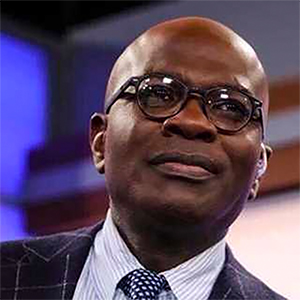
Steve Cortes is president of the League of American Workers, a populist right, pro-laborer advocacy group. He wrote this for InsideSources.com.
_____
©2026 Tribune Content Agency, LLC

















































Comments