3 Illinois GOP rivals for US Senate sidestep criticizing Trump in debate but note differences
Published in Political News
CHICAGO — Three Republicans seeking the party’s March 17 nomination for the U.S. Senate did what they could to avoid airing disagreements with President Donald Trump’s policies while still acknowledging some differences they have with the GOP’s national leader.
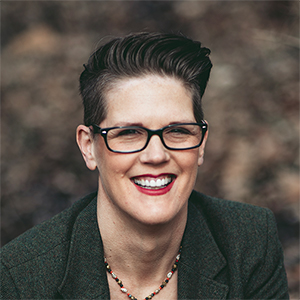
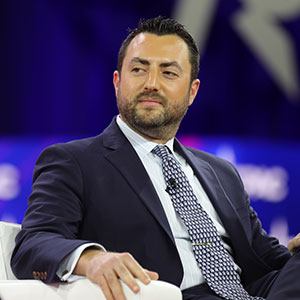
Don Tracy, Jeannie Evans and Casey Chlebek appeared Wednesday night at an hour-long debate hosted by ABC-Ch. 7, Univision Chicago and the League of Women Voters of Illinois and Chicago, with each of the candidates making some missteps as they contended a Republican could win the race for retiring Democratic U.S. Sen. Dick Durbin’s seat in deep blue Illinois.
Tracy, a former state GOP chairman, joined the other two in opposing an increase to the $ 7.25-per-hour federal minimum wage. He noted Illinois had increased its minimum wage for developmentally disabled workers and said, “Some of these people cannot produce anywhere near the value of the minimum wage.”
Chlebek, who has unsuccessfully sought the GOP U.S. Senate nomination in 2020 and 2022, answered the minimum wage question by instead talking about immigration. During the debate, he had difficulty understanding questions and frequently asked moderators to repeat them. He also said “abolishing property taxes” was a key campaign plank, though the federal government has no role in levying local real estate taxes.
Evans, an attorney billing herself as a “fresh face of the Republican Party of Illinois,” said she was unaware that her campaign website party lacked any mention of her political party affiliation. She tried to shy away from questions about whether she agreed with Trump’s decision to pardon Jan. 6 rioters who were involved in the deadly 2021 insurrection attempt to overturn Joe Biden’s election, saying, “It’s 2026. I’m moving forward.”
After the debate, Evans told reporters, “I was not involved in those decisions. I didn’t see all the decisions” involving the presidential pardon. She also tried to avoid answering a question about whether she agrees with Trump’s unfounded belief that the 2020 election was stolen, first repeating that she’s “ready to move forward” before acknowledging, “I have not seen the evidence of the election being stolen, so I’m just ready to move on to other topics.”
All three found various points to praise Trump.
“I’d like to focus on the things that I agree with,” Evans said. “I think this administration is doing a tremendous job in various areas,” such as securing the border and pushing to reduce business regulations.
“We have a very energetic president,” Tracy said, adding that asking him for any areas of disagreement with Trump was “a very broad question because there’s so many different policies, so many different things the president is trying to do.”
Chlebek said he was “totally on board with President Trump regarding” deregulation, adding “the extra protections that we have by all these over-regulated industries is actually a killer for many, many businesses.”
But all three said they did not support Trump’s call to nationalize elections, although Chlebek said voting should be limited to one day nationally and made the baseless claim that voting by mail is “prone to, actually, fraud.”
The three also expressed concerns with Trump’s tariff policies, with Evans noting that she is a “free market economist,” while Tracy contended “we’ve been subsidizing the world, including China and Europe,” for way too long. Chlebek said tariffs should not be used in an “arbitrary fashion” and should be used only to retaliate against countries that dump goods into the United States.
Evans and Tracy blamed the state’s sanctuary policies for encouraging illegal immigration. Evans said she would “work to build cooperation between local, state and federal law enforcement.” Tracy said Trump’s aggressive immigration enforcement policies have “worked around the country. In sanctuary cities, due to massive resistance, it’s not working as well as it should.”
But Chlebek, who emigrated legally from Poland to Chicago with his family as a youth, criticized immigration enforcement agents for using “arbitrary rules” and said he opposed “a blanket way of just removing people from the streets.”
“If somebody is here five, ten years, we should apply a little bit different approach to them because maybe their positions are justified and maybe, as being good citizens and paying taxes, we should be giving them a way to citizenship,” he said.
Tracy, who lost a 2002 bid for a state Senate seat when he ran as a Democrat and in 2010 was an unsuccessful GOP lieutenant governor candidate, took a jab at Evans by saying the U.S. Senate was “certainly no job for a political novice.”
“Now that the U.S. Senate seat is going to be open, it’s a terrific opportunity for an Illinois Republican to win statewide again in Illinois. But winning that seat will not be easy. It will be an uphill dogfight,” said Tracy, a lawyer from Springfield who, with his siblings own Dot Foods, the world’s largest food service company. “I have worked with diverse coalitions, which is like herding cats sometimes. I know how to deal with adversaries. I am the most qualified candidate to win that particular seat.”
But Evans noted “the two others on this stage have run before on multiple occasions.”
“It’s time for a fresh face of the Republican Party in Illinois. I am ready to work hard to motivate people with conservative values across our entire state to come out to vote in November. My message will resonate,” she said.
Chlebek asked voters “to give me a chance to bring accountability and true leadership to Washington. I think we can do better.”
_____
©2026 Chicago Tribune. Visit chicagotribune.com. Distributed by Tribune Content Agency, LLC.




























Comments