Commentary: How Trump could earn farmers' support
Published in Political News
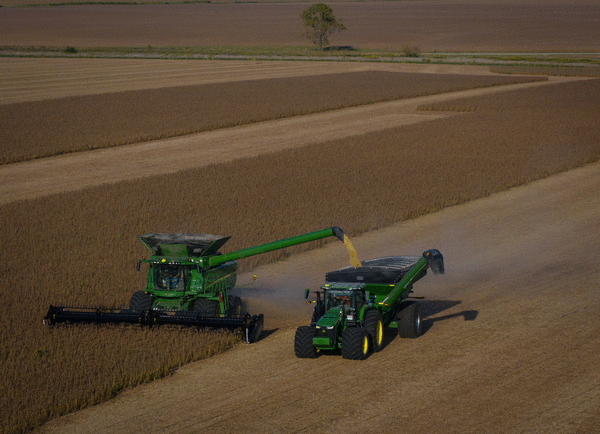
Every morning over buckwheat pancakes and sausage, my father and grandfather would decide which fields to work that day and share an update about their cattle. Then, inevitably, the talk would move on to the low price of milk and the government’s part in it.
“It’s all a game,” my grandfather would declare, throwing up his hands. “They rigged it against us.”
This sentiment has existed in American agriculture for more than three decades, especially on dairy farms like the one in New York State where I grew up. The numbers are stark: From 2003 to 2019, the United States lost more than half of its dairy farms due to low prices and a volatile market. Family farms disappeared, and those that remained had to keep getting bigger to survive, a trend that has continued in all farming industries.
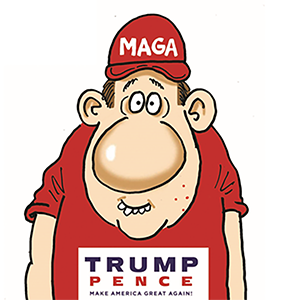
Disillusioned farmers have by and large thrown their support behind President Donald Trump — not because they believe the New York real estate developer understands them, but because Trump promised to disrupt the political mores and systems that had left them behind.
As a candidate on the campaign trail, Trump declared himself to be “the most pro-farmer president that you’ve ever had,” despite evidence to the contrary, including the harm done to farmers by the first-term trade wars he launched.
But a year into Trump’s second term, many farmers are worse off than they were on Inauguration Day. The president’s trade wars have raised equipment costs and reduced exports, while closing the U.S. Agency for International Development eliminated a major buyer of farm commodities. In mid-January, a coalition of 56 agriculture organizations sent a letter to Congress sounding an alarm about these developments.
“America’s farmers, ranchers and growers are facing extreme economic pressures that threaten the long-term viability of the U.S. agriculture sector,” the letter stated. “An alarming number of farmers are financially underwater, farm bankruptcies continue to climb and many farmers may have difficulty securing financing to grow their next crop.”
It doesn’t have to be this way. Members of both parties can act to deliver real relief to farmers.
First, put agriculture back on the national agenda. In the 2024 presidential debates between Trump and Vice President Kamala Harris, agriculture was never mentioned. While Thomas Jefferson once wrote that “those who labour in the earth are the chosen people of God,” farmers are now struggling in a country that has gone relatively quiet on their significance.
Second, the United States needs to reinvent agricultural policy by putting family farms first. Smaller agriculture encourages vested stewardship of the land and better supports rural communities by keeping more people and money in the area.
Corporate influence and the government prioritizing cheap food have stacked the system against those types of farms; that won’t change by fine-tuning previous farm bills. Trump’s trade wars were initially attractive to the industry because they were a “big swing,” even if he was facing the wrong direction at the plate.
Finally, it is important to acknowledge where things have gone wrong. How large-scale farm operations have hurt family farmers. How importing beef from Argentina is detrimental to ranchers in the United States. And how cuts to the Supplemental Nutrition Assistance Program (SNAP) have meant a loss of farm income across all sectors. Policy makers can’t help farmers if they don’t understand these devilish details.
After decades of pain in agriculture, many farmers feel disenfranchised. Trump parlayed that disillusionment into a potent political force, but his policies have harmed those he promised to help. To really help farmers — and win their loyalty — a candidate must understand and address the complex sources of their distress.
As my grandfather might have said, it’s time to un-rig the game.
____
Ryan Dennis of Canaseraga, New York, is the author of “Barn Gothic: Three Generations and the Death of the Family Dairy Farm.” This column was produced for Progressive Perspectives, a project of The Progressive magazine, and distributed by Tribune News Service.
_____
©2026 Tribune Content Agency, LLC.














































Comments