Abortion laws show that public policy doesn’t always line up with public opinion
Published in Political News
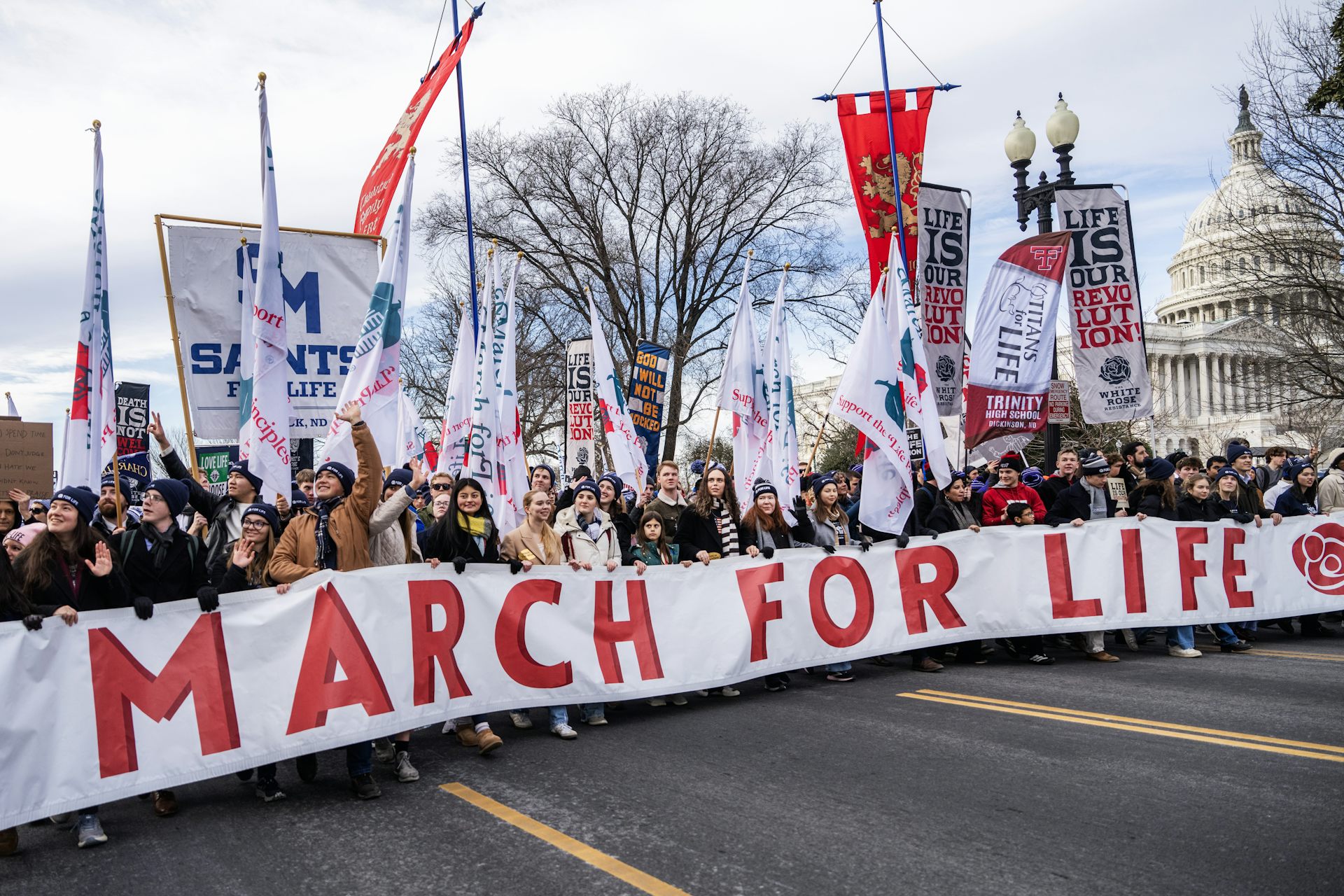
Representational government rests on a simple idea: that the laws the nation lives under generally reflect what the public wants. In the United States, few issues test that idea more than abortion.
In 2022, the U.S. Supreme Court ruled in Dobbs v. Jackson Women’s Health Organization that the Constitution does not guarantee a right to an abortion. The decision effectively overturned nearly 50 years of federally protected access to the procedure and returned primary authority over abortion policy to states.
Individual states now have the authority to enact permissive or restrictive abortion laws. These vary substantially, from near-total bans on the procedure – such as in Florida or Texas, where abortion is banned except in very limited circumstances – to guarantees of abortion access that are enshrined in state constitutions, including in California and Vermont.
Abortion serves as a clear example of how difficult it can be to translate public opinion into law. It is an issue where public views have remained relatively consistent over time, with the majority of the public supporting abortion rights according to polls. Still, laws have shifted dramatically from state to state and year to year.
As a researcher who studies the relationship between public opinion and state-level policy, I examine whether laws reflect the preferences of the American public. The dichotomy between abortion protections and restrictions suggests that this dynamic is often more complicated than many people might assume.
State legislatures, courts and election methods – and the interplay between them – all influence how public preferences are translated into law. Additionally, lobbying by well-connected interest groups that may represent a minority viewpoint can exert significant pressure on lawmakers, sometimes outweighing the desires of the broader public.
As a result, there is not always a direct line between what a majority of voters might want and the policies that are enacted.
Despite these broad policy differences, public opinion has remained relatively stable around the abortion issue since the 1970s. Sixty-three percent of Americans say abortion should be legal in all or most cases, compared with 36% who say it should be illegal in all or most cases, according to the Pew Research Center. In 34 states and the District of Columbia, more people say abortion should be legal than say it should be illegal.
Even in states with restrictive policies, opinion is often closely divided. In Utah, where abortion is banned after 18 weeks of pregnancy, public opinion is split nearly down the middle.
Support for abortion does vary by religion, age, education level, political views and gender. Eighty-six percent of religiously unaffiliated Americans say abortion should be legal in all or most cases, compared with 25% of white evangelical Protestants, for example.
Similar divides appear across other partisan or demographic groups. About 85% of those who lean Democratic say abortion should be legal in most cases, according to Pew, compared with about 41% of those who lean Republican. Differences also emerge by education, with college graduates more likely to support legal abortion than those without a college degree. More women than men support abortion access, although the difference is relatively minor – 64% of women, 61% of men.
In response to the 2022 Dobbs decision, voters in multiple states turned to ballot initiatives, mostly to restore or affirm abortion rights. In 2024, voters in 10 states decided on abortion-related measures. Seven states passed measures to protect abortion rights: Arizona, Colorado, Maryland, Missouri, Montana, Nevada and New York. Measures to enact protections failed in Florida, Nebraska and South Dakota.
Ballot initiatives are one of the few ways Americans can directly shape policy, though the rules for their passage vary by state. Citizen-generated initiatives are only available in about half the states.
In states such as Arizona and California, simple majorities were able to approve their 2024 measures affirming abortion protections. That same year, 57% of Florida voters supported a similar measure to protect abortion access up to 24 weeks of pregnancy, but that did not meet the state’s 60% threshold for passage of initiatives.
Even in states where ballot initiatives have passed, translating voter preferences into policy is not always a straight line. In Missouri, for example, the state Supreme Court in May 2025 allowed preexisting restrictions to remain in effect while legal challenges to a 2024 abortion rights amendment continued. Because that amendment remains part of the state constitution, legislators have placed a new measure on the November 2026 ballot specifically to repeal those protections and reinstate a nearly total ban.
Seen in this context, the abortion issue represents not only a debate about access. It also offers a clear example of how representation works in practice.
The relationship between public opinion and policy is not always direct or immediate, but is shaped by the institutions and processes that define American democracy.
This article is republished from The Conversation, a nonprofit, independent news organization bringing you facts and trustworthy analysis to help you make sense of our complex world. It was written by: Marlo Rossi, Rutgers University
Read more:
2026’s abortion battles will be fought more in courthouses and FDA offices than at the voting booth
State courts from Oregon to Georgia will now decide who – if anyone – can get an abortion under 50 different state constitutions
A concise history of the US abortion debate
Marlo Rossi does not work for, consult, own shares in or receive funding from any company or organization that would benefit from this article, and has disclosed no relevant affiliations beyond their academic appointment.


















































Comments