I’ve studied MAGA rhetoric for a decade, and this is what I see in Hegseth’s boasts, action-movie one-liners and gloating over dominance
Published in Political News
When Secretary of Defense James Mattis addressed the intensification of U.S. combat operations against the Islamic State group in 2017, he assured the American public of his commitment to “get the strategy right” while maintaining “the rules of engagement” to “protect the innocent.”
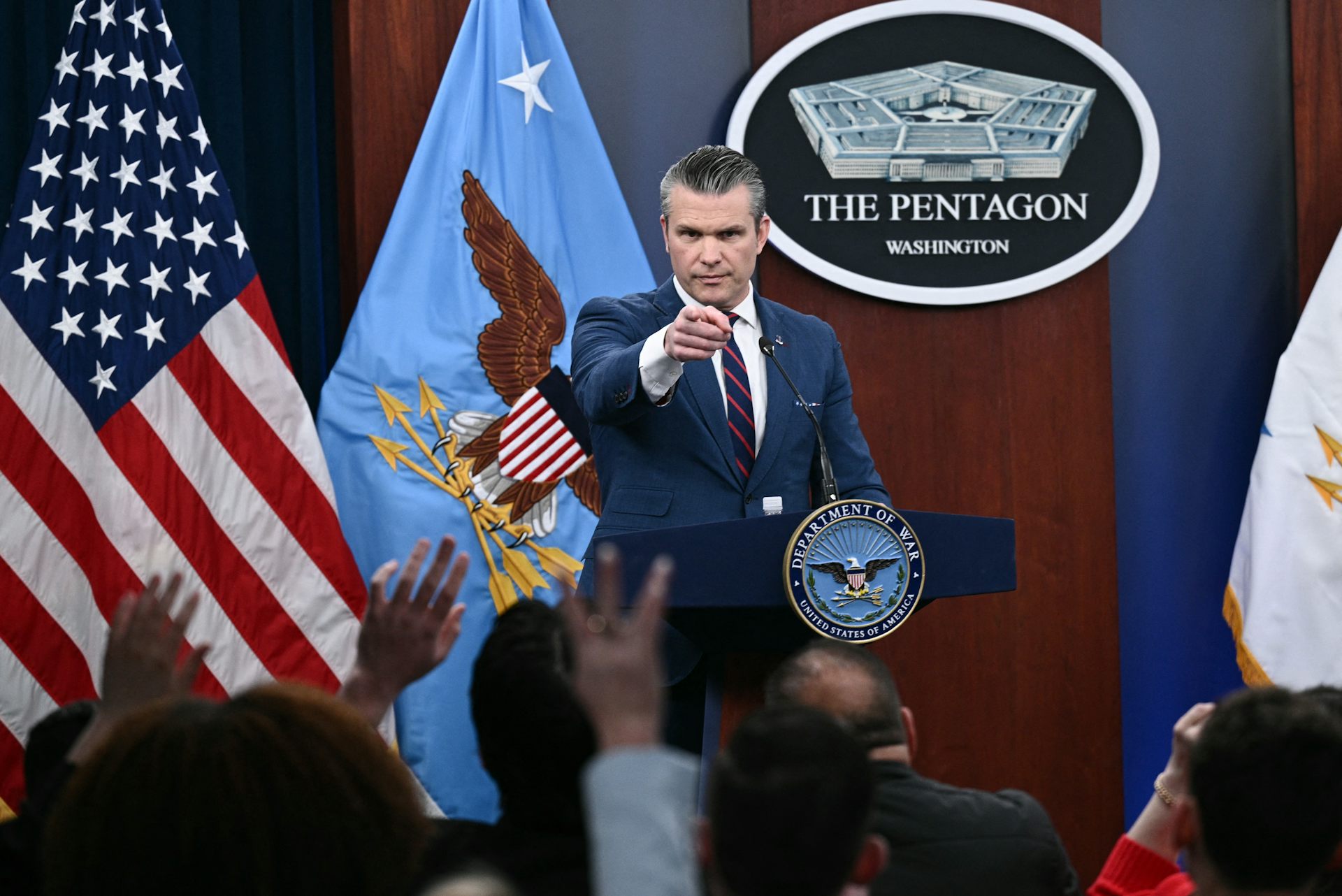
Mattis’ professional tone was a stark contrast to Secretary Pete Hegseth’s remarks following the first days of the joint U.S.-Israeli combat operations in Iran.
On March 2, 2026, after bragging about the awe-inspiring lethality of U.S. “B-2s, fighters, drones, missiles,” Hegseth casually brushed aside concerns about long-term geopolitical strategy, declaring “no stupid rules of engagement, no nation-building quagmire, no democracy building exercise, no politically correct wars. We fight to win.”
Admonishing the press for anything less than total assent, he commanded, “to the media outlets and political left screaming ‘endless wars:’ Stop. This is not Iraq.”
Two days later, Hegseth gloated about “dominance” and “control,” while asserting that the preoccupation of the “fake news media” with casualties was motivated by liberal media bias and hatred of President Trump.
“Tragic things happen; the press only wants to make the president look bad,” he said. He dismissed concerns about the rules of engagement, declaring that “this was never meant to be a fair fight. We are punching them while they are down, as it should be.”
I’m a communication scholar who has studied MAGA rhetoric for a decade. I have observed how Hegseth and other officials in the second Trump administration refuse to abide by what recurring rhetorical situations – urgent public matters that compel speech to audiences capable of being influenced – typically demand of public officials.
The theme of this administration is that no one is going to tell it what to say or how to say it. It will be encumbered neither by norms nor the exigencies that compel speech in a democratic society.
When the U.S. goes to war, the public expects the president and the defense secretary to convince them of the appropriateness of the action. They do this by detailing the justification for military action, but also by addressing the public in a manner that conveys the seriousness and competence required for such a grave task as waging war.
But during the first week of the Iran war, Hegseth’s press briefings deviated from the measured tone expected from high-ranking military officials.
Hegseth flippantly employed villainous colloquialism – “they are toast and they know it,” “we play for keeps,” and “President Trump got the last laugh” – delivered with a combative tone that communicated masculine self-assurance.
Many observers were taken aback by his haughty tone, hypermasculine preoccupation with domination, giddiness about violence and casual attitude toward death.
During Trump’s first term, this penchant for rule-breaking was by and large isolated to the president, whose transgressions were part of his populist appeal.
Although Trump’s first cabinet members agreed on most political objectives, they attempted to rein in what they saw as the president’s more dangerous whims.
But with loyalty as the new bona fide qualification for administration officials, Trump’s second cabinet is populated with a large contingent of right and far-right media personalities like Hegseth, including Kash Patel, Sean Duffy and Mehmet Oz.
The anti-institutional ethos of far-right media explains why these officials refuse to conform to “elite” expectations and instead speak in a manner that is bombastic, outrageous and perverse.
Among them, there is little reverence for what they may perceive of as emasculating rules of tradition and politeness in a media marketplace where “owning,” “dominating,” and “triggering” your enemy is precious currency. Far-right media personalities are adept at commanding attention with showmanship and swagger.
Trump appears to have chosen Hegseth for precisely this reason: He performs the role of the big man to perfection.
Hegseth’s language choices and petulant tone do not demonstrate an ignorance of what rhetorical situations demand of him; instead, they reflect a refusal to be emasculated by such cumbersome norms.
When making statements about the first week of the war, Hegseth grinned as he delivered action-movie one-liners, like “turns out the regime who chanted ‘Death to America’ and ‘Death to Israel’ was gifted death from America and death from Israel.”
Hegseth engaged in what is known as “kill talk,” a verbal strategy, typically directed at new military recruits, that denies the enemy’s humanity and disguises the terrible costs of violence. His repetition of words like “death,” “killing,” “destruction,” “control,” “warriors” and “dominance” framed violence in heroic terms that are detached from the realities of war.
In my view, Hegseth addressed the public as a squad leader addresses military recruits. Hegseth apparently delighted in dispensing death and elevating and glorifying war. He said virtually nothing of long-term strategy beyond “winning.”
In the MAGA media world, winning is really all that matters. If winning is the only goal, then war is, by profound inference, a game, a test of masculine fortitude.
This point was made clear when the White House posted a video that interspersed footage of airstrikes on Iran with “killstreak animation” from the popular video game Call of Duty: Modern Warfare. In the game, when a player kills multiple opponents without also dying, they are rewarded with the ability to conduct a missile strike to exterminate an opposing team. Again, this message gamifies violence and obscures the destructive toll of war.
Informed by the contemptuous hypermasculinity of far-right media culture, all this taboo behavior and glorified portrayals of death convey one fundamental message: When the public most needs explanation and justification for the actions of their government, the powerful owe the public neither explanation – nor comfort.
This article is republished from The Conversation, a nonprofit, independent news organization bringing you facts and trustworthy analysis to help you make sense of our complex world. It was written by: Casey Ryan Kelly, University of Nebraska-Lincoln
Read more:
Militant white identity politics on full display in GOP political ads featuring high‑powered weapons
How Trump’s compulsion to dominate sabotages dealmaking, undermines democracy and threatens global stability
America’s dad vs. the manosphere: Walz‑Vance debate highlights two versions of masculinity
Casey Ryan Kelly does not work for, consult, own shares in or receive funding from any company or organization that would benefit from this article, and has disclosed no relevant affiliations beyond their academic appointment.







































Comments