When presidents ban journalists from the White House, the First Amendment is not the only constitutional right at stake
Published in Political News
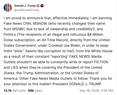

The president is going after the press again.
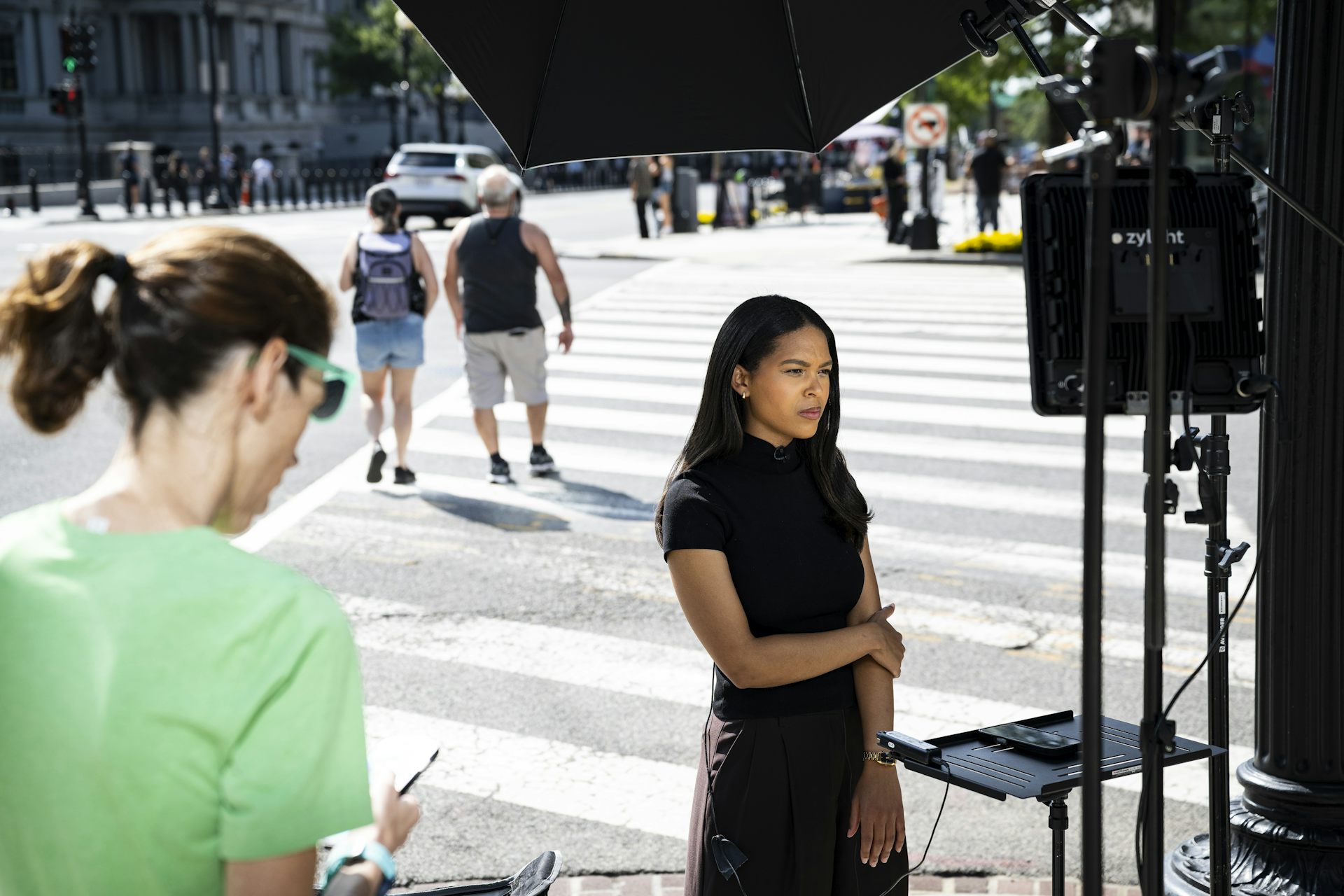
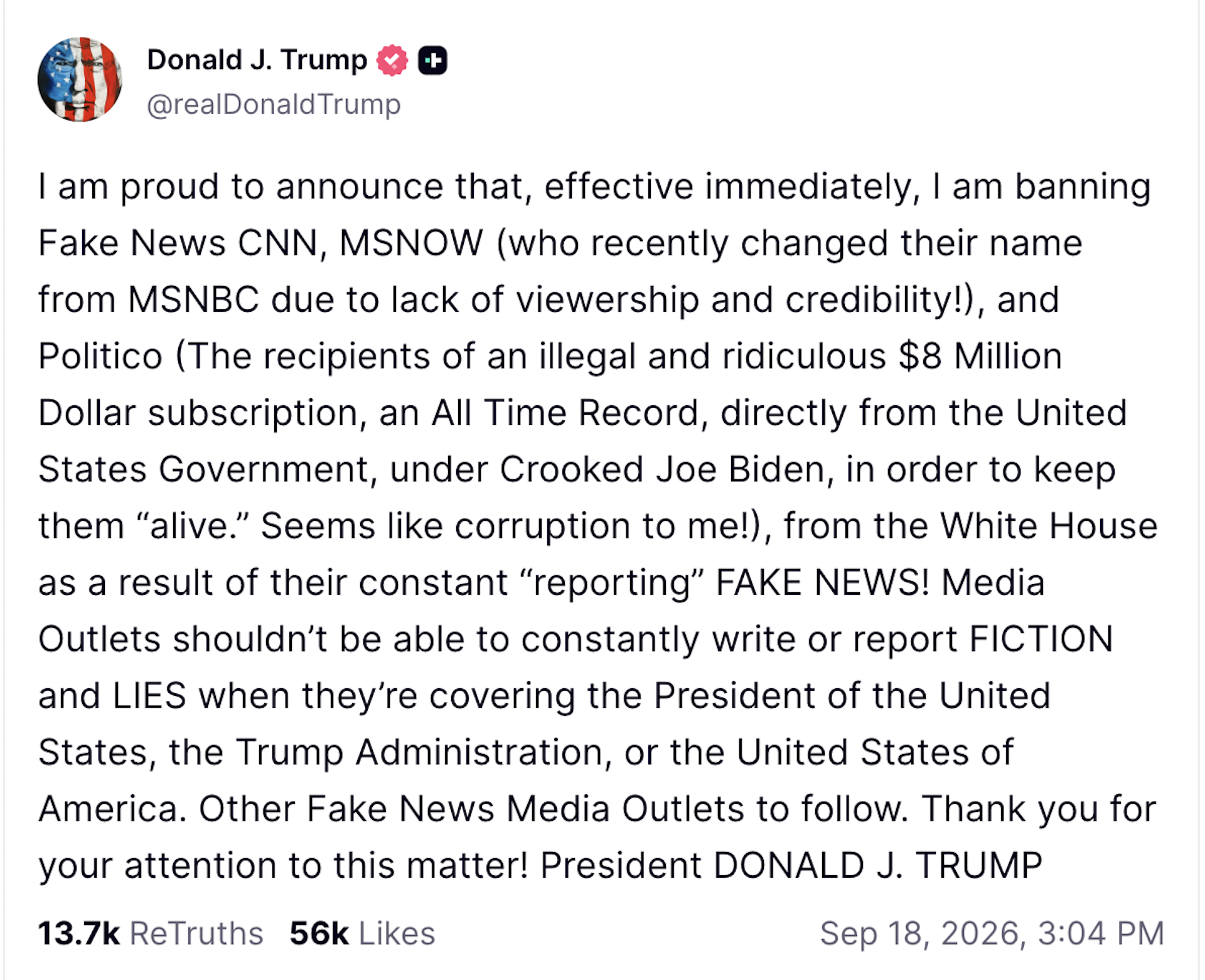
On Sept. 19, 2026, journalists from CNN, MS NOW, and Politico were denied access to the White House after President Donald Trump revoked their credentials, citing “their constant ‘reporting’ FAKE NEWS!” On social media, Trump posted, “Media Outlets shouldn’t be able to constantly write or report FICTION and LIES when they’re covering the President.”
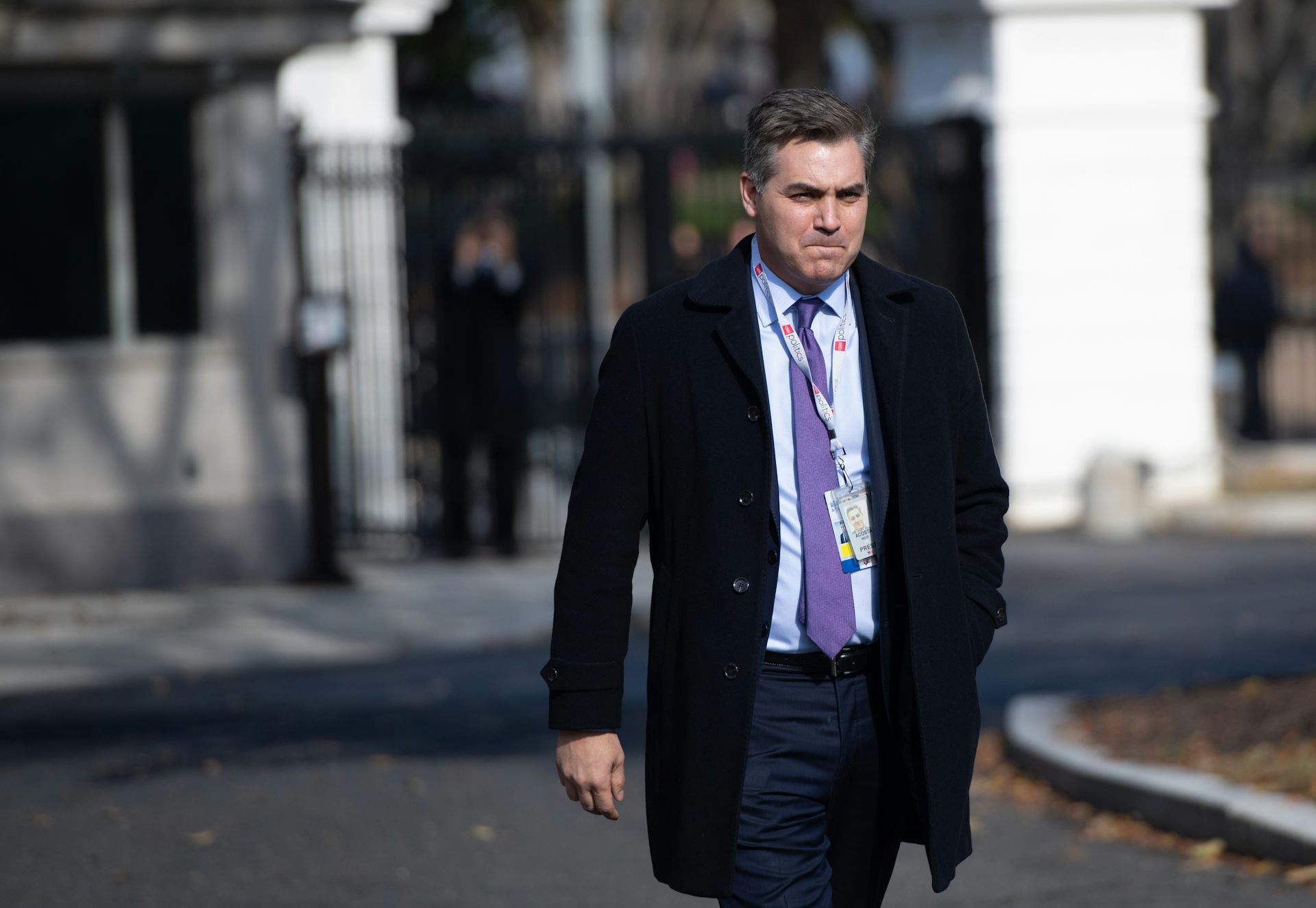
This is not Trump’s first attempt at banning journalists from the White House. During his first term, he sought to ban CNN’s Jim Acosta by revoking his credentials following a contentious news conference about the 2018 midterm elections.
In that conflict, CNN quickly filed a lawsuit, arguing that, “If left unchallenged, the actions of the White House would create a dangerous chilling effect for any journalist who covers our elected officials.”
Journalism organizations also responded. The Committee to Protect Journalists, the Radio Television Digital News Association and even Acosta’s peers at The Daily Caller – a right-leaning news outlet – condemned the White House ban.
A federal court granted CNN a temporary injunction – reinstating Acosta’s press pass. The Trump administration later restored Acosta’s credentials, and CNN dropped its lawsuit.
Many commentators and members of the press have called Trump’s latest ban on the three news organizations a violation of the First Amendment.
White House Correspondents’ Association President Jacqui Heinrich said on X, “Today’s action revoking access for journalists from CNN, POLITICO, and MSNOW violates the First Amendment.”
Even George Washington University law professor Jonathan Turley, who staunchly supports Republicans and frequently criticizes the press, said on X that the ban “would be an assault on long-honored principles of a free press.”
As Turley and many others have argued over the weekend, Trump’s ban is almost certainly unconstitutional under the First Amendment, which states that “Congress shall make no law … abridging the freedom of speech, or of the press.” Media law professor Frank LoMonte argued in 2018, “The First Amendment guarantees all Americans freedom to speak and publish without government interference.”
But they may be missing a crucial point. In fact, there’s more than one constitutional right involved in such a case. The judge who restored Acosta’s press pass in 2018 primarily based his ruling on the reporter’s Fifth Amendment rights to due process, not on the First Amendment.
And in my view as a constitutional law professor, it is less clear whether the press has a constitutional right of access to the White House even though past presidents have honored and respected the press’s access to the executive branch.
While several Supreme Court cases, such as Richmond Newspapers v. Virginia, unequivocally provide the press with a right of access to criminal trials, there is no Supreme Court precedent that specifically provides a clear constitutional right of access to the White House.
In one case from 1977, Sherrill v. Knight, Robert Sherrill, the Washington correspondent for The Nation, was – after holding press passes over several years – denied a press pass because the Secret Service advised he should not be given one. The Secret Service refused to disclose their justification.
Sherrill sued, and the D.C. Circuit Court of Appeals concluded that the Secret Service cannot deny a White House press pass absent “narrow and specific standards by which applications are to be judged.”
The court required the White House to provide the press with “notice of the factual bases for denial, an opportunity for (them) to respond to these, and a final written statement of the reasons for denial (of a press pass).”
In the court’s view, these requirements – notice and an opportunity to rebut the bases for the denial of a press pass – are protected by two constitutional guarantees working together, the press protections in the First Amendment and the Fifth Amendment’s protections from arbitrary deprivations of “life, liberty, or property, without due process of law.”
In other words, before the federal government can deprive an individual of their life, liberty or property, the federal government must provide that individual with due process, whose purpose is widely accepted as preventing “arbitrary governmental actions.”
There are a number of Supreme Court decisions that could be key in the current journalists’ lawsuit, which was filed on Sept. 21, 2026.
Among them is Mathews v. Eldridge from 1976, in which the Supreme Court stated that due process is flexible depending on the extent of the liberty or property interest at stake. But in general, the justices said, due process requires the government to provide notice to the individual and an opportunity for the individual to present their case before the deprivation occurs.
In Sherrill v. Knight from 1977, the court ruled that the denial of a press pass implicated a First Amendment liberty interest. That interest, the court wrote, “undoubtedly qualifies as liberty which may not be denied without due process of law under the fifth amendment.”
This nuance – the First and Fifth Amendment working in tandem – is what most commentators and critics are missing in their response to the recent ban of CNN, MS NOW and Politico. In fact, these outlets collectively lead with their claim that the Trump administration violated their Fifth Amendment right to due process in their lawsuit to block Trump’s ban.
“Even if attending a White House event is not a constitutionally guaranteed right, that doesn’t mean the government is free to take it away as punishment,” LoMonte argued in 2018.
Based on public reporting, it is clear that the Trump administration did not provide CNN, MS NOW or Politico with clear written notice stating the reasons for the revocation of their press passes. It certainly did not provide the outlets with an opportunity to rebut Trump’s unsupported claim that they report “FICTION and LIES.”
The same Trump-appointed judge who decided the CNN Acosta case has been assigned to the latest press ban case. So, if the CNN Acosta case is any indication, I expect the federal judge to promptly, but temporarily, reinstate the news outlets’ press passes while Trump tries to argue that his actions are constitutional, which in my view, they are not.
This article is republished from The Conversation, a nonprofit, independent news organization bringing you facts and trustworthy analysis to help you make sense of our complex world. It was written by: Wayne Unger, Quinnipiac University
Read more:
Can Trump’s White House legally ban reporters?
Supreme Court’s questions about First Amendment cases show support for ‘free trade in ideas’
How the First Amendment protects Americans’ speech − and how it does not
Wayne Unger does not work for, consult, own shares in or receive funding from any company or organization that would benefit from this article, and has disclosed no relevant affiliations beyond their academic appointment.






































Comments