Columbia University, battered by Trump and divisive protests, needs more time to find new president
Published in News & Features
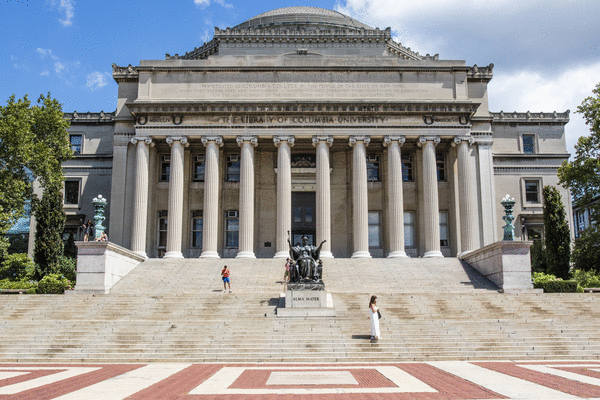
NEW YORK — Columbia University has extended the search process for its next president, as it looks to fill one of the toughest jobs in higher education that has seen frequent, high-profile departures amid pressure from the Trump administration and divisive campus protests.
School trustees had originally planned to name a new president as soon as possible, with that person taking office no later than Jan. 1.
“Given the importance of this decision, we will extend this process beyond the start of the new year to take the time to fully understand each candidate’s strengths and potential fit,” the chairs of the board of trustees and search committee wrote Monday.
A Columbia spokeswoman declined to comment further on the search. The university did not publicly set a new deadline.
But the board did say the delay was not about a lack of qualified candidates.
“We are encouraged by the depth and quality of the applicant pool, which reflects both the university’s strong reputation and position and the broad appeal of this leadership opportunity,” the trustees said.
The memo followed speculation that trustees were set to vote last Friday to extend an offer. A school official denied the rumor, which appeared to stem from a regularly scheduled trustee meeting. The board receives progress updates on the search.
The top spot at the city’s most prestigious university has been vacant since summer 2024, when a torrent of criticism from across the ideological spectrum, including congressional Republicans, forced out former President Minouche Shafik over her handling of campus protests against the war in Gaza.
In her place, the university temporarily installed Katrina Armstrong, the former medical school leader who was rumored to be a finalist for the permanent gig. But she, too, abandoned the post in March to the satisfaction of the Trump administration, which had been fighting to impose changes on campus in line with its ideological positions.
Columbia eventually settled with the federal government to restore research grants under Claire Shipman, the acting president who was elevated from her seat on the board.
Last summer’s deal, which went beyond addressing the antisemitism allegations that Columbia had initially come under fire for, has sparked protests against government overreach.
In a recent survey, students, faculty and alumni said “academic freedom” is one of the most pressing issues the next leader should address.
“There is this chipping away at the freedoms of students and faculty that is just unmistakable for those of us who are experiencing it on the inside,” said Michael Thaddeus, a math professor and acting president of the Columbia chapter of the American Association of University Professors.
“Is one person going to answer all of our prayers and be the great conciliator who can ensure all students and faculty, all our voices can be heard? That’s a lot to ask — I’m not sure anyone could fit that bill — but that is what we are trying to hope for.”
The Columbia Spectator, the student newspaper that was first to report the setback, said this is the longest Columbia has gone without a permanent president since 1948.
_____
©2025 New York Daily News. Visit nydailynews.com. Distributed by Tribune Content Agency, LLC.




Comments