Weather pushes back SpaceX's Crew-12 window, opening door for 1st ULA launch of year
Published in News & Features
NASA’s plans to get the first human spaceflight of the year off the pad have to hold off until at least Friday because of weather constraints along the flight path needed in case of emergency. That delay, though, opens the door for a national security mission aiming for liftoff on Thursday morning.
The SpaceX Crew-12 mission is now looking at a launch no earlier than 5:15 a.m. Eastern time Friday from Cape Canaveral Space Force Station’s Space Launch Complex 40, pushing back another day from what had originally targeted an early Wednesday liftoff.
The flight path for the Crew Dragon Freedom needs to have good weather conditions in case of an abort, and high winds are expected along the eastern seaboard.
So NASA astronauts Jessica Meir and Jack Hathaway, European Space Agency astronaut Sophie Adenot and Roscosmos cosmonaut Andrey Fedyaev, will wait another day in quarantine at Florida's Kennedy Space Center before they get their chance to launch on what is planned to be an eight-month stay on board the International Space Station.
The weather along the U.S. coast, though, is of no concern to United Launch Alliance, which is aiming to launch its new Vulcan rocket on its first mission of the year.
The rocket that debuted in 2024 is making only its fourth-ever flight, and the second ever for the Space Force after receiving certification to fly national security missions last year.
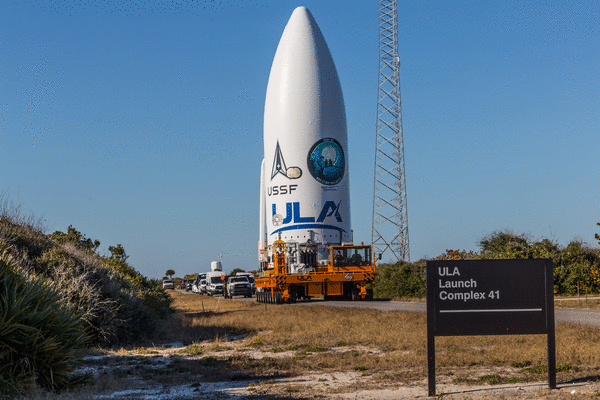
The USSF-87 mission contains multiple payloads for the Space Force’s Space Systems Command. It’s targeting liftoff from Canaveral’s Space Launch Complex 41 during a window that runs from 3:30 to 5:30 a.m. Thursday.
Space Launch Delta 45’s weather squadron forecasts a 90% chance for good conditions at the launch site.
One of the payloads is the Geosynchronous Space Situational Awareness Program spacecraft built by Northrop Grumman, which is designed to “rapidly detect, warn, characterize and attribute disturbances to space systems in the geosynchronous environment,” according to a ULA profile on its website. A second spacecraft on board has multiple classified payloads.
The mission was awarded to ULA in 2021 with an original target launch in 2023, but delays in Vulcan rocket development have contributed to a backlog of more than 20 national security missions assigned to ULA’s replacement for its dwindling supply of Atlas V rockets and already retired Delta IV Heavy rockets.
ULA’s plans to ramp up launches in 2025 didn’t come to fruition, having only flown six missions including the lone Vulcan launch while competitor SpaceX flew 101 times in 2025 from its two Space Coast launch pads. Blue Origin added a couple more of its New Glenn rocket.
So far in 2026, all seven launches have been made by SpaceX.
_____
©2026 Orlando Sentinel. Visit orlandosentinel.com. Distributed by Tribune Content Agency, LLC.






Comments