Ex-Colombian president denies sex-for-contracts allegations as scandal grows
Published in News & Features
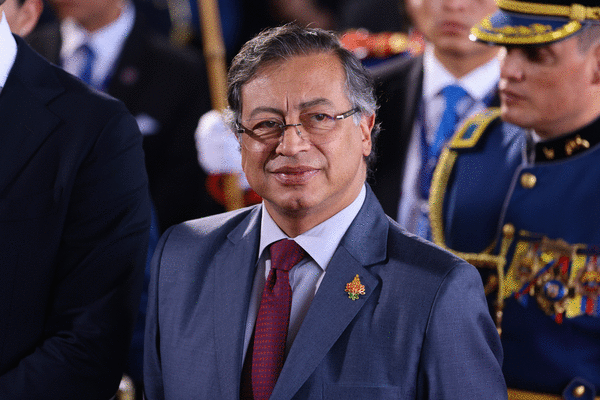
A Colombian woman who says she had a five-year intimate relationship with former President Gustavo Petro has accused him of using government contracts to obtain sexual favors from dozens of women, allegations he vehemently denies as part of a politically motivated campaign to expose his private life.
The accusations, detailed in an investigation by Colombian magazine Semana, have triggered a growing political and judicial controversy involving claims of cocaine use, private sexual gatherings and intimidation of women allegedly rewarded with government employment.
Deicy Jiménez, who says she began a relationship with Petro in 2019, alleges that he helped her obtain contracts with several government institutions and that between 30 and 40 other women benefited from similar arrangements.
“I have never awarded a contract in exchange for sexual relations. I would vomit on myself if I ever did such a thing,” Petro said in an Oct. 25 statement published on his X account.
The former president accused the administration of his successor, Abelardo de la Espriella, of orchestrating a politically motivated campaign to expose his private life after failing, he claimed, to establish allegations of corruption or drug trafficking against him.
The controversy intensified this week after Jiménez released a video showing the two embracing, kissing and talking. Petro reiterated his denial in a message posted on X late Wednesday, saying the recording had not been examined by forensic experts or evaluated by a judge and offered no evidence of corruption.
“The only certain thing is that there is no corruption in it: there is no contract, no payment, no government decision,” Petro wrote, referring to the video. “Anyone seeking justice submits their evidence to the Court, not to the headlines.”
Although the recording could support Jiménez’s account of a personal relationship with Petro if authenticated, it does not independently establish her central allegation that government contracts were awarded in exchange for sexual favors.
A relationship that began in 2019
Jiménez told Semana that she met Petro through an adult website in 2019, when he was a senator and had recently lost Colombia’s 2018 presidential election.
According to her account, they exchanged contact information and subsequently met at a hotel in Cali, where their intimate relationship began. About a month later, she moved to Bogotá.
Jiménez said Petro began helping her secure government contracts, providing what she described as financial support through employment opportunities rather than regular cash payments.
“He started helping me with contracts. He never gave me money,” she told journalist Vicky Dávila, who conducted the interview.
The statement referred to the financial arrangements surrounding their alleged relationship. Elsewhere in the same interview, Jiménez claimed Petro had given her cash to purchase cocaine, an allegation that has not been independently established.
She identified contracts associated with the office of then-Senator María José Pizarro, Colombia’s Superintendency of Private Surveillance and Security, and the Ministry of the Interior.
Semana reported finding government contracts awarded to Jiménez, including agreements involving public institutions. Those records, however, do not establish that the contracts were awarded in exchange for sexual favors.
Jiménez claimed Pizarro knew she had been recommended by Petro. She also said former Interior Minister Armando Benedetti was aware of the recommendation, although she acknowledged that she had never discussed her alleged intimate relationship with him.
Her account does not establish that either official knew of or participated in an improper exchange.
During the interview, Dávila asked Jiménez whether she had slept with Petro.
“Yes,” Jiménez answered.
“In exchange for those contracts?” Dávila asked.
“Yes, of course,” Jiménez replied.
She characterized the arrangement as an abuse of power, alleging that government employment became a means of securing sexual access to women and keeping them financially dependent on the former president.
Petro has defended government programs intended to assist vulnerable women, including sex workers, while insisting that such initiatives should not be confused with the alleged exchange of contracts for sexual favors.
Allegations involving dozens of women
Jiménez claimed her experience was part of a much larger arrangement involving between 30 and 40 women.
She described the women as generally young and sometimes economically vulnerable, alleging that several received government contracts or positions in institutions including the presidency, Congress and the Superintendency of Health.
According to Jiménez, some participated in private gatherings with Petro and subsequently benefited from government employment.
She also alleged that certain women threatened to reveal compromising information about the former president, while others were intimidated into remaining silent.
Jiménez acknowledged that Petro had never directly threatened to kill her. She nevertheless said she felt intimidated by his behavior and by comments suggesting she could face problems if she began another romantic relationship.
The controversy has also drawn attention from officials in Colombia’s current administration.
Carlos Andrés Ríos, director of the Administrative Department of the Presidency, told Congress that 48 women had allegedly been exploited through government service contracts during Petro’s administration.
He accused the former president of using those arrangements to exercise control over the women and said the government intended to bring its allegations before judicial authorities.
But Mary Luz Herrán, Petro’s former wife, offered a different explanation.
In an interview reported by Semana, Herrán acknowledged the existence of a group of 48 women but said they had participated in a government program designed to improve their economic circumstances and provide new opportunities.
It remains unclear whether the 48 women identified by Ríos are among those described by Jiménez or whether the allegations concern separate groups. Neither account establishes that government contracts were improperly awarded.
Petro, meanwhile, has defended the women who worked in his administration.
“The women who worked in my government got there through their ability and effort, and they do not deserve to have their names tarnished in order to attack me,” he wrote in his response to the video.
Cocaine allegations and private gatherings
Jiménez also accused Petro of consuming cocaine during private encounters, alleging that drugs were sometimes supplied by him and, on other occasions, obtained at his request.
In one particularly serious allegation, she claimed Petro gave her three million Colombian pesos in cash to purchase cocaine, which she subsequently transported aboard a commercial flight.
She said she photographed packets of substances that Petro allegedly left in her possession because she wanted evidence of their encounters.
Jiménez also described gatherings lasting several days, sometimes at hotels or private residences, and alleged that members of Petro’s security detail were aware of the activities.
She further alleged that consuming cocaine was sometimes a condition of accompanying Petro during those gatherings.
The materials reviewed for this article do not independently establish those allegations. Petro’s public statements identified in the available reporting do not specifically address the alleged cocaine purchase or transportation.
Judicial scrutiny and a new video
The controversy has moved beyond the pages of Semana and into Colombia’s judicial system.
According to the magazine, Jiménez has provided testimony to Colombia’s Supreme Court of Justice about her allegations, along with materials she says support them, including messages, recordings and information about government contracts.
The Prosecutor General’s Office has also sought to question her, although a scheduled proceeding was postponed. The available reporting does not establish that Petro has been formally charged in connection with her allegations.
Jiménez’s former attorney, Andrés Felipe Caballero, announced Nov. 3 that he was withdrawing from her representation because of security concerns.
“I am stepping aside for reasons of personal safety,” Caballero wrote on X.
The lawyer said his decision did not mean he was withdrawing his support for Jiménez’s account. In his statement, he said he was more convinced than ever that she was telling the truth and emphasized the importance of allowing her and other potential witnesses to testify and provide evidence.
His resignation also disrupted a scheduled appearance by Jiménez before the Prosecutor General’s Office, according to Colombian news reports.
Petro criticized the disclosure of information from judicial proceedings that he said were subject to confidentiality requirements.
In his response to the video, the former president argued that the recording should be evaluated through the courts rather than through media coverage. He said he would respect the confidentiality of the judicial process and would not answer through a video what should be addressed in a legal proceeding.
Petro also called for protection for Jiménez and other people involved in the case, while accusing his political opponents of using intimate images to distract from other government controversies.
The former president has not publicly provided a detailed account of his alleged relationship with Jiménez in the statements reviewed for this article.
Meanwhile, Jiménez met in Bogotá with Angie Rodríguez, a former senior official in Petro’s administration who has separately accused him of mistreatment, pressure and other irregularities.
According to Semana, the two women discussed coordinating their legal strategies.
Whether Petro maintained a private relationship with Jiménez is only part of the controversy. The question now confronting Colombian authorities is whether government contracts were improperly used to obtain sexual favors or silence women — allegations the former president has categorically denied.
©2026 Miami Herald. Visit at miamiherald.com. Distributed by Tribune Content Agency, LLC.





Comments