Meet Dulcey Hunter, the University of Chicago's first banned books scholar
Published in Books News
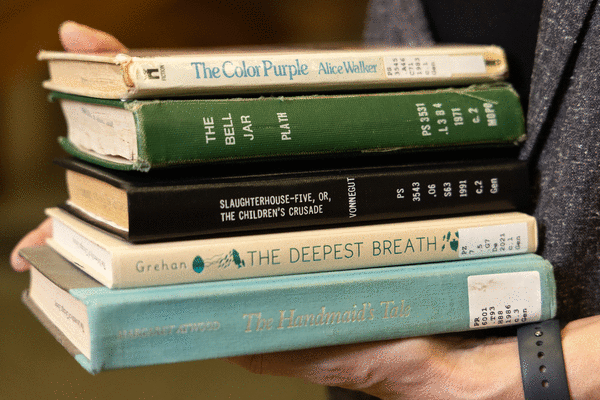
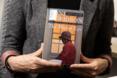
CHICAGO — Already well known as a sanctuary city for refugees and immigrants, Chicago became, in 2022, a different kind of refuge — one for banned books. It was then that the city and Chicago Public Library officials established “Book Sanctuaries” across 77 community areas and 81 library branches, expanding local access to banned or challenged books.
Then, in 2023, Illinois became the first state to enact a law that allows the secretary of state’s office to withhold grant funding from municipal and school district libraries if they don’t adopt the American Library Association’s Library Bill of Rights, which holds that “materials should not be proscribed or removed because of partisan or doctrinal disapproval.
That same year, the University of Chicago Library launched a similar effort with its Banned Books Initiative, which collects books banned and challenged in the U.S. and makes them available on campus in digital formats and through interlibrary loan.
The institution’s library now has its first scholar focused on banned books.
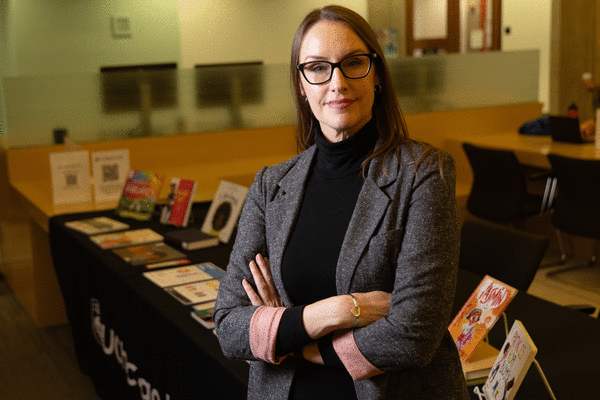
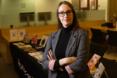
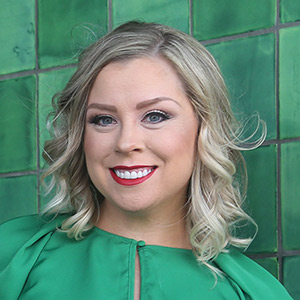
Dulcey Hunter, an English language arts educator who taught middle and high school students in Florida for more than two decades, will spend the next academic year building a pedagogy framework to help teachers better understand why narratives that depict difficult life experiences and painful truths oftentimes are censored.
In exploring why those narratives are targeted and what that means for classrooms and teacher preparation, Hunter hopes to provide information on how to better prepare teachers to enter classrooms with a more comprehensive, trauma-informed approach to teaching banned books and to bolster their ability to engage with students who have been traumatized.
Her work begins with the understanding that classrooms — specifically English language arts and literacy classrooms — are vital cultural sites.
“They’re vital educational spaces where the difficulties and hardships of life don’t necessarily have to be bracketed in the name of safeguarding children, but rather exploring those more painful truths together in a way that can broaden understanding, empathy, connection and insight,” Hunter said.
“My work explores how book-banning efforts reflect a broader cultural narrative, reflecting struggles over whose stories may be told, whose suffering is permitted cultural visibility and whose experiences may be collectively understood.”
Looking through this lens, censorship is not just a contest over books, but a matter of “why certain forms of suffering become culturally threatening when made visible,” she said.
The first phase in the collaboration was collecting banned books and making them accessible to as many people as possible; the second stage focused on uplifting the discussion of banned books to improve the university library’s work, according to U. of C.’s dean of the University Library. With thousands of books collected, Reimer said the next step entailed enabling academic research on the impact of book bans — which is where Hunter comes in.
“This is the chance to have a full-time researcher who can go into a level where none of us librarians have the time and broaden our understanding of what’s happening and how it’s impacting people,” he said. “Now we’ll hopefully have a much more substantial debate with more evidence.”
Challenges to books have accelerated, according to the American Library Association. Most are driven by interest groups, Reimer said, adding that book bans undermine librarians’ roles as trusted information brokers, which feeds into more questioning of science, research and evidence-based arguments.
“(Book bans) challenge the library as an environment that’s free from that kind of intervention, where you can get material that looks at the world from different perspectives,” Reimer said. “Having a researcher here, who can inform from the school library perspective and talk about the impact that this has on library patrons, kids and younger students is really meaningful for us.”
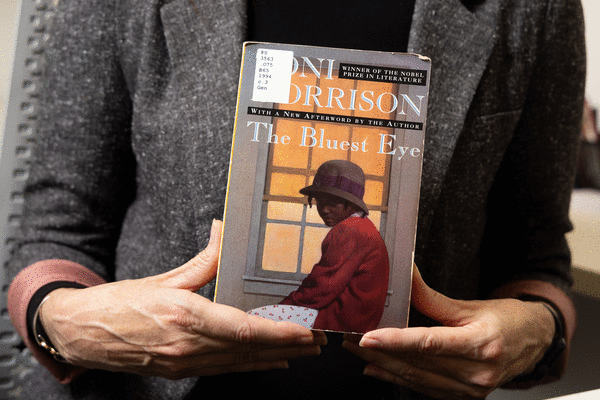
In addition to her research, Hunter will also host a monthly Instagram video series,“Banned and Brilliant,” where she recommends and discusses a book that has been historically banned or challenged across the United States. The series launched last month with Toni Morrison’s novel, “The Bluest Eye.”
Hunter recommends that individuals become more mindful of what is happening in their local schools and libraries — that awareness is important when it comes to the challenging and banning of books.
The American Library Association and PEN America are organizations doing a lot of research on censorship.
Book bans tend to focus on narratives that challenge established mores and touch on identity, cultural memory and collective witnessing, Hunter said, so there is a lot of power in broadening classroom exploration of a variety of books with the guidance of a trusted professional or teacher.
Exposure to a variety of literature expands readers’ understanding of experiences that go beyond their own lives and “become opportunities for insight, connection, and transformation, Hunter said.
©2026 Chicago Tribune. Visit at chicagotribune.com. Distributed by Tribune Content Agency, LLC.

Comments