Kenny Loggins, the subject of a new film, discusses yacht rock, drugs, possible Broadway musical and more
Published in Entertainment News
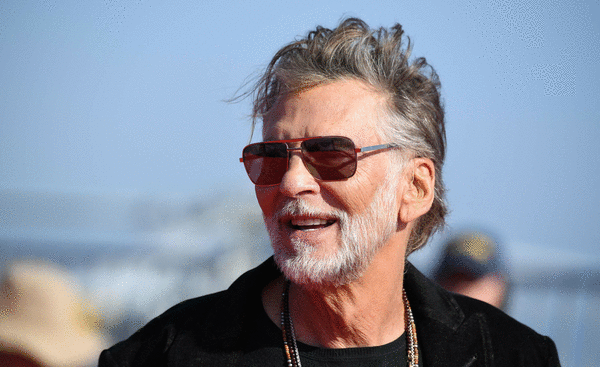
SAN DIEGO — Kenny Loggins was a boy in the 1950s when his dad brought him from Los Angeles to see one of San Diego’s most famous landmarks. Today, nearly 70 years later, the two-time Grammy Award-winner and 2026 Songwriters Hall of Fame inductee still has vivid memories of his first visit to the Hotel del Coronado.
“It looked like a castle!” Loggins said.
Her returns to the same hotel Wednesday night as one of the honorees at the 2026 Coronado Islands Film Festival’s sold-out Leonard Maltin Industry Tribute Awards Gala. Loggins will also attend Friday’s screening of the new documentary, “Kenny Loggins: Conviction Of The Heart,” and participate in a Q&A after the screening at Coronado’s Village Theater.
Directed and produced by Dori Berinstein, a six-time Tony Award-winner, the 93-minute film presents an overview of the veteran troubadour’s life and career. The film is thoughtful and candid without including any curveballs or major twists. Berinstein will join Loggins here for Friday’s post-screening Q&A.
“Working with Dori is really a joy,” Loggins said, speaking from Los Angeles. “She wants to do a Broadway musical with me, so we might work together again.”
A jukebox musical?
“That would be up to her and her writers,” he replied. “I can see ‘Conviction of the Heart’ working as a title. It depends on the plot.”
In addition to Loggins, the film features various Loggins family members, record industry mogul Clive Davis (who died in June), and a number of musical pals. Those pals include Michael McDonald, Richard Marx, David Foster and Jim Messina, who from 1971 to 1976 was one half of Loggins & Messina. The duo’s albums sold 16 million copies in just five years, buoyed by such popular songs as “Your Mama Don’t Dance,” “My Music,” “Danny’s Song” and “House at Pooh Corner.”
'Footloose,' 'Top Gun'
Loggins was even more successful after going solo, in particular with the songs he contributed to a number of popular films. His biggest hits include the title track from the movie “Footloose,” “I’m Alright” from “Caddyshack,” the Barbra Streisand-sung “I Believe In Love” from “A Star Is Born,” and “Danger Zone” from the movie “Top Gun,” key portions of which were filmed in Coronado at Naval Air Station North Island. “Danger Zone” was also featured in the 2022 sequel, “Top Gun: Maverick.”
To Loggins’ dismay, “Danger Zone” was used last fall in an AI-generated video that President Donald Trump posted on his Truth Social account. The fake video shows a crown-wearing Trump flying in a fighter jet — emblazoned with the words “KING TRUMP” — from which fecal matter is dropped onto “No Kings” protestors marching in a facsimile of New York City’s Times Square.
In a statement he issued at the time, Loggins said: “Nobody asked me for my permission, which I would have denied, and I request that my recording on this video is removed immediately. I can’t imagine why anybody would want their music used or associated with something created with the sole purpose of dividing us.
“Too many people are trying to tear us apart, and we need to find new ways to come together. We’re all Americans, and we’re all patriotic. There is no ‘us and them’ – that’s not who we are, nor is it what we should be. It’s all of us. We’re in this together, and it is my hope that we can embrace music as a way of celebrating and uniting each and every one of us.”
Multiple media outlets reported on the Trump AI video — and on Loggins’ response. Overlooked was the fact Loggins had written and performed the title song for the 2016 satirical film, “Donald Trump’s The Art of the Deal: The Movie,” which stars Johnny Depp as Trump. The cast also includes Ron Howard, Michaela Watkins, Henry Winkler and Alfred Molina.
Loggins’ song for the film includes such tongue-in-cheek lines as “Oh, the only art I’ve ever been able to feel Is the only art that matters, The Art of The Deal” and “There’s nothing better or quite as sublime as signing your name on the dotted line.”
The lyrics are belted with palpable, Bruce Springsteen-ish zeal by Loggins, who pokes fun at both Trump and himself. In the video for the song, Loggins is wearing an American flag headband and an American flag shirt. He is clearly enjoying himself, especially in the scene in which his character gleefully rips apart simulations of paintings by Van Gogh and Rothko.
The film and the video predate by seven years Loggins’ farewell tour, which concluded at the Santa Barbara County Bowl on Nov. 4, 2023. His performances now are few and far between, and that suits him just fine.
“At this point,” he said, “my motivating force is: ‘Is this going to be fun? Is this something I want to do?’ My business manager uses the phrase: “What brings you life?” And at a certain point, you have to make that decision.”
Loggins spoke at length with The San Diego Union-Tribune last week. The interview has been edited for length and clarity.
Q: We last spoke in 2022, via Zoom, to discuss your memoir, “Still Alright,” for the San Diego Festival of Books. I’ll make a wild guess that you’ve done more interviews than you ever care to recall.
A: (laughs affirmatively)
Q: So, I’d like to throw questions at you that maybe you haven’t been asked.
A: That seems like it will be an interesting challenge for you.
Q: Let’s see if I fall into a hole or not. If I looked in your garage, would I find a vintage VW van?
A: (laughs) No!
Q: But that was a pivotal car in your earlier, pre-fame life, right?
A: That was before I made money with Loggins & Messina. I came back from the first Loggins & Messina tour and bought myself a BMW. That was the last I saw of my VW van.
Q: How helpful has playing pickleball been for your singing voice?
A: I can’t say that it has been helpful for my singing voice. But it’s certainly been helpful for my body to keep moving and keep working with balance and reaction time. And it’s fun. It’s nice to have something that you can count on. You’re going to have a good time with it.
Q: Do you ever get a musical idea in the middle of a pickleball game?
A: No, no. That’s definitely a question no one’s asked me.
Q: Not a good one, but at least no one’s asked it. Is there a cause and effect between your memoir and the new film documentary about you?
A: Well, when I wrote the memoir, I realized that memory is very unreliable. I talked with (producer) Bobby Colomby and (CBS Records President) Donnie Ienner about a meeting at the Beverly Hills Hotel after the master tapes to my 1991 album, “Leap of Faith,” were stolen. Bobby said: “Yeah, I was there,” and I didn’t even remember that he was at the meeting. He said I sang Donnie the songs from the album, and I had no recollection of doing that.
In that one moment, where there were only three people there, each one of us had a completely different memory of what happened. For the film, Dori was asking me about more emotional stuff because she was going for something that connected to her “Conviction of the Heart” premise, so I didn’t need to have accurate memories of details of things that happened.
Q: In the film, you discuss your then-pending farewell tour, and you say: “I love what I do, and I want to leave on a high note.” Three years later, are you reconsidering anything?
A: I’ve done a few benefit concerts. It’s been steady work for me to keep my voice in shape because things start to atrophy as you get older. So, I have a vocal coach that I work with three days a week, and I feel like I’m getting my stronger voice back. In the last few weeks, things have improved, which gives me more freedom to do, or not do, performance opportunities that come up. I played a Fourth of July show this year in St. Louis with Michael McDonald, and he and I were talking about maybe doing a handful of duet shows, which would be fun.
Q: The only gig you have currently announced for next year is the Yacht Rock Cruise. For the record, have you ever owned a yacht?
A: (laughs) I have not ever owned a yacht, and the “Yacht Rock” tag is a misnomer at the very least.
Q: Can you elaborate on that?
A: Well, it’s not that we owned yachts. I don’t even think Christopher Cross had a boat at the time, but you never know! What I’m glad about is that that there is a name for that style of music now that people have accepted, and they can go to their channel on Sirius and listen to “yacht rock.” Having a definition and a handle that people can work with allows them to find that music more easily — and to zero in on it — so that the streaming avenues of income are more viable.
Q: You and Michael McDonald were featured on Thundercat’s 2017 song, “Show You the Way,” and the whole yacht rock phenomenon exposed you to a new generation. For kids that maybe didn’t even know who you were, suddenly you’re this cool guy who Thundercat is collaborating with.
A: “Cool” is a thing that comes and goes with eras. I think it requires understanding from a point of view of being older so that you can see that the vagaries of pop culture. But at the same time, we all like being liked. And to have this opportunity to have music rediscovered by a younger generation is gratifying.
Q: Did the meaning and purpose of music change for you during the pandemic shutdown, when it suddenly was not possible to go out and play music for people?
A: It affected all our lives dramatically. For me, performing was a source of revenue that I was counting on and I didn’t have that. We all had to change our lifestyles, I imagine, to one degree or another. My biggest difficulty was that my voice started to get weaker. When I was touring a lot, that muscle stayed in shape. But when I couldn’t tour, it sort of atrophied on me. That’s when I had to call a trainer and learn a new technique for singing. That was the most challenging part for me, re-learning how to sing.
Q: The film makes a passing reference to your brief tenure in a latter-day edition of the band the Electric Prunes in 1968. What did you learn from that gig that helped propel you toward finding your own musical destiny?
A: Good question. When I first started working with Jimmy Messina and we were about to go out on the road for the very first time, I had night sweats for weeks because of the experience of having “Danny’s Song” and “House at Pooh Corner” bomb when I did them with the Electric Prunes. I would sing my acoustic stuff with the Electric Prunes, and that audience was not there for that. They were a psychedelic band.
I remember pulling into a gig in Philadelphia, and there was a line of about a dozen nuns. They were waiting to get in because the Electric Prunes had a hit album called “Mass in F Minor,” but we weren’t playing any of those songs. We were all like: “Man, we’ve got nuns in the audience! What the hell are we doing here?”
Q: Hindsight being 20/20, is it good or bad that the version of “Danny’s Song” you recorded in 1970 with Gator Creek was not a success?
A: Oh, it was lucky that was not a success. I probably would have been stuck there for a while if it was. I was just pulled in at the last minute because Gator Creek needed a singer and material, and it was a gig for me. I had nothing going on. I made $100 a week as a songwriter. But I don’t think Gator Creek even paid me.
Q: In the film, you talk about how — during and after your second divorce in 2003 — you developed a Xanax addiction. It seems pretty candid to talk about any addiction whatsoever. Did you think twice about discussing that in the film?
A: I wanted to be really vulnerable and as up front as possible. Because I’ve felt — in watching some (music) documentaries — that sometimes they look like promotional films. They don’t feel honest to me. And it felt like honesty would probably be what sets this apart from many other documentaries. So, that’s what I went for.
I was just telling the truth about Xanax, which is probably one of the biggest-selling drugs in the country. A lot of people can understand and relate to the use of benzodiazepines. They’re the “perfect” drug. They create the very (condition) you take them for. And I’m putting quotes around “perfect” because I’m being sarcastic.
Q: Right.
A: Once you start taking Xanax regularly, it’s very difficult to get off them. It took me a year to get off that stuff. The physical thing you can get over in a couple of weeks. But the emotional thing, the mental thing, takes a long time to (recover from).
Q: I don’t know if it was your upbringing, but — Xanax notwithstanding — what enabled you to not fall prey to the drugs that ruined or claimed the lives of so many other musicians?
A: I’m not sure I understand the question.
Q: Well, you survived. You may have had a Xanax addiction, but you weren’t addicted to heroin. You weren’t freebasing coke. And I’m just wondering what you attribute not falling prey to things like that?
A: I think primarily to my relationship with my father. He and I were really close. Out in the world, when you’re dealing with whatever insecurities you have — showbiz is a very public thing. That’s why so many people fall prey to the drugs. You have to have a strong sense of grounding of who you are to to not get f**ked up by it. So, my relationship with my dad helped tremendously in the long run.
I just never got along with cocaine. I didn’t like it. I tried it. It was the crash (after taking it) that was very difficult, and I thought: “This is not a fun thing. This is not a thing I would want to have as part of my life.”
Q: At the end of the movie, your song “Where Do I Go From Here” plays. How do you answer that question now?
A: Well, you just show up and go with what feels right, what feels like fun, what feels like an adventure, what feels like a good learning experience. And I have a wonderful mate, Lisa Hawkins, who takes great care of me. We love each other, and that helps a lot.
©2026 The San Diego Union-Tribune. Visit sandiegouniontribune.com. Distributed by Tribune Content Agency, LLC.









Comments