Massachusetts reports first measles cases of year: 'Getting vaccinated is the best way for people to protect themselves'
Published in Health & Fitness
BOSTON — Bay State health officials have confirmed the first measles cases of the year amid a large national outbreak of the life-threatening virus.
The first case was reported in a school-aged Massachusetts resident who was exposed and diagnosed out-of-state, and remains out of state during the infectious period, according to the state Department of Public Health. There were no known exposures to others in Massachusetts for this first case.
The second case was diagnosed in an adult who lives in Greater Boston. The person recently returned from international travel, and had an uncertain vaccination history.
During their infectious period, the person visited several locations — where other people were likely exposed to the virus, DPH said. State and local public health officials were working with these locations to identify and notify those who were potentially exposed.
Following the confirmation of these cases and the large national outbreak of measles, DPH is reminding residents of the importance of the MMR vaccine in preventing measles.
“Our first two measles cases in 2026 demonstrate the impact that the measles outbreaks, nationally and internationally, can have here at home,” said Public Health Commissioner Robbie Goldstein. “Fortunately, thanks to high vaccination rates, the risk to most Massachusetts residents remains low.
“Measles is the most contagious respiratory virus and can cause life-threatening illness,” he added. “These cases are a reminder of the need for health care providers and local health departments to remain vigilant for cases so that appropriate public health measures can be rapidly employed to prevent spread in the state. This is also a reminder that getting vaccinated is the best way for people to protect themselves from this disease.”
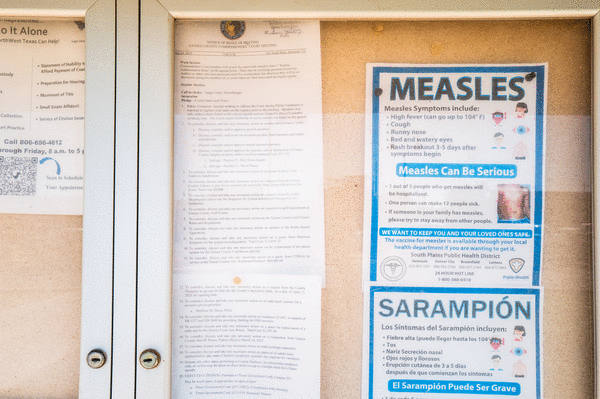
Early symptoms of measles occur 10 days to 2 weeks after exposure and may resemble a cold (cough, runny nose, and red eyes), usually with fever.
A rash occurs 2 to 4 days after the initial symptoms develop. The rash usually appears first on the head and then moves downward. The rash typically lasts a few days and then disappears in the same order.
People with measles may be contagious up to four days before the rash appears and four days after the rash appears.
Measles is a potentially serious illness, with complications occurring in about 30% of infected individuals, including immune suppression, pneumonia, diarrhea, and encephalitis, which may be life-threatening.
Those who were exposed to measles and develop symptoms should call their health care provider before visiting an office, clinic, or emergency department. Visiting a health care facility without calling in advance may put others at risk and should be avoided. Anyone who has had measles in the past or has received two doses of the vaccine is unlikely to develop measles, even if exposed.
People who have had measles, or who have been vaccinated against measles per the DPH Guidance for Vaccines are considered immune. The Measles-Mumps-Rubella vaccine offers the best protection against measles and the serious complications associated with infection.
The DPH recommendations for the MMR vaccination are:
•Children: Children should receive their first dose of the MMR vaccine at 12-15 months. School-aged children need two doses of the MMR vaccine.
•Adults: Adults should have at least one dose of the MMR vaccine. Certain groups at high risk need two doses of the MMR vaccine, such as international travelers, health care workers, and college students. Adults born in the U.S. before 1957 are considered immune to measles from past exposures.
People who are exposed to measles and have not been vaccinated are at risk for developing measles, and will need to avoid all public activities until they are no longer at risk of developing disease.
This means that unvaccinated, exposed people will need to miss daycare, school, work, and other activities. Anyone concerned about measles is advised to contact their health care provider to confirm their immunization status and get vaccinated, if needed.
For additional information, contact your local health department or DPH at 617-983-6800.
----------
©2026 MediaNews Group, Inc. Visit at bostonherald.com. Distributed by Tribune Content Agency, LLC.








Comments