Ask the Pediatrician: Short stature in children: What It means and when to check growth
Published in Health & Fitness
Short stature means a child is much shorter than most children the same age and sex. While sometimes short stature is typical in some children, it can be associated with an underlying medical condition. October is Dwarfism Awareness Month, shining an annual light on children with short stature, and the American Academy of Pediatrics has helpful information to guide parents with questions about their child's growth.
Doctors commonly use the term short stature when a child’s height falls below the third percentile on a growth chart, a tool used by pediatricians to track a patient's growth over time in comparison to their peers. By monitoring growth over time, pediatricians can make sure children are growing as expected and identify any concerns early. Each line represents a percentile. For example, if a boy’s height is at the 25th percentile, about 25 out of 100 boys his age are shorter than he is.
Most children do not follow these lines exactly, but most often, their growth over time tracks near these lines, often following their specific "growth curve." A child whose height falls below the third percentile line has short stature compared with other children of the same age.
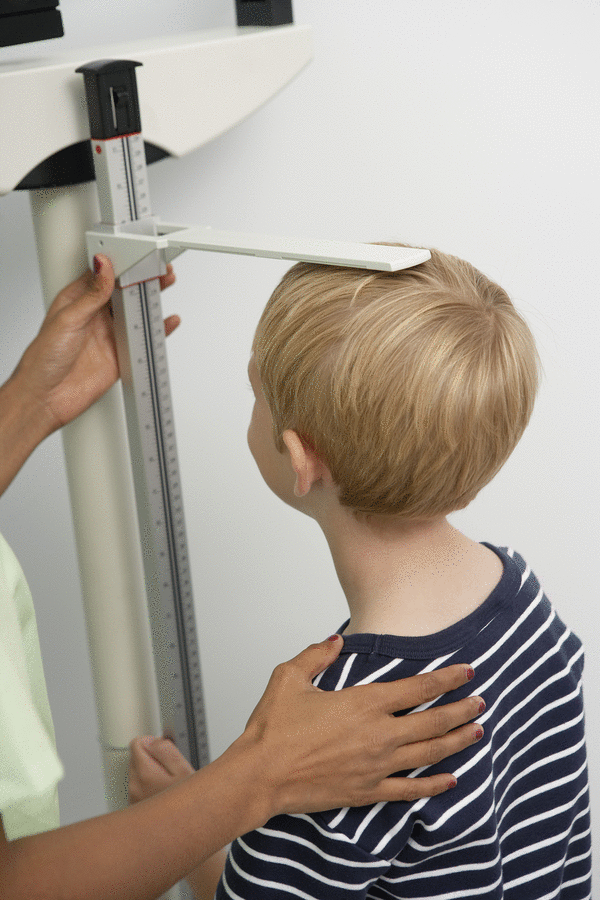
During routine checkups, pediatricians carefully measure growth and compare the findings with standardized growth charts. For children from birth to age 2, the doctor also measures head circumference (distance around the widest area of the head), weight, and length. For children ages 2 to 19, the doctor checks weight, height, and body-mass index (BMI).The American Academy of Pediatrics recommends doctors use the World Health Organization growth charts from birth to 2 years of age and the CDC charts from age 2 to 19.
Tracking growth over time is key, but it is important to note that measurement alone does not tell the full story. Your pediatrician will look at many things when assessing your child's growth. The height of each parent can tell them how tall their child is likely to be when fully grown. A child whose parents have below-average height will most likely grow up to have a below-average height too.
The rate of growth, called "growth velocity," is also important. A child who is not growing at the same rate as other children of the same age will slowly drop further down on the growth curve as they get older. For example, they might cross from the 25th percentile line to the fifth percentile line. Crossing percentile lines on the growth curve like that can be a sign of an underlying medical condition affecting growth and should be evaluated by your pediatrician.
If your child's growth seems different than other kids the same age, it’s natural to wonder why. While short stature may warrant a medical evaluation, most often it is just a variation in human development based on a child's genetic traits. This can happen for various reasons including being born to a family that is shorter in general or by a delay in growth and puberty. This delayed growth is usually surpassed during a "catch up growth" period once puberty starts, even if the onset is a bit later than expected. There can also be no known cause for a child's shorter height, but they remain healthy and actively growing.
To help identify if short stature may be a sign that a child has an underlying health condition, doctors will look for other signs and symptoms that might suggest there is an underlying condition leading to short stature. These conditions can include genetic conditions, chronic medical conditions, poor nutrition or even certain medications. Chronic medical conditions that impact major organs like celiac disease, hormonal conditions such as hypothyroidism, or those born with Cushing syndrome - when the body creates too much cortisol - often impact growth.
A common group of genetic conditions that often result in short stature are skeletal dysplasias, that affect how bones grow and develop. There are over 400 types of skeletal dysplasia, some are very rare and others are more common. Achondroplasia, the most common type of skeletal dysplasia, and hypochondroplasia are two types of skeletal dysplasia that can be an underlying cause of disproportionate short stature, meaning some parts of the body are shorter in relation to others. Most children (80%) with achondroplasia and hypochondroplasia are born to parents of average height without a family history of skeletal dysplasia.
Children with achondroplasia typically have shorter arms and legs and a larger head size, while their torsos are closer to average size. In addition to differences in growth, some children with achondroplasia may also have certain health concerns, including narrowing at the base of skull in infancy, frequent ear infections during childhood, hearing problems, sleep apnea, and spinal curvature at any age. Achondroplasia does not usually affect a child’s ability to think or learn. Most children with achondroplasia have typical intelligence and development. It is expected that many infants and toddlers may reach physical milestones such as sitting, crawling, or walking on a different timeline than other kids due to their musculoskeletal changes.
Hypochondroplasia, a less common form of skeletal dysplasia, can be milder and more difficult to recognize than achondroplasia as the signs and symptoms can vary from child to child. This can lead to some children not being diagnosed until later in childhood. Children with hypochondroplasia also may have health issues like frequent ear infections and sleep apnea, as well as neurological effects like seizures and developmental challenges, such as learning difficulties or developmental delays.
Other genetic bone disorders that can lead to short stature include osteogenesis imperfecta, sometimes called brittle bone disease. Osteogenesis imperfecta can result in bone fragility where bones break more easily than usual because the body does not make enough healthy collagen, an important building block of bone. There are several types of osteogenesis imperfecta with varying symptoms. Some children with the condition may have short stature, frequent fractures or other health concerns that can affect growth and development.
For genetic conditions that affect growth – including achondroplasia, Down syndrome, and Turner syndrome – health care professionals may use condition-specific growth charts in addition to standard growth charts. These specific charts can provide a more accurate picture of a child's growth over time and help guide ongoing care.
When evaluating your child's growth, the most important tool your pediatrician will use is to monitor their growth over time using the growth chart from newborn to adult. If there are concerns about short stature, looking at growth over about 6 months is often the most helpful way to understand your child’s growth pattern. If your child is growing as expected, no further testing may be needed.
If there are signs of short stature, your child's doctor may order a bone age X-ray, usually of the left hand and wrist. This helps show whether bones are maturing slower, faster, or as expected. It can also help determine whether puberty or growth may be happening earlier or later and provide clues about future growth potential.
Blood tests are sometimes recommended in evaluating short stature. Genetic testing can be helpful for diagnosing causes such as a skeletal dysplasia or other genetic causes. These tests can be done before or after birth and show variations in a person’s genes that may control growth or how cartilage turns into bones.
If you have any questions about your child's growth, talk with your pediatrician. Regular checkups help monitor your child’s growth over time, so your child’s regular pediatrician will be the best equipped to help. Your pediatrician is the first step to determine whether additional testing or referral to a pediatric geneticist or endocrinologist is needed.
____
Jennifer Arnold, MD, MSc, FAAP, is a pediatrician, neonatologist, medical educator and disability health advocate at Boston Children’s Hospital and assistant professor of newborn medicine at Harvard Medical School. She serves as executive director of immersive design systems at Boston Children’s and is the medical director for skeletal dysplasia in the hospital’s Skeletal Health Center. Her clinical and academic work spans skeletal dysplasia, neonatology, disability health equity, healthcare simulation, patient safety, and innovative approaches to improving the patient and family experience.
Dr. Arnold brings a unique perspective to her work as both a physician and a person with skeletal dysplasia. She is passionate about advancing equitable, person- and family-centered care for children with disabilities and ensuring that patients and families have access to accurate, balanced and practical health information.
An internationally recognized speaker, educator, advocate and New York Times bestselling author, Dr. Arnold is also the host of Boston Children’s Hospital’s Answers Parentcast, where she helps translate pediatric health information for patients and families. She has dedicated much of her career and public-facing work to improving pediatric health care, advancing disability inclusion and empowering patients and families to be active participants in their care.
©2026 Tribune Content Agency, LLC.









Comments