When Your Pet Trains You
Published in Cats & Dogs News
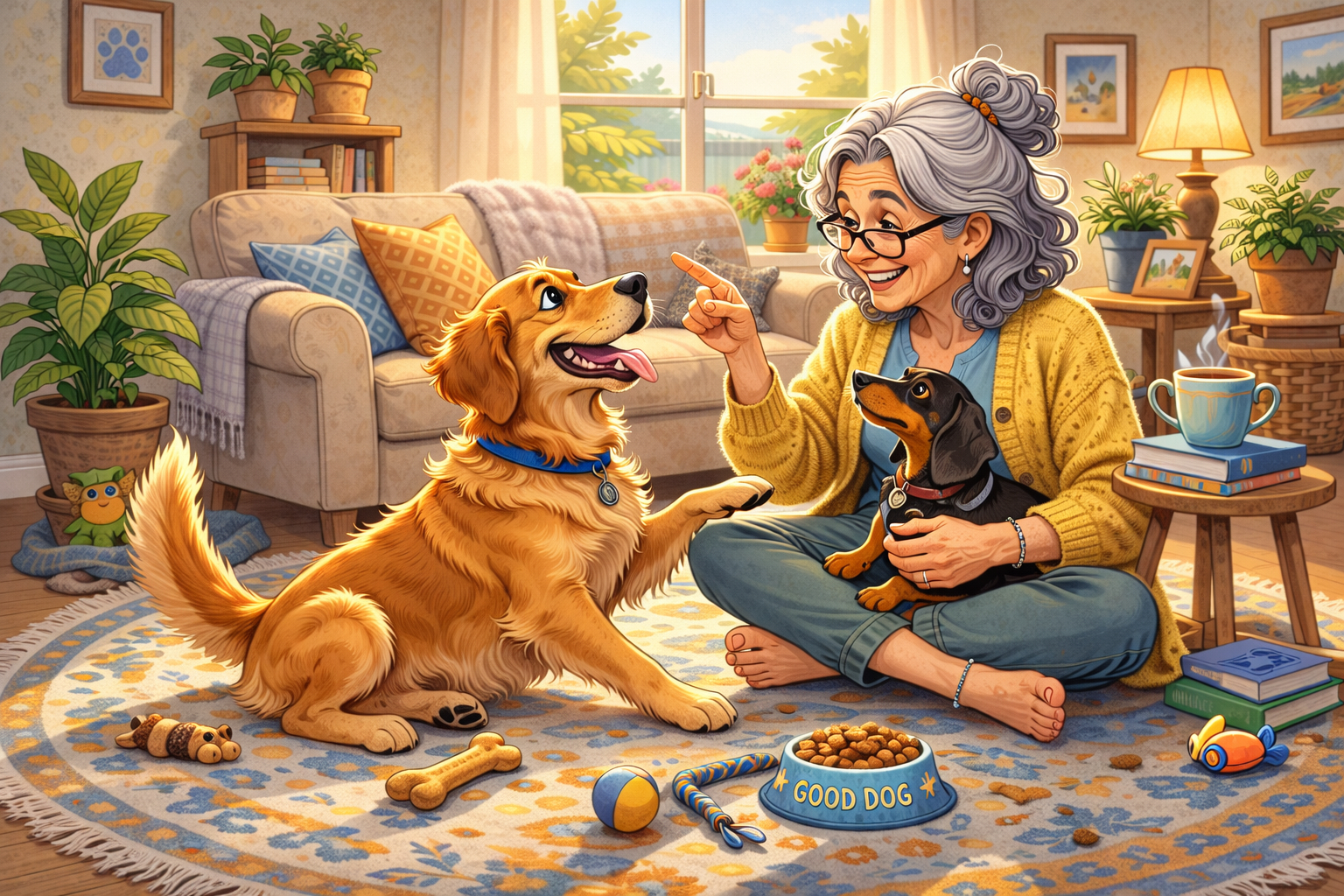
It usually starts small. A nudge at the same time each morning. A stare that lingers just a little too long near the treat cabinet. A quiet refusal to go outside in the rain. These moments feel incidental at first — quirks, habits, personality — but over time they form a pattern. And before long, the pattern becomes routine.
What many pet owners eventually discover, often with a mix of amusement and resignation, is that training does not flow in only one direction.
The illusion of control
Most people bring a pet into their home with a clear idea of how things will work. The dog will be trained. The cat will adapt. Boundaries will be set and respected.
For a brief period, this seems plausible.
Schedules are established. Commands are introduced. Rewards are given for desired behavior. From the human perspective, it feels like a structured process — a system in which consistency leads to results.
But animals are not passive participants. They observe, adapt and respond in ways that are often more subtle than the training methods applied to them. And over time, they begin to shape the very system designed to shape them.
The result is a quiet reversal. The pet learns the human just as thoroughly as the human learns the pet.
Reinforcement runs both ways
Training, at its core, is about reinforcement. Behavior followed by reward becomes more likely to occur again.
What is less often acknowledged is that humans are just as susceptible to this process.
A dog that paws gently for attention and receives it learns to repeat the behavior. But the owner who responds — who feels a small surge of satisfaction at the interaction — is also being reinforced. The act of giving attention becomes rewarding in itself.
Over time, these exchanges build into habits. The dog learns exactly how to elicit a response, and the human learns, often unconsciously, to provide it.
This is not manipulation in a calculated sense. It is mutual conditioning, unfolding naturally through daily interaction.
The schedule you didn’t choose
One of the clearest signs that a pet has begun to shape its owner is the emergence of a routine that feels both fixed and strangely inevitable.
Meal times shift slightly earlier because the dog begins waiting, watching, reminding. Walks become more consistent — or less — depending on the animal’s preferences. Sleep schedules adjust, sometimes subtly, sometimes dramatically.
Owners often describe these changes as choices, but they rarely feel entirely self-directed. Instead, they feel negotiated, as though the household has settled into a rhythm that no single participant fully controls.
In many cases, the pet is the most consistent influence in that rhythm.
The art of selective behavior
Pets are remarkably skilled at identifying which behaviors produce results.
A dog may ignore a command in one context but respond immediately in another. A cat may refuse attention all day, only to become insistent at a specific moment. These patterns are not random.
They are the product of observation.
Animals learn not only what is expected of them, but when those expectations are enforced, when they can be bent and when they can be ignored entirely. They learn tone of voice, body language and timing.
And in doing so, they begin to guide interactions.
A dog that has learned its owner will eventually give in to a persistent nudge will nudge longer. A cat that discovers early morning activity produces food will adjust its behavior accordingly.
The training is subtle, but it is effective.
Emotional feedback loops
Beyond behavior and routine, pets also shape their owners emotionally.
A look, a gesture, a small sign of affection can alter a person’s mood almost instantly. This responsiveness creates a feedback loop in which the owner becomes increasingly attuned to the animal’s signals.
In many households, this attunement leads to a kind of emotional synchronization. Owners begin to anticipate needs before they are clearly expressed. They adjust their behavior to maintain a sense of harmony.
This can be deeply rewarding, but it also reinforces the pet’s influence. The more responsive the owner becomes, the more effective the pet’s signals become.
The boundaries that move
Few pet owners maintain exactly the same boundaries they set at the beginning.
The dog that was not supposed to be on the couch eventually is. The cat that was meant to stay out of the bedroom finds its way in. The “just this once” exception becomes a regular occurrence.
These shifts are rarely the result of a single decision. They happen gradually, shaped by repeated interactions and small concessions.
Over time, the household rules evolve — not through formal revision, but through lived experience.
And more often than not, the pet plays a central role in that evolution.
Learning to recognize the shift
Recognizing that a pet has, in some ways, trained its owner is not a sign of failure. It is an acknowledgment of the relationship’s complexity.
The bond between humans and animals is not hierarchical in a simple sense. It is dynamic, shaped by mutual influence and ongoing adaptation.
When owners become aware of this dynamic, they can make more intentional choices. They can decide which behaviors to reinforce and which to gently redirect. They can reestablish boundaries where needed, or embrace the routines that have naturally developed.
Most importantly, they can appreciate the process for what it is: a form of communication.
A shared system
In the end, the question is not whether pets train their owners. It is how that training unfolds, and what it creates.
In the best cases, it leads to a shared system — a set of habits, expectations and responses that feel natural to both human and animal. A rhythm that reflects not just one perspective, but a collaboration.
It may begin with a simple nudge or a lingering stare. But over time, it becomes something more structured, more meaningful.
Not a loss of control, but a redefinition of it.
And for many pet owners, that quiet shift is not something to resist, but something to recognize — and, perhaps, to appreciate.
========
Eliza Rowan Pike writes about domestic life, animals and the unnoticed systems that shape everyday routines. Her work focuses on the quiet negotiations that define how people and their environments adapt to one another. This article was written, in part, utilizing AI tools.






Comments